上海市徐汇区安福路322号
Garden House at 322 Anfu Road
安福路322号花园住宅
From a Kong property to film distribution and reading
The 1932 residence belonged to businessman Kong Lingkan, son of H. H. Kung and Soong Ai-ling and associated with the Yangtze company. This is an ownership and commercial connection; it does not establish the provenance of every interior fitting or residence by every family member.
Explore the historical timeline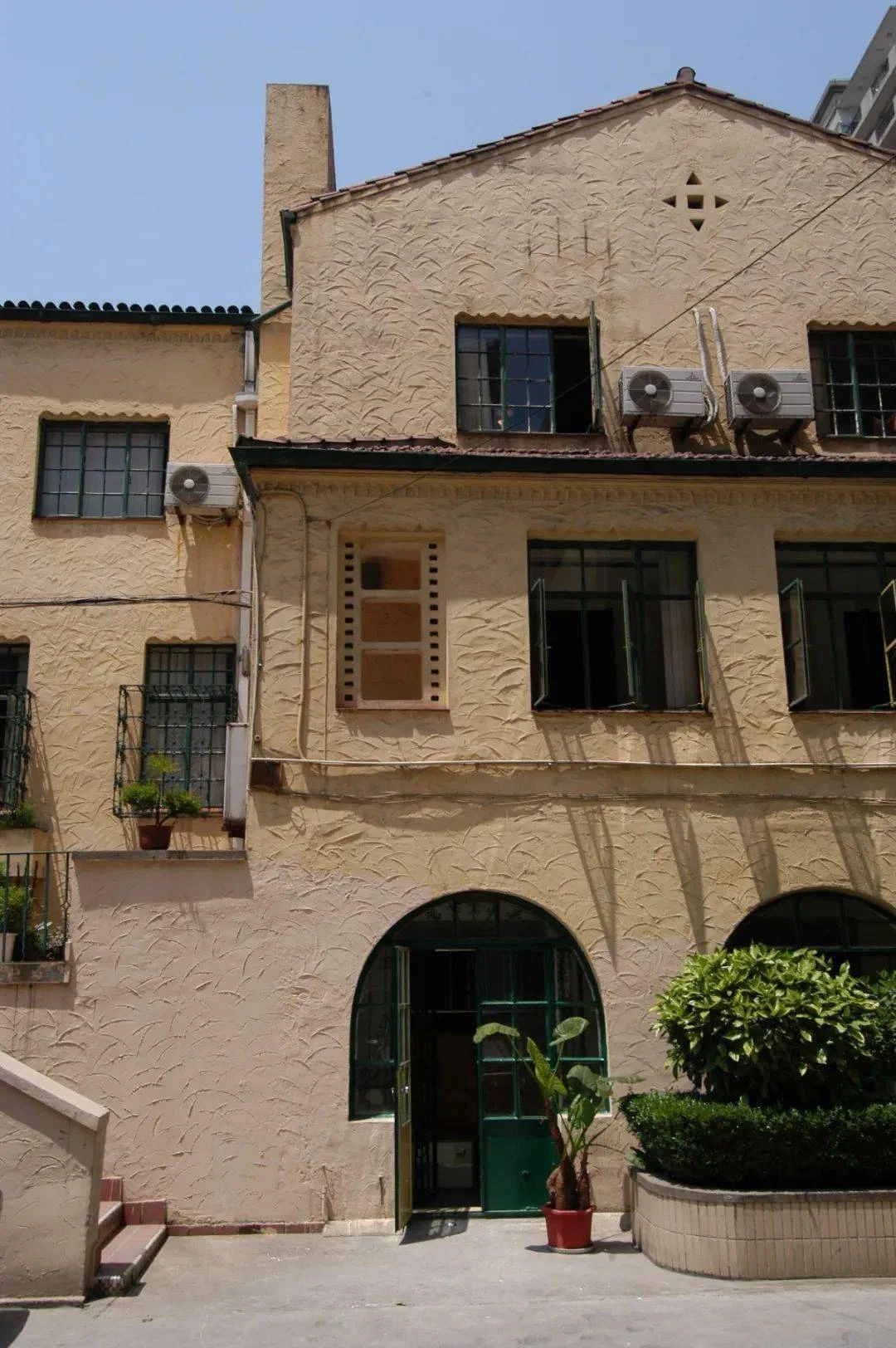
Capture date unknown
Pale walls, green joinery and arched openings at 322 Anfu Road. Published in the 2020 heritage feature; capture date unknown.
Photographer not individually credited; see source · Image source · Rights retained by original creators and source
At a glance
- Construction / use dates
- 1932
- Architect
- Not established in the reviewed sources
- Character
- Spanish-style garden residence
- Original use
- Garden residence
- Use and access
- Residence adapted for film culture
- Address
- 上海市徐汇区安福路322号Anfu Road
Architecture and use: sources[1]
The beginning
Why was it built here?
The 1932 residence belonged to businessman Kong Lingkan, son of H. H. Kung and Soong Ai-ling and associated with the Yangtze company. This is an ownership and commercial connection; it does not establish the provenance of every interior fitting or residence by every family member.[1]
Later, Shanghai’s film distribution and exhibition company used the property. A 2020 heritage account records a film bookshop and gathering space. The private house thus connects with how films circulate and audiences meet; the old report is not a guarantee that a particular business still operates.[1]
Look up, then look closer
Details worth a closer look
Read from the street
Red tiles, pale walls and dark green window frames create a material contrast. Trace the changing roof heights and curves below the eaves: the style emerges from these relationships, not a single arched window.[1]
A closer detail
A tower, outdoor stairs and terraces connect garden and upper floors. From permitted areas compare indirect and direct approaches; these layers distinguish a garden residence from an apartment frontage.[1]
One building, changing roles
Read the building through time
Captions distinguish photographic dates from publication dates; periods without reliable images are covered in the text.
- 1932
Garden residence built
The house predates its use by film institutions.[1]
- 1949+
Film distribution offices
Office use connected private property with Shanghai’s film distribution network.[1]
- 2020
Film bookshop and gathering use documented
This is the report’s publication date, not a current trading guarantee.[1]
Today and visiting
Discover the building from the street
Residence adapted for film culture[1]
- Address
- 上海市徐汇区安福路322号
- Approach
- Entrances, events and access can change; follow current notices. Historic significance does not make residential stairs, gardens or living spaces public.
Sources checked: 2026-10-26 · Entrances, events and access can change; follow current notices. Historic significance does not make residential stairs, gardens or living spaces public.
Shanghai and the world
Place the address in the city
Connect this address with the theatre at 288 and the composer’s home in Lane 191: production, circulation, viewing and listening become a cultural walk. Film history also inhabits distribution offices and bookshelves.[1]
Text and image sources
This account is based on the sources below. Unverified details are identified as such. Where photographs are included, sources and licences are listed beneath each image.
- Building and local-history source ↗
Used to check dates, uses and architectural descriptions; photo dates are separately identified.
Image handling and dating
Images come from the archives or image source pages listed beneath each photograph. We resize and compress them to WebP, preserving their original proportions without colourisation or added detail. Grain, blur and scanning marks in historical photographs are retained.
Images without a documented capture date are marked undated; publication is not photography. No invented before-and-after view substitutes for a verified historic photograph.