1
Asia Building
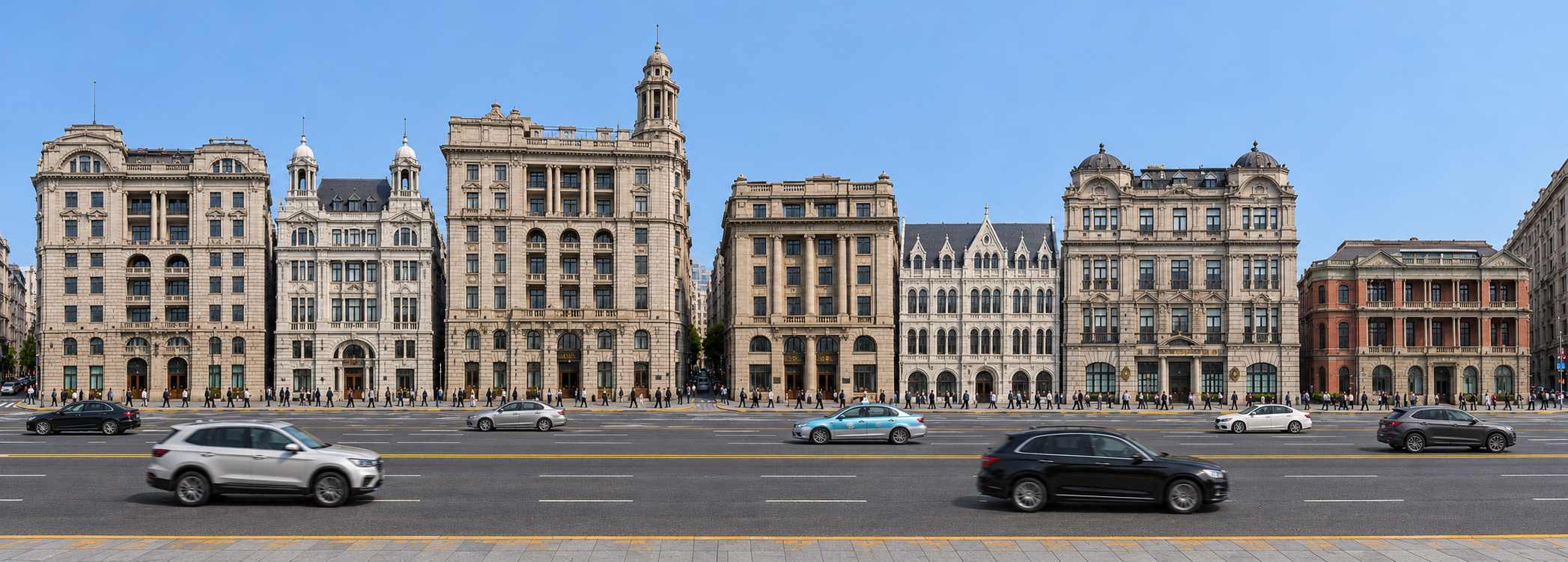
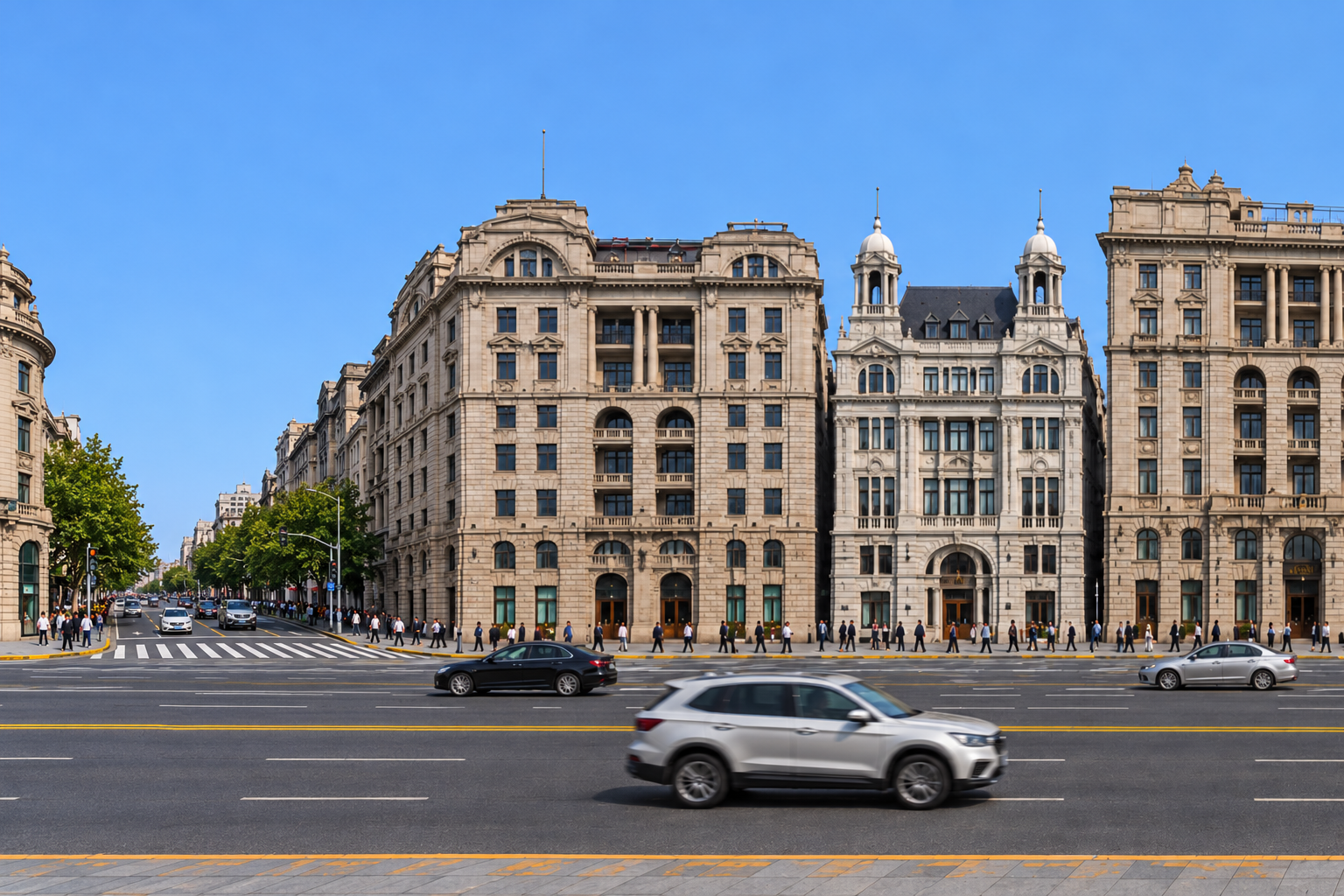
Once used by Asiatic Petroleum, this building connects the Bund’s commercial history with the international oil trade.
Look for arched windows and the returning facade beside Yan’an East Road.
Sources & further reading ↗SHANGHAI / The Bund
Follow the historic facades of Zhongshan East First Road, from the southern Bund to Waitanyuan. Explore the buildings and the stories behind them.
Shanghai · Zhongshan East First Road · Huangpu riverfront
1
Once used by Asiatic Petroleum, this building connects the Bund’s commercial history with the international oil trade.
Look for arched windows and the returning facade beside Yan’an East Road.
Sources & further reading ↗2
The former Shanghai Club served British merchants, revealing the social world that accompanied the Bund’s colonial commerce.
Notice the pale facade, repeated arches and small towers at either end.
Sources & further reading ↗3
Named for the Union Bank, No. 3 uses a corner tower and river-facing facade to make its presence felt.
Follow the corner tower upward and compare it with the regular window rows.
Sources & further reading ↗5
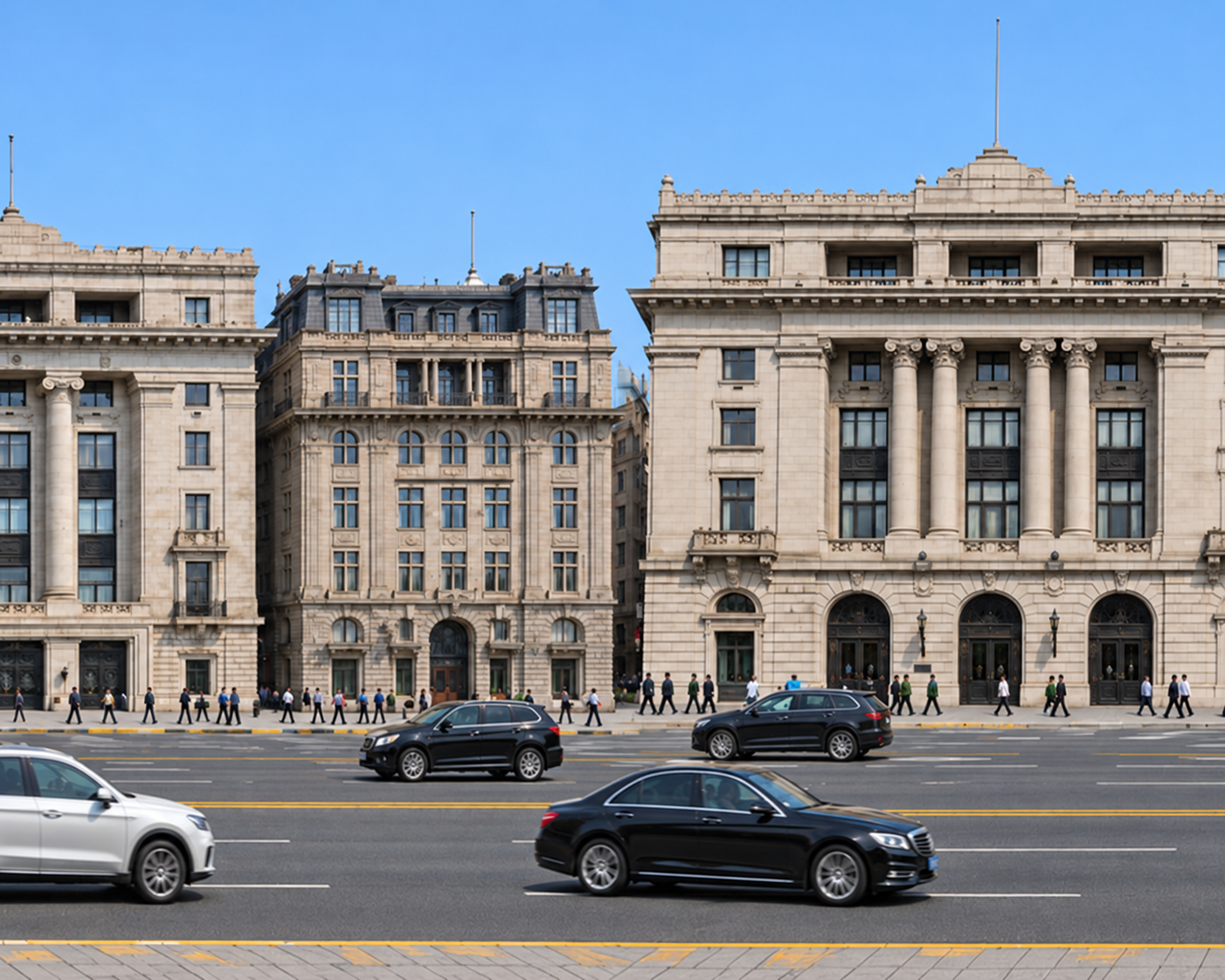
Built for the Nisshin shipping company, this building recalls commercial links along the Yangtze and between East Asian ports.
In this illustration, compare tall columns, deep windows and ground-floor arches.
Sources & further reading ↗6
The Imperial Bank of China was an early modern Chinese bank: its former home reveals Chinese participation in the Bund’s financial history.
Pointed gables and narrow arched windows distinguish it from its classical neighbours.
Sources & further reading ↗7
The Danish Great Northern Telegraph Company worked here, connecting this address with Shanghai’s international communications history.
Compare its curved roof features and symmetrical windows with the red-brick neighbour.
Sources & further reading ↗9
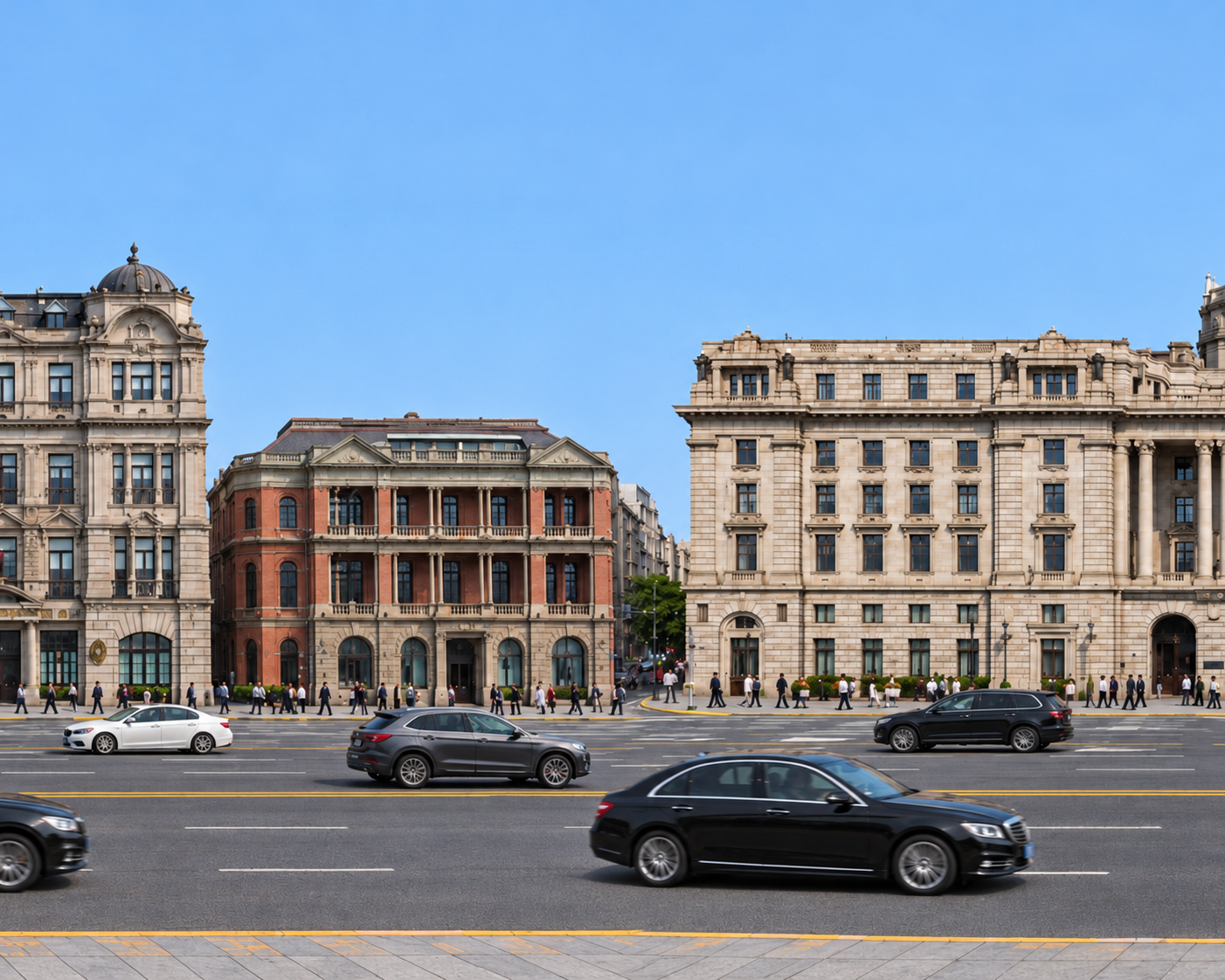
China Merchants belongs to the history of modern Chinese shipping. Its low red-brick building offers a quieter scale among the banks.
Look at red brick against pale galleries; Fuzhou Road opens between this building and HSBC.
Sources & further reading ↗12
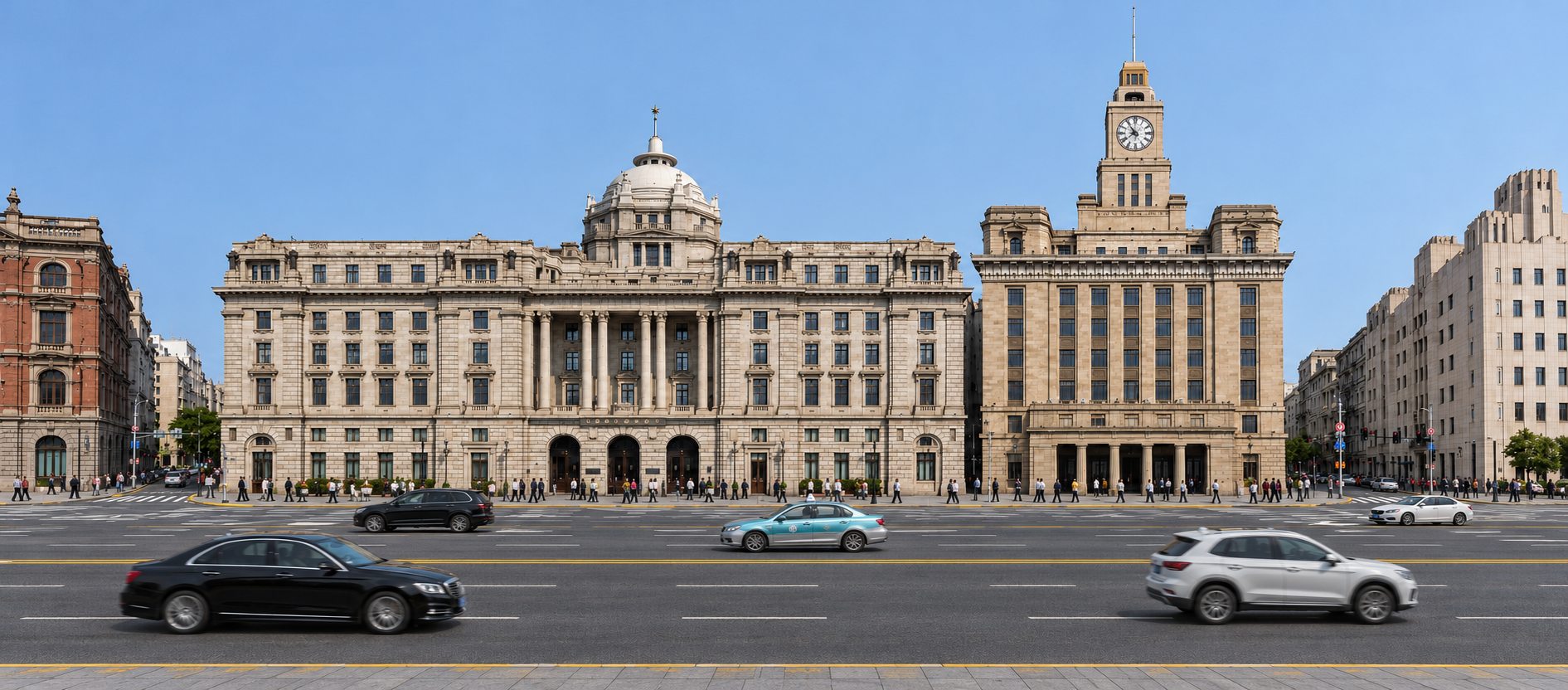
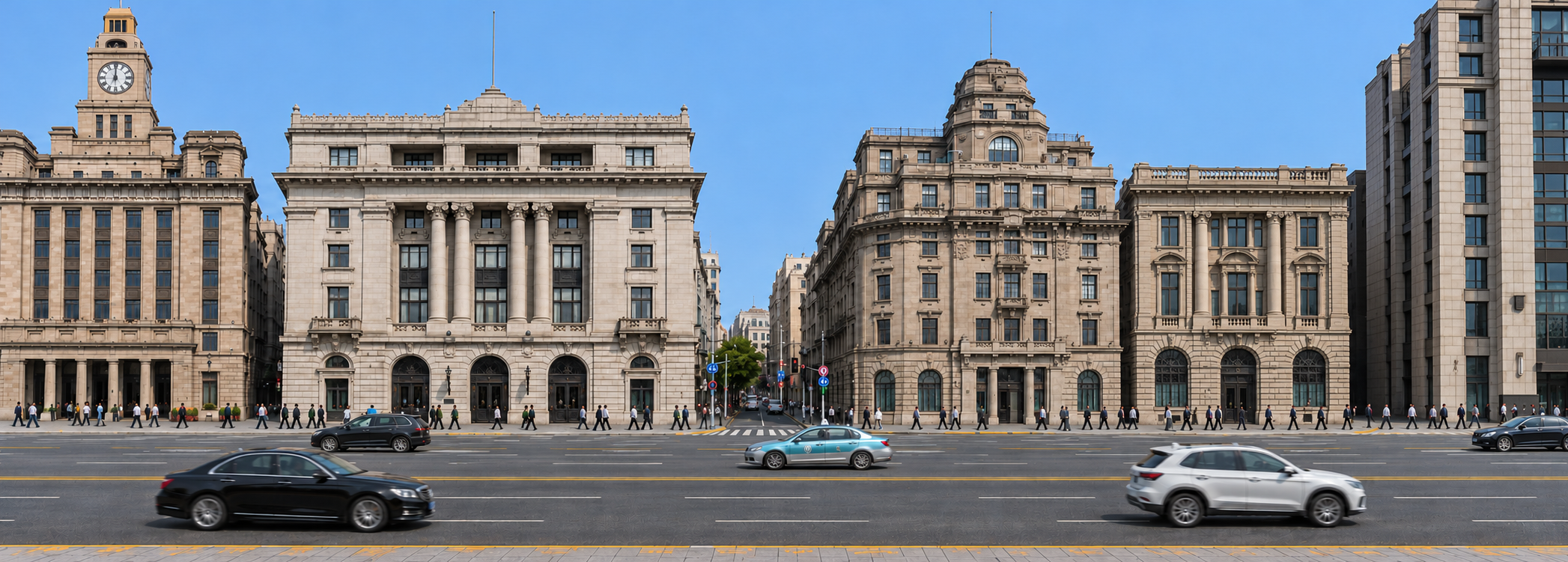
Opened in 1923 for HSBC, its broad facade and central dome express Shanghai’s ambitions as an international financial centre.
Trace the stone base, colonnade and dome: the dome is its clearest landmark.
Sources & further reading ↗13
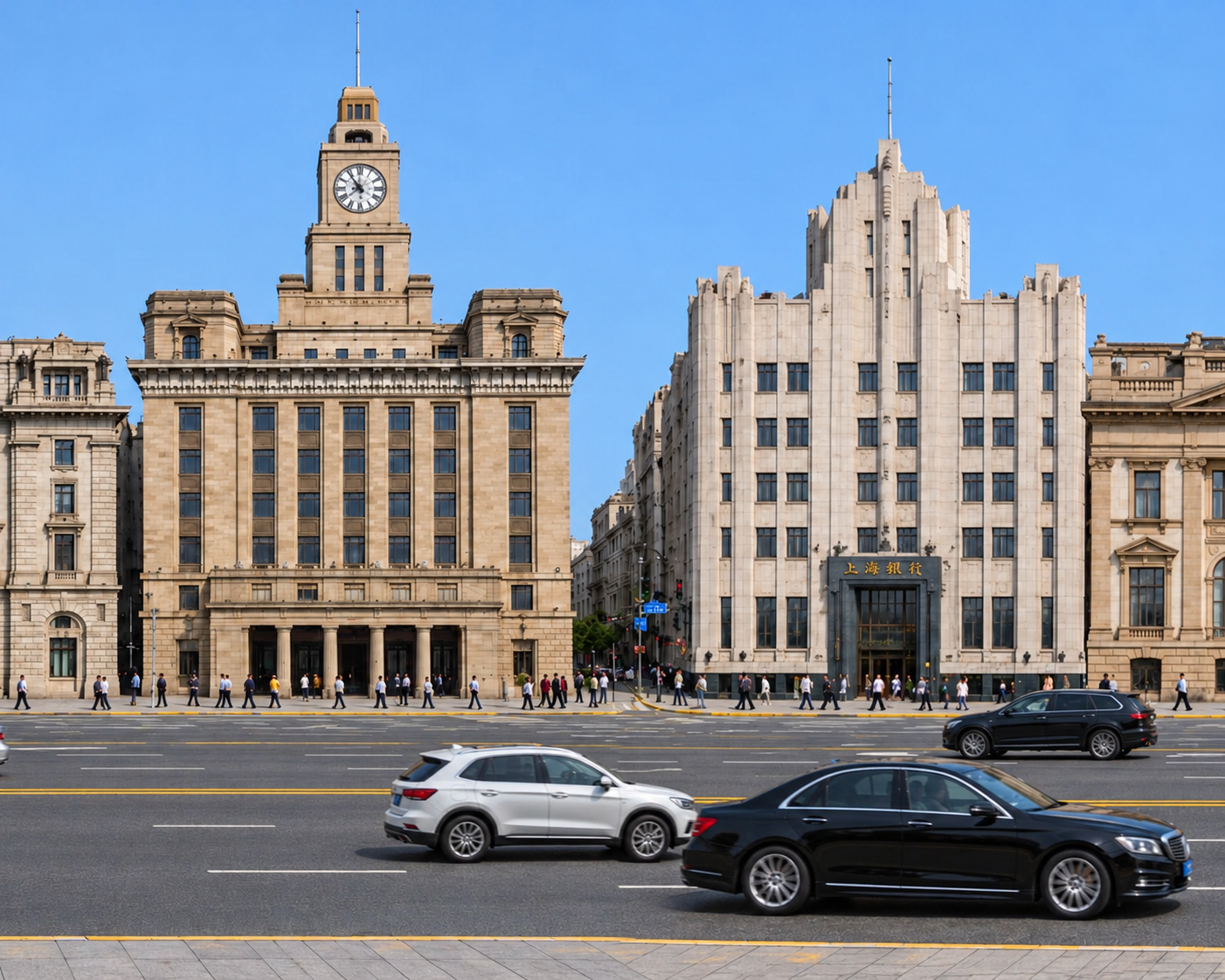
Completed in 1927, the Customs House recalls Shanghai’s port trade. Its clock tower is one of the Bund’s defining silhouettes.
Look for clock faces, the stepped tower and the heavy stone base.
Sources & further reading ↗14
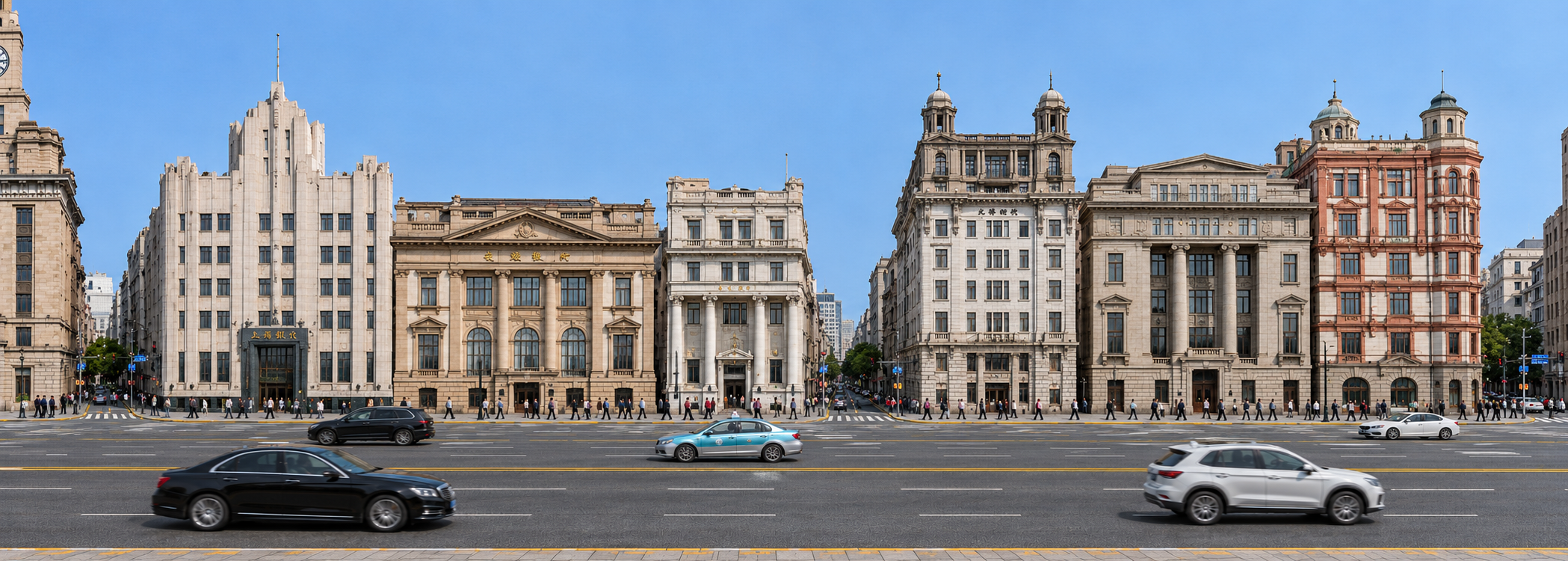
A later addition to the historic Bund, the Bank of Communications contrasts with its classical neighbours through a restrained, vertical facade.
Notice straight window rows and the raised centre of the roofline.
Sources & further reading ↗15
The former Russo-Chinese Bank links Shanghai with Russian-backed finance; it later housed the Central Bank.
Compare the pediment, columns and broad low body with its taller neighbours.
Sources & further reading ↗16
The Bank of Taiwan’s Shanghai branch dates from Taiwan’s Japanese colonial period and reflects the reach of East Asian finance.
Look at its compact facade and repeated windows between larger neighbours.
Sources & further reading ↗17
Former headquarters of the North China Daily News, this building represents the English-language press within the Bund’s commercial world.
Look up for paired roof towers above the vertical window rows.
Sources & further reading ↗18
Known locally as Maijiali, the Chartered Bank’s former home at No. 18 recalls international banking on the Bund.
Study the columns and cornice; the illustration interprets rather than surveys the facade.
Sources & further reading ↗19
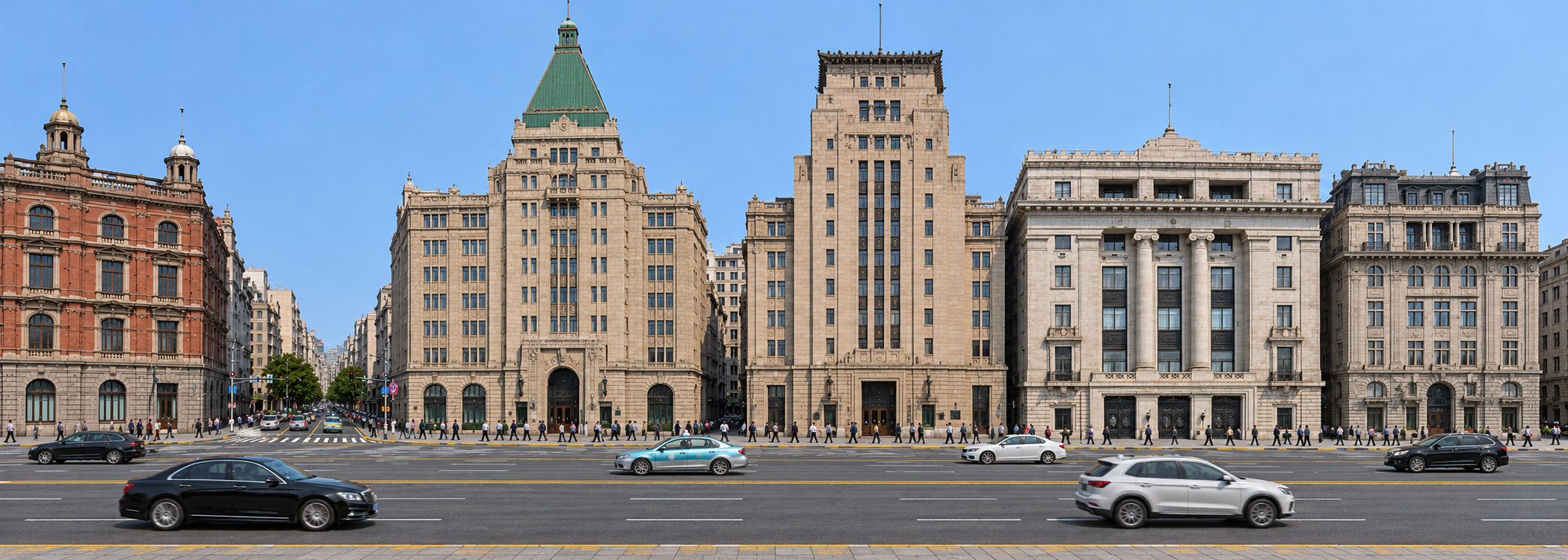
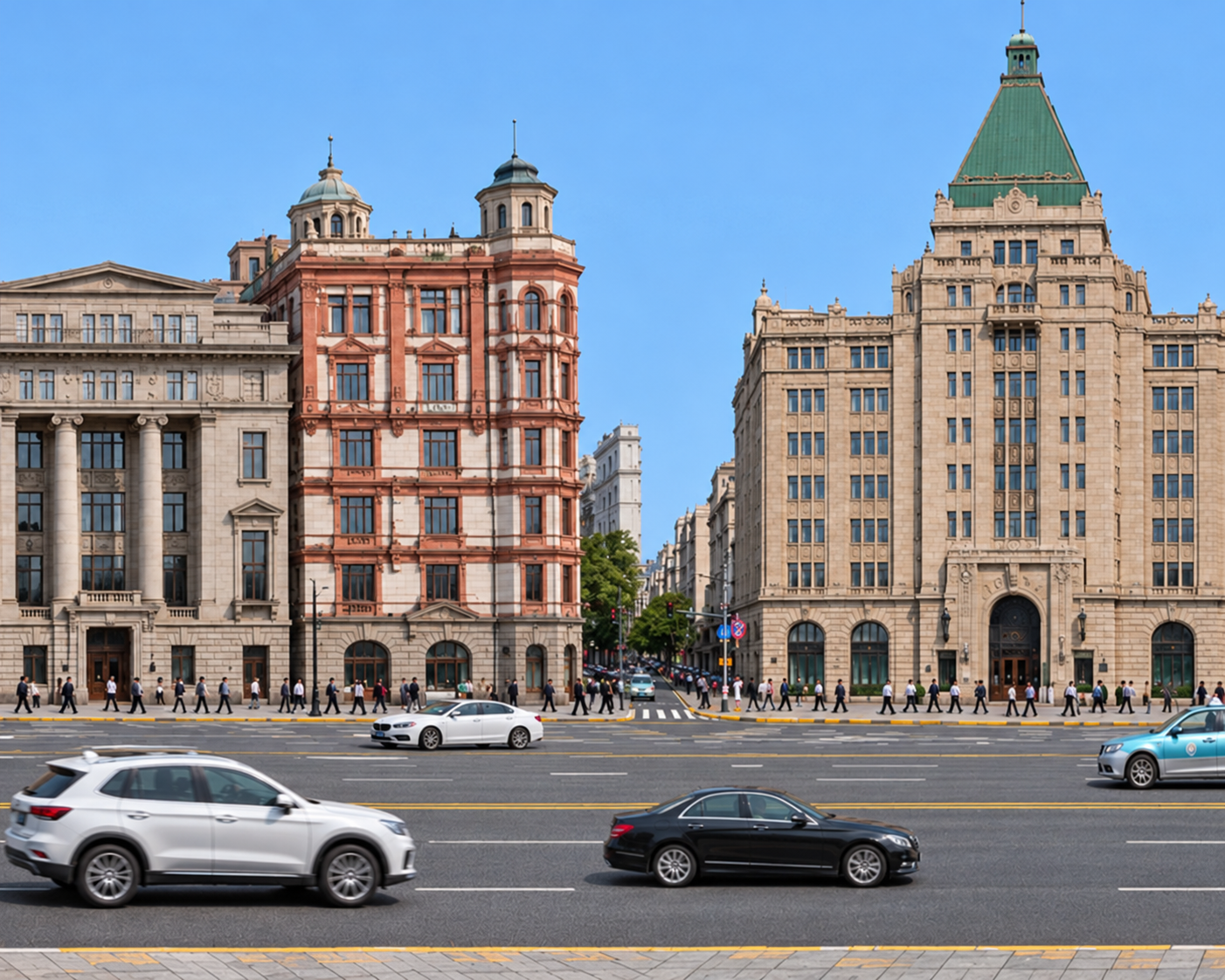
The former Palace Hotel later became the Peace Hotel’s south building, facing a later generation of hotel architecture across Nanjing Road.
Notice the red facade; Nanjing Road separates it from the green-roofed Peace Hotel.
Sources & further reading ↗20
Victor Sassoon’s building housed the Cathay Hotel, later the Peace Hotel’s north building, linking hospitality with the Sassoon family’s business history.
The green pyramidal roof is the key landmark; follow the setbacks beneath it.
Sources & further reading ↗23
The Bank of China established a visible presence on this international banking street, standing beside the Peace Hotel.
Compare its Chinese-inspired roofline with the neighbouring green pyramid.
Sources & further reading ↗24
The Yokohama Specie Bank operated here, connecting Shanghai’s banking district with Japan’s overseas trade networks.
Notice the broad colonnade and heavy base beside the taller tower.
Sources & further reading ↗26
The former Yangtze Insurance building recalls the insurance business that supported maritime trade alongside banks.
Look at compact window rows and the roofline between two broader neighbours.
Sources & further reading ↗27
Jardine Matheson was a major British trading house in early Shanghai; its building anchors the corner of Beijing East Road.
Study the monumental columns and the street opening to the right.
Sources & further reading ↗28
The former Glen Line building recalls international shipping and faces Jardine Matheson across Beijing East Road.
Look at the rising central roof and the turning corner facade.
Sources & further reading ↗29
The former Banque de l’Indochine building connects Shanghai with French overseas banking networks.
Notice the flat balustraded parapet and classical columns. A narrow gap separates its north side from the Peninsula hotel; there is no street opening to Yuanmingyuan Road here.
Sources & further reading ↗