上海市徐汇区安福路288号
Shanghai Dramatic Arts Centre
上海话剧艺术中心
A working stage on Anfu Road
In 1995 the Shanghai People’s Art Theatre and Shanghai Youth Drama Troupe merged to form the centre. This dates the institution, not necessarily the completion of the building. Two theatrical traditions continued to meet at one address.
Explore the historical timeline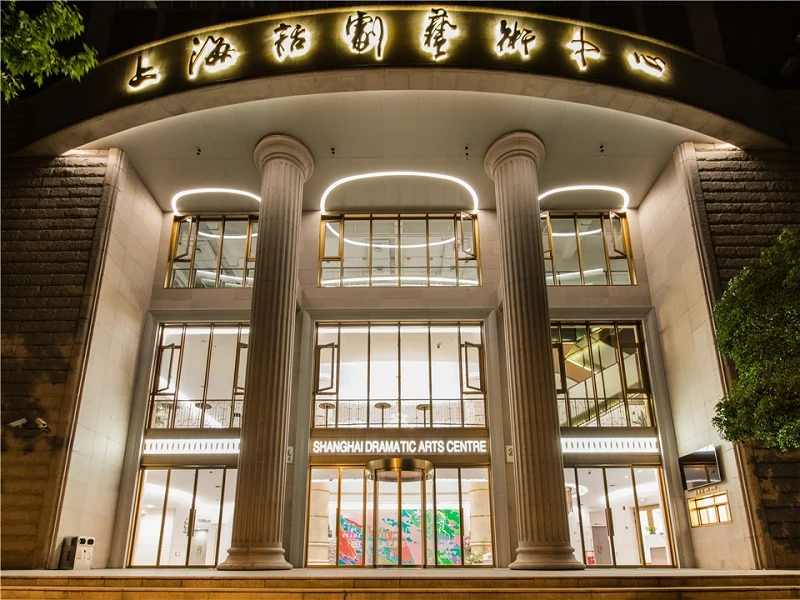
Capture date unknown
The illuminated theatre entrance, with columns and canopy framing the lobby. Included in the municipal 2023 venue guide, credited to the theatre website; capture date unknown.
Theatre website en.china-drama.com · Image source · Rights retained by original creators and source
At a glance
- Construction / use dates
- Institution established 1995
- Architect
- Not established in the reviewed sources
- Character
- Modern theatre building
- Original use
- Performance, rehearsal and theatre production
- Use and access
- An active performing-arts institution
- Address
- 上海市徐汇区安福路288号Anfu Road
The beginning
Why was it built here?
In 1995 the Shanghai People’s Art Theatre and Shanghai Youth Drama Troupe merged to form the centre. This dates the institution, not necessarily the completion of the building. Two theatrical traditions continued to meet at one address.[1] [2]
Spoken theatre depends on actors, directors, stage technicians and audiences. The place matters through productions and the continuous work of rehearsal and exchange. Check performance language, surtitles and the specific auditorium before booking; the exterior alone cannot describe a theatre visit.[1] [2]
Look up, then look closer
Details worth a closer look
One building, changing roles
Read the building through time
Captions distinguish photographic dates from publication dates; periods without reliable images are covered in the text.
- 1950
- 1995
- 2023
Today and visiting
Discover the building from the street
An active performing-arts institution[1] [2]
- Address
- 上海市徐汇区安福路288号
- Approach
- Entrances, events and access can change; follow current notices. Historic significance does not make residential stairs, gardens or living spaces public.
Sources checked: 2026-10-26 · Entrances, events and access can change; follow current notices. Historic significance does not make residential stairs, gardens or living spaces public.
Shanghai and the world
Place the address in the city
The theatre changes the street’s rhythm: neighbourhood life by day, arrivals in the evening, everyday life again after the curtain. A ticket can be an entry into the city’s cultural production.[1] [2]
Text and image sources
This account is based on the sources below. Unverified details are identified as such. Where photographs are included, sources and licences are listed beneath each image.
- Building and local-history source ↗
Used to check dates, uses and architectural descriptions; photo dates are separately identified.
- Further research and biography ↗
Used to check dates, uses and architectural descriptions; photo dates are separately identified.
Image handling and dating
Images come from the archives or image source pages listed beneath each photograph. We resize and compress them to WebP, preserving their original proportions without colourisation or added detail. Grain, blur and scanning marks in historical photographs are retained.
Images without a documented capture date are marked undated; publication is not photography. No invented before-and-after view substitutes for a verified historic photograph.