上海市徐汇区安福路191弄15号
He Luting’s Home in Meihuali
美华里 · 贺绿汀旧居
A lane home linked to screen and stage
He Luting (1903–1999) came to Shanghai in the early 1930s and lived at No. 15 while teaching and studying. He entered the National Music College in 1931. The address places a composer’s development within the ordinary work of finding a home, earning a living and learning.
Explore the historical timeline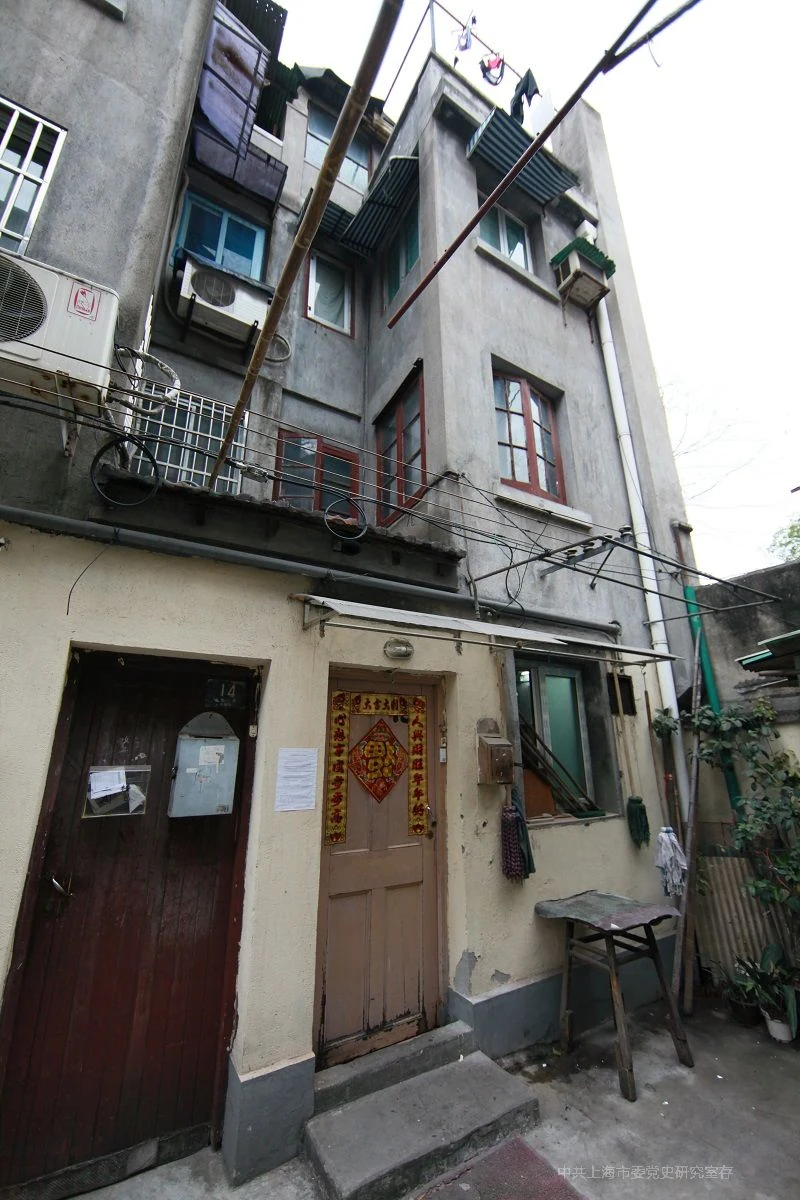
Capture date unknown
Lane-house photograph identified as He Luting’s former residence by the Fudan and Shanghai party-history resource. Neighbouring doors and domestic fittings remain visible. Published in 2020; capture date unknown.
Photographer not individually credited; see source · Image source · Rights retained by original creators and source
At a glance
- Construction / use dates
- Not established in the reviewed sources
- Architect
- Not established in the reviewed sources
- Character
- A dwelling within a residential lane
- Original use
- Lane residence
- Use and access
- Residential or institutional premises; begin outside
- Address
- 上海市徐汇区安福路191弄15号Anfu Road
Architecture and use: sources[1]
The beginning
Why was it built here?
He Luting (1903–1999) came to Shanghai in the early 1930s and lived at No. 15 while teaching and studying. He entered the National Music College in 1931. The address places a composer’s development within the ordinary work of finding a home, earning a living and learning.[1]
He wrote music for films including Scenes of City Life, Crossroads and Street Angel, as well as spoken plays, connecting melody with urban stories. What the address recalls is not a visible instant of inspiration but a professional network across music, film and theatre.[1]
Look up, then look closer
Details worth a closer look
Read from the street
The actual address lies inside Lane 191; the street opening is only its approach. Distinguish reaching the lane from reaching No. 15, and do not read the illustrated marker as a measured building footprint.[1]
A closer detail
Unlike a detached garden house, a lane organizes rows, paths and distances between neighbours together. Observe the continuous wall line from the entrance and consider everyday movement, beyond the commemorative sign alone.[1]
One building, changing roles
Read the building through time
Captions distinguish photographic dates from publication dates; periods without reliable images are covered in the text.
- 1931
Enters the National Music College in Shanghai
The home connects professional music education with earning a living through teaching.[1]
- 1930s
Composition meets film and spoken theatre
Film and theatre scores carried his work to different audiences.[1]
- 2009
Residence registered as immovable cultural heritage
Registration records local cultural value; visits must still respect residents.[1]
Today and visiting
Discover the building from the street
Residential or institutional premises; begin outside[1]
- Address
- 上海市徐汇区安福路191弄15号
- Approach
- Entrances, events and access can change; follow current notices. Historic significance does not make residential stairs, gardens or living spaces public.
Sources checked: 2026-10-26 · Entrances, events and access can change; follow current notices. Historic significance does not make residential stairs, gardens or living spaces public.
Shanghai and the world
Place the address in the city
Walk toward the film-culture address at 322 and the theatre at 288 to turn He’s cross-media career into a route. Works travel across language and medium, while the lane preserves their domestic scale.[1]
Text and image sources
This account is based on the sources below. Unverified details are identified as such. Where photographs are included, sources and licences are listed beneath each image.
- Building and local-history source ↗
Used to check dates, uses and architectural descriptions; photo dates are separately identified.
Image handling and dating
Images come from the archives or image source pages listed beneath each photograph. We resize and compress them to WebP, preserving their original proportions without colourisation or added detail. Grain, blur and scanning marks in historical photographs are retained.
Images without a documented capture date are marked undated; publication is not photography. No invented before-and-after view substitutes for a verified historic photograph.