上海市徐汇区安福路201号
Former Wu Guozhen Residence
吴国桢旧居
A home, a mayor’s residence and civic memory
The building plaque dates the house to 1922; Wu Guozhen arrived in 1946. Separating those dates avoids treating a famous occupant as the original builder. The reviewed local history explicitly leaves the original designer unidentified.
Explore the historical timeline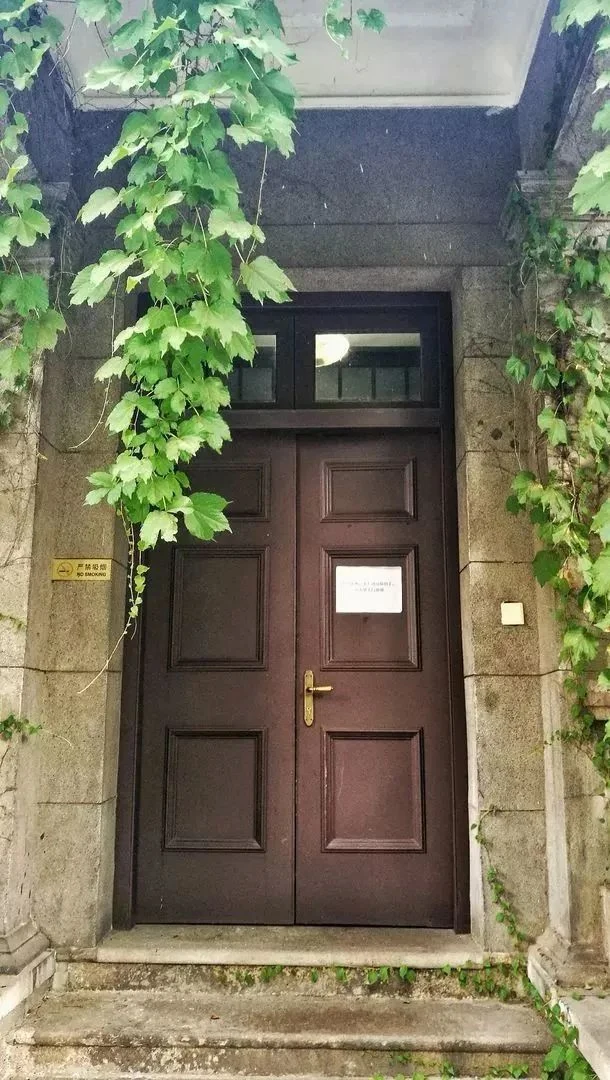
Capture date unknown
Door and climbing plants at 201 Anfu Road: an entrance detail, not a full exterior. Published in the 2018 local-history account; capture date unknown.
Photographer not individually credited; see source · Image source · Rights retained by original creators and source
At a glance
- Construction / use dates
- 1922
- Architect
- Not established in the reviewed sources
- Character
- Eclectic Chinese and Western elements
- Original use
- Garden residence
- Use and access
- Residential or institutional premises; begin outside
- Address
- 上海市徐汇区安福路201号Anfu Road
Architecture and use: sources[1]
The beginning
Why was it built here?
The building plaque dates the house to 1922; Wu Guozhen arrived in 1946. Separating those dates avoids treating a famous occupant as the original builder. The reviewed local history explicitly leaves the original designer unidentified.[1]
Wu Guozhen (1903–1984), educated in economics and politics in the United States, served as mayor of Hankou, Chongqing and Shanghai. This was his official residence during his Shanghai tenure. His career opens questions about postwar city government; an official residence records public office as well as private life.[1]
Look up, then look closer
Details worth a closer look
Read from the street
The entrance colonnade beside Chinese garden features is a starting point for reading eclecticism. Identify the forms of gate, porch and garden structures rather than treating “East meets West” as an explanation in itself.[1]
A closer detail
Trees and walls prevent a complete view from the road. Read the distance between entrance and roof without pursuing obscured interiors; that setback is itself part of the garden-house form.[1]
One building, changing roles
Read the building through time
Captions distinguish photographic dates from publication dates; periods without reliable images are covered in the text.
- 1922
Plaque records the construction date
The plaque date is kept distinct from Wu’s later occupation.[1]
- 1946
Becomes the Shanghai mayor’s residence
The municipal government made it an official residence, linking house and public office.[1]
- 2018
Local account records plaque and garden
The garden observations belong to that report, not today’s access conditions.[1]
Today and visiting
Discover the building from the street
Residential or institutional premises; begin outside[1]
- Address
- 上海市徐汇区安福路201号
- Approach
- Entrances, events and access can change; follow current notices. Historic significance does not make residential stairs, gardens or living spaces public.
Sources checked: 2026-10-26 · Entrances, events and access can change; follow current notices. Historic significance does not make residential stairs, gardens or living spaces public.
Shanghai and the world
Place the address in the city
Walking toward the theatre connects domestic history with institutions. A politician’s address cannot substitute for an assessment of his tenure, but it shows that city government also operated through particular doorways and rooms.[1]
Text and image sources
This account is based on the sources below. Unverified details are identified as such. Where photographs are included, sources and licences are listed beneath each image.
- Building and local-history source ↗
Used to check dates, uses and architectural descriptions; photo dates are separately identified.
Image handling and dating
Images come from the archives or image source pages listed beneath each photograph. We resize and compress them to WebP, preserving their original proportions without colourisation or added detail. Grain, blur and scanning marks in historical photographs are retained.
Images without a documented capture date are marked undated; publication is not photography. No invented before-and-after view substitutes for a verified historic photograph.