105 Wukang Road
The corner at No. 105
武康路105号住宅
Small-scale housing meets the shopping street
105 Wukang Road. Built in 1945, No. 105 is much smaller than the large apartments farther south. Reliable evidence for its architect and original plan remains limited, so dated uses offer a more secure account than an invented designer story.
Explore the historical timeline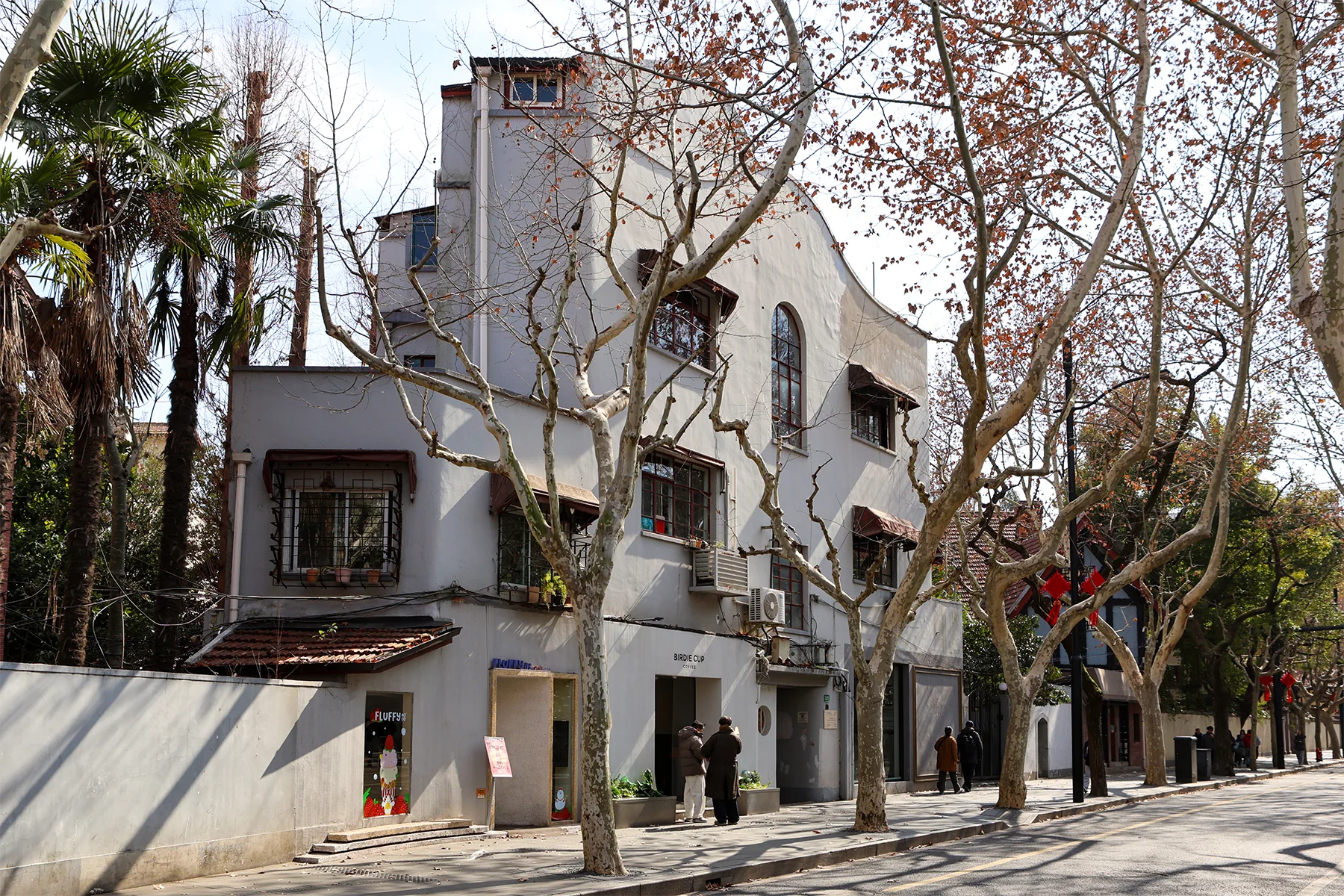
Photographed 9 February 2026
The street façade of 105 Wukang Road, with white walls, a curved gable and plane trees along the pavement.
Windmemories · Image source · CC BY-SA 4.0
At a glance
- Built
- 1945See the account and sources below
- Architect
- Not identified in the checked sourcesSee the account and sources below
- Architecture
- Small modern-period house; style unconfirmedSee the account and sources below
- Original use
- ResidenceSee the account and sources below
- Use today
- Parts of the frontage have housed retail and coffeeSee the account and sources below
- Address
- 105 Wukang RoadSee the account and sources below
The beginning
Why was it built here?
Built in 1945, No. 105 is much smaller than the large apartments farther south. Reliable evidence for its architect and original plan remains limited, so dated uses offer a more secure account than an invented designer story.[1] [2]
A 2018 commercial guide records a fashion boutique here; the 2023 Civil Affairs walk describes a coffee shop at a street-facing corner. These observations show changing frontage use, not proof that the whole house became commercial.[1] [2]
Look up, then look closer
Three details worth a closer look
One building, changing roles
Read the building through time
Captions distinguish photographic dates from publication dates; periods without reliable images are covered in the text.
- 1945
- 2018
- 2023
Today and visiting
Discover the building from the street
Read the number and frontage from the pavement; a shop address is not access to the entire house.[1] [2]
- What to look for
- Compare the residential volume with the smaller commercial opening.
- Visiting
- Check on-site signs for business status and accessible areas.
Sources checked: 2026-10-22 · Check current notices for access and business hours. A historical account of use is not confirmation of today’s operating status.
Shanghai and the world
Part of Wukang Road’s lived history
Ordinary scale matters too: this street’s life includes shops and neighbours as well as named residences and celebrated architects.[1] [2]
Farther south, compare Ba Jin’s house and Midan Apartments to distinguish domestic, museum and collective-housing boundaries.[1] [2]
Text and image sources
This account is based on the sources below. Unverified details are identified as such. Where photographs are included, sources and licences are listed beneath each image.
- Shanghai Civil Affairs Bureau · A walk along Wukang Road ↗
A 2023 account; descriptions of use refer to the period of that article.
- Airbnb Newsroom · Shanghai hosts’ recommendations ↗
A 2018 record of a shop at No. 105, used only as evidence of retail use at that time.
Image handling and dating
Images come from the archives or image source pages listed beneath each photograph. We resize and compress them to WebP, preserving their original proportions without colourisation or added detail. Grain, blur and scanning marks in historical photographs are retained.
Images retain their original framing and proportions. Publication dates are not capture dates; unknown photograph dates are not inferred. Details, group views and architectural drawings are identified in the captions.