52 Yongfu Road
Garden House at 52 Yongfu Road
永福路52号花园住宅
Five arches and a film institution’s history
Built in 1932, the garden house was designed by Hazzard’s practice. Accounts render its early owner’s name differently; the available records do not securely establish a single complete biography.
Explore the historical timeline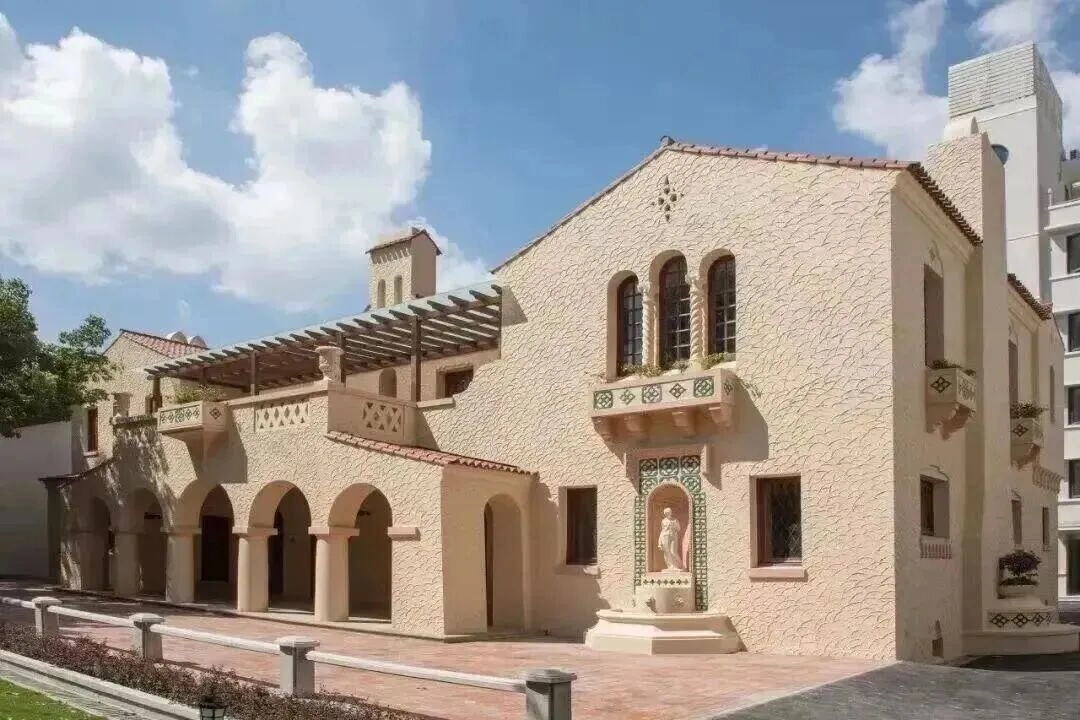
Capture date not stated by the source
Garden-side facade of 52 Yongfu Road: five arches, upper terrace and red-tiled roofs.
Image from the cited report or institutional source · Image source · Rights retained by the original creator
At a glance
- Construction / use dates
- 1932
- Architect
- Hazzard architectural practice
- Character
- Spanish-style garden house
- Original use
- Garden residence
- Use and access
- Later film-institution premises; follow current access arrangements
- Address
- 52 Yongfu Road
The beginning
Why was it built here?
Built in 1932, the garden house was designed by Hazzard’s practice. Accounts render its early owner’s name differently; the available records do not securely establish a single complete biography.[1] [2]
The house later accommodated the literary department of Shanghai Film Studio and, in the 1990s, Yongle film organisations. Repairs are recorded in 1996 and 2018; it was listed as a Shanghai historic building in 1999.[1] [2]
Look up, then look closer
Details worth a closer look
One building, changing roles
Read the building through time
Captions distinguish photographic dates from publication dates; periods without reliable images are covered in the text.
- 1932
- 1996–1999
- 2018
Today and visiting
Discover the building from the street
Later film-institution premises; follow current access arrangements[1] [2]
- Address
- 52 Yongfu Road
- Access
- View from public roads and permitted areas. Historic importance does not open residential gardens, stairs or institutional compounds to the public; follow posted access rules.
Sources checked: 2026-10-26 · View from public roads and permitted areas. Historic importance does not open residential gardens, stairs or institutional compounds to the public; follow posted access rules.
Shanghai and the world
Building and neighbourhood
Yongfu’s houses later accommodated film, diplomacy and domestic life. No. 52’s film-institution history belongs to this address, separate from its neighbours.[1] [2]
Text and image sources
This account is based on the sources below. Unverified details are identified as such. Where photographs are included, sources and licences are listed beneath each image.
- Architectural-heritage research: 52 Yongfu Road ↗
Checks dates, people, uses and architectural descriptions; reported uses belong to the source date.
- Shanghai Observer local report: Yongfu garden houses (2026) ↗
Checks dates, people, uses and architectural descriptions; reported uses belong to the source date.
Image handling and dating
Images come from the archives or image source pages listed beneath each photograph. We resize and compress them to WebP, preserving their original proportions without colourisation or added detail. Grain, blur and scanning marks in historical photographs are retained.
Publication and capture dates are distinct. Monochrome and file images are not automatically historical photographs; captions follow what the source establishes.