271 West Fuxing Road, Xuhui, Shanghai
Gaoyou Apartments
高邮公寓
Five storeys at the entrance to Gaoyou Road
Around 1935 the Van StellingWerf family commissioned this building, designed by the Realty Investment Company. Originally Cordier Apartments, it took its name from the adjoining road and was later renamed Gaoyou Apartments.
Explore the historical timeline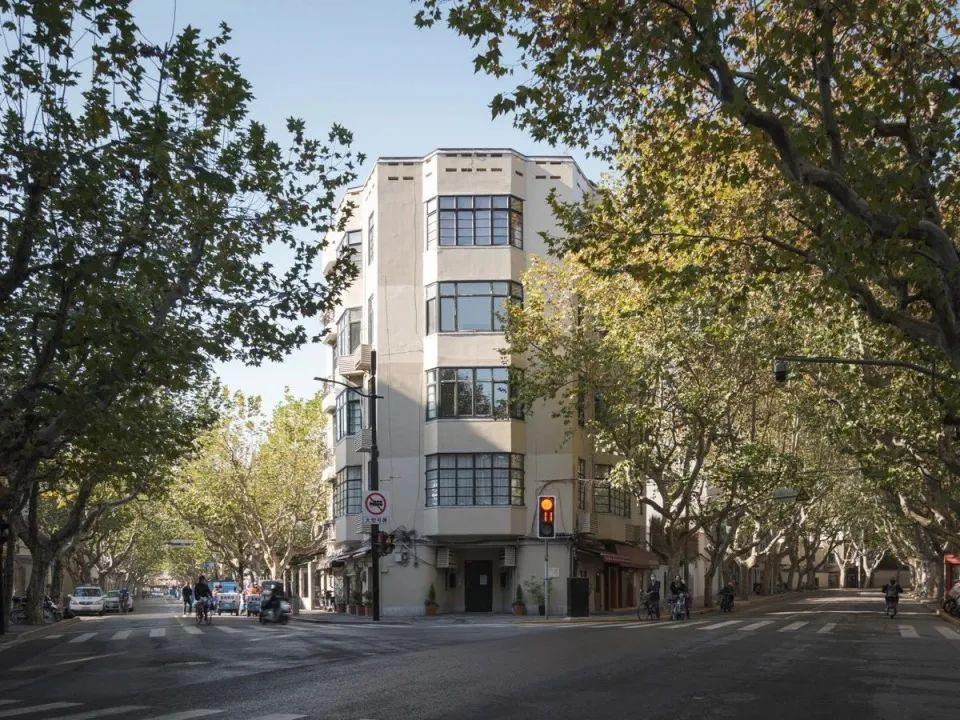
Capture date not stated; published 19 August 2023
Street view of Gaoyou Apartments, showing its corner and facade.
Shanghai housing authorities and heritage preservation centre; reproduced by The Paper Shanghai · Image source · Rights retained by the original creator
At a glance
- Construction date
- Around 1935
- Designer
- Realty Investment Company
- Architectural character
- Modern apartment building with Art Deco features
- Original use
- Residential apartments
- Present use
- Residential apartments
- Address
- 271 West Fuxing Road, Xuhui, Shanghai
Architecture and use: sources[1]
The beginning
Why was it built here?
Around 1935 the Van StellingWerf family commissioned this building, designed by the Realty Investment Company. Originally Cordier Apartments, it took its name from the adjoining road and was later renamed Gaoyou Apartments.[1]
Built as apartments, it was listed as a Xuhui heritage protection site in 2017. Its mass at the meeting of West Fuxing and Gaoyou roads gives the quieter street a distinct entrance.[1]
Look up, then look closer
Details worth a closer look
Corner and street
Five reinforced-concrete storeys stack the dwellings. Follow the corner first, then compare the balance of windows and wall on each floor to read the compact scale of the plot.[1]
Facade details
The facade favours clear geometric lines. Its Art Deco character lies in the relationship between openings, corner and floors rather than elaborate carving.[1]
One building, changing roles
Read the building through time
Captions distinguish photographic dates from publication dates; periods without reliable images are covered in the text.
- c.1935
Apartments completed
The Van StellingWerf family financed a five-storey reinforced-concrete apartment house designed by the Realty Investment Company at the road junction.[1]
- 1949+
Renamed from Cordier to Gaoyou Apartments
After 1949 Cordier Apartments became Gaoyou Apartments, taking a name connected with the adjoining road.[1]
- 2017
Listed as a Xuhui heritage protection site
Xuhui listed the corner residence as a heritage protection site, recognising the whole building rather than a single street facade.[1]
Today and visiting
Discover the building from the street
Residential apartments[1]
- Address
- 271 West Fuxing Road, Xuhui, Shanghai
- Access
- View the exterior from the public pavement. Stairs, entrance halls and homes are not public attractions.
Sources checked: 2026-10-26 · View the exterior from the public pavement. Stairs, entrance halls and homes are not public attractions.
Shanghai and the world
Two streets, one apartment building
Turning from West Fuxing Road into Gaoyou Road reveals another side of the same building. Compare it with Liangyou at Yongfu Road to see how different plots shape housing.[1]
Text and image sources
This account is based on the sources below. Unverified details are identified as such. Where photographs are included, sources and licences are listed beneath each image.
- Shanghai housing and heritage authorities: corner apartments guide (2023) ↗
Checks addresses, design attribution, building form and protection records.
Image handling and dating
Images come from the archives or image source pages listed beneath each photograph. We resize and compress them to WebP, preserving their original proportions without colourisation or added detail. Grain, blur and scanning marks in historical photographs are retained.
The photograph comes from the credited architectural guide; publication and capture dates differ. No verified historical building photograph was found, so no invented before-and-after view is shown.