上海市徐汇区湖南路8号
Zhao Dan’s Former Residence
赵丹旧居
A life in film behind curved balconies
Actor Zhao Dan and his family lived on the third floor of 8 Hunan Road from 1962 to 1979. Zhao (1915–1980) is remembered for films including Nie Er and Living Forever in Burning Flames. This address connects his screen career with domestic life.
Explore the historical timeline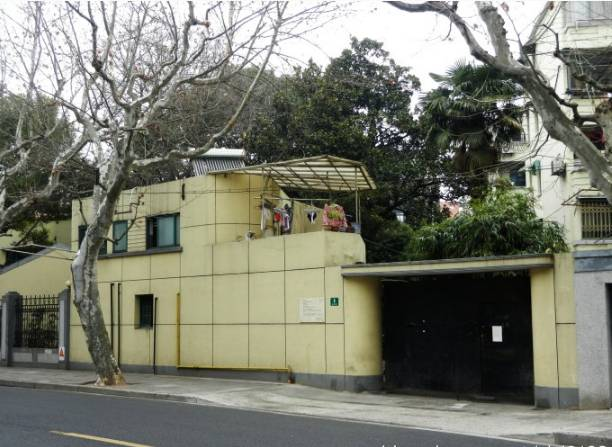
Capture date unknown
Entrance and wall at 8 Hunan Road, published by Leyou Shanghai in 2017; capture date unknown.
Photographer not individually credited; see source · Image source · Rights retained by original creators and source
At a glance
- Construction / use dates
- 1930 on the heritage plaque; a conflicting 1948 date remains unresolved
- Architect
- Not established in the reviewed sources
- Character
- Modern-style three-storey house with curved balconies
- Original use
- Garden residence
- Use and access
- Still residential; the tourism directory lists no public access
- Address
- 上海市徐汇区湖南路8号Hunan Road
The people behind the address
A life in brief
Zhao Dan (1915–1980) was a Chinese film actor. Active in theatre and cinema from the 1930s, he and his family lived on the third floor here from 1962 to 1979.[1] [2] [3]
Contributions and influence
Films including Nie Er and Living Forever in Burning Flames made his performances part of Chinese cinema history. The home connects those public works with the everyday setting behind them.[1] [2] [3]
The beginning
Why was it built here?
Actor Zhao Dan and his family lived on the third floor of 8 Hunan Road from 1962 to 1979. Zhao (1915–1980) is remembered for films including Nie Er and Living Forever in Burning Flames. This address connects his screen career with domestic life.[1] [2] [3]
Construction dates conflict: the photographed 2011 heritage plaque says 1930, the municipal tourism directory says the 1930s, and a 2017 Leyou Shanghai article says late 1948. These accounts remain distinguished pending original building records.[1] [2] [3]
Look up, then look closer
Details worth a closer look
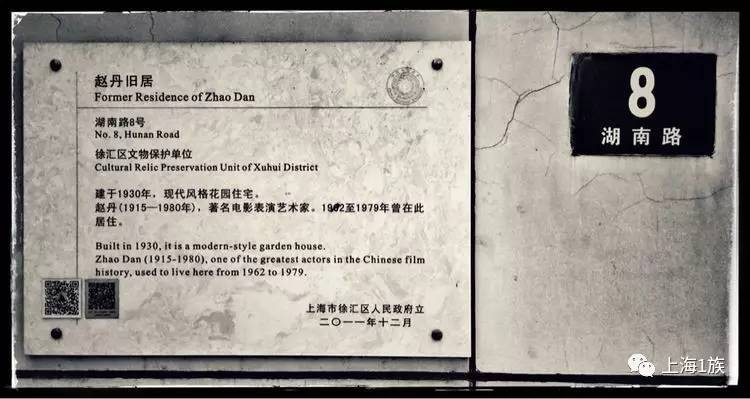
Capture date unknown
Number 8 beside the 2011 heritage plaque, whose text dates construction to 1930. Published in 2017; capture date unknown.
Yu Bing / Shanghai Yizu, article credit · Image source · Rights retained by original creators and source
One building, changing roles
Read the building through time
Captions distinguish photographic dates from publication dates; periods without reliable images are covered in the text.
- 1930 / 1948
- 1962–1979
- 2011
Today and visiting
Discover the building from the street
Still residential; the tourism directory lists no public access[1] [2] [3]
- Address
- 上海市徐汇区湖南路8号
- Approach
- Entrances, events and access can change; follow current notices. Historic significance does not make residential stairs, gardens or living spaces public.
Sources checked: 2026-10-26 · Entrances, events and access can change; follow current notices. Historic significance does not make residential stairs, gardens or living spaces public.
Shanghai and the world
Place the address in the city
Zhao Dan also lived in the Wukang Building. Walking from Hunan Road to Wukang Road connects different chapters of his life; the dates and images of the two residences should remain distinct.[1] [2] [3]
More photographs
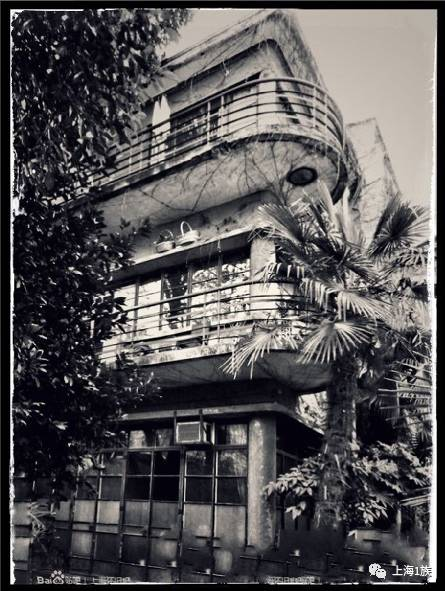
Capture date unknown
Curved balconies of Zhao Dan’s former home. The source uses a monochrome image without a capture date; it is not a dated archival photograph.
Photographer not individually credited; see source · Image source · Rights retained by original creators and source
Text and image sources
This account is based on the sources below. Unverified details are identified as such. Where photographs are included, sources and licences are listed beneath each image.
- Building and local-history source ↗
Used to check dates, uses and architectural descriptions; photo dates are separately identified.
- Further research and biography ↗
Used to check dates, uses and architectural descriptions; photo dates are separately identified.
- Further research and biography ↗
Used to check dates, uses and architectural descriptions; photo dates are separately identified.
- Street and photograph source ↗
Used to check dates, uses and architectural descriptions; photo dates are separately identified.
Image handling and dating
Images come from the archives or image source pages listed beneath each photograph. We resize and compress them to WebP, preserving their original proportions without colourisation or added detail. Grain, blur and scanning marks in historical photographs are retained.
Images without a documented capture date are marked undated; publication is not photography. No invented before-and-after view substitutes for a verified historic photograph.