25, Lane 5, Gaoyou Road
Zheng Zhenduo’s Former Home
郑振铎旧居
A wartime guardian of books in Shanghai
This small house stands inside Lane 5 and predates Zheng’s arrival. A Palace Museum chronology places his residence in 1943–1945, while a local guide starts in 1942; the starting dates differ.
Explore the historical timeline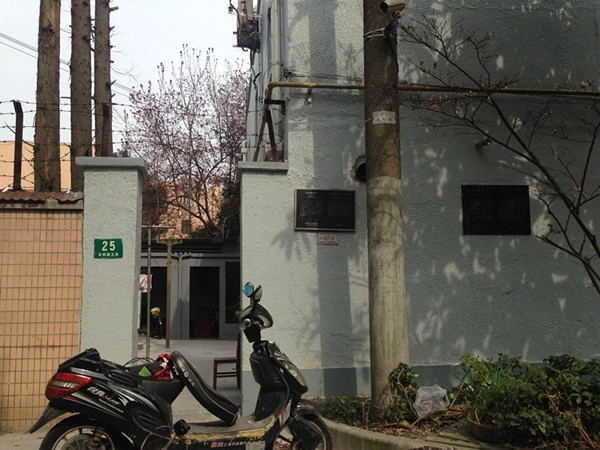
Capture date not stated by the source
Gate, boundary wall and house at Zheng Zhenduo’s former home, 25, Lane 5, Gaoyou Road.
Image from the cited report or institutional source · Image source · Rights retained by the original creator
At a glance
- Construction / use dates
- Reported as 1935–1937; exact year unresolved
- Architect
- Not established in reviewed sources
- Character
- Two-storey brick-and-timber garden house
- Original use
- Garden residence
- Use and access
- Residential or institutional premises; view the exterior first
- Address
- 25, Lane 5, Gaoyou Road
The people behind the address
A life in brief
Zheng Zhenduo (1898–1958) was a writer, translator, literary historian and collector, later the first head of the PRC’s cultural-heritage administration.[1] [2] [3]
Contributions and influence
During the war he worked with colleagues to buy and preserve books at risk of dispersal, turning collecting into public cultural protection. The Palace Museum documents that sustained work through records and a chronology.[1] [2] [3]
The beginning
Why was it built here?
This small house stands inside Lane 5 and predates Zheng’s arrival. A Palace Museum chronology places his residence in 1943–1945, while a local guide starts in 1942; the starting dates differ.[1] [2] [3]
The address is associated with his wartime efforts to safeguard old books. It records a scholar’s work and domestic life during upheaval, not a purpose-built museum; the resident’s story is distinct from the building’s construction history.[1] [2] [3]
Look up, then look closer
Details worth a closer look
One building, changing roles
Read the building through time
Captions distinguish photographic dates from publication dates; periods without reliable images are covered in the text.
- 1935–1937
- 1943–1945
- 2015
Today and visiting
Discover the building from the street
Residential or institutional premises; view the exterior first[1] [2] [3]
- Address
- 25, Lane 5, Gaoyou Road
- Access
- View from public roads and permitted areas. Historic importance does not open residential gardens, stairs or institutional compounds to the public; follow posted access rules.
Sources checked: 2026-10-26 · View from public roads and permitted areas. Historic importance does not open residential gardens, stairs or institutional compounds to the public; follow posted access rules.
Shanghai and the world
Building and neighbourhood
Gaoyou’s history extends beyond street facades into short residential lanes. This modest house contrasts in scale with the monumental columns at No. 68.[1] [2] [3]
Text and image sources
This account is based on the sources below. Unverified details are identified as such. Where photographs are included, sources and licences are listed beneath each image.
- Shanghai Xuhui: Gaoyou Road’s buildings and people (2019) ↗
Checks dates, people, uses and architectural descriptions; reported uses belong to the source date.
- Palace Museum: Zheng Zhenduo exhibition and chronology ↗
Checks dates, people, uses and architectural descriptions; reported uses belong to the source date.
- The Paper: Zheng Zhenduo’s Gaoyou Road home (2015) ↗
Checks dates, people, uses and architectural descriptions; reported uses belong to the source date.
Image handling and dating
Images come from the archives or image source pages listed beneath each photograph. We resize and compress them to WebP, preserving their original proportions without colourisation or added detail. Grain, blur and scanning marks in historical photographs are retained.
Publication and capture dates are distinct. Monochrome and file images are not automatically historical photographs; captions follow what the source establishes.