No. 29, the Bund · Zhongshan East First Road
Banque de l’Indochine Building
东方汇理银行大楼
Three storeys linking Shanghai with France’s overseas financial network
Explore the past and present of No. 29 on the Bund through authentic photographs, architectural details and a historical timeline.
Follow its history through photographs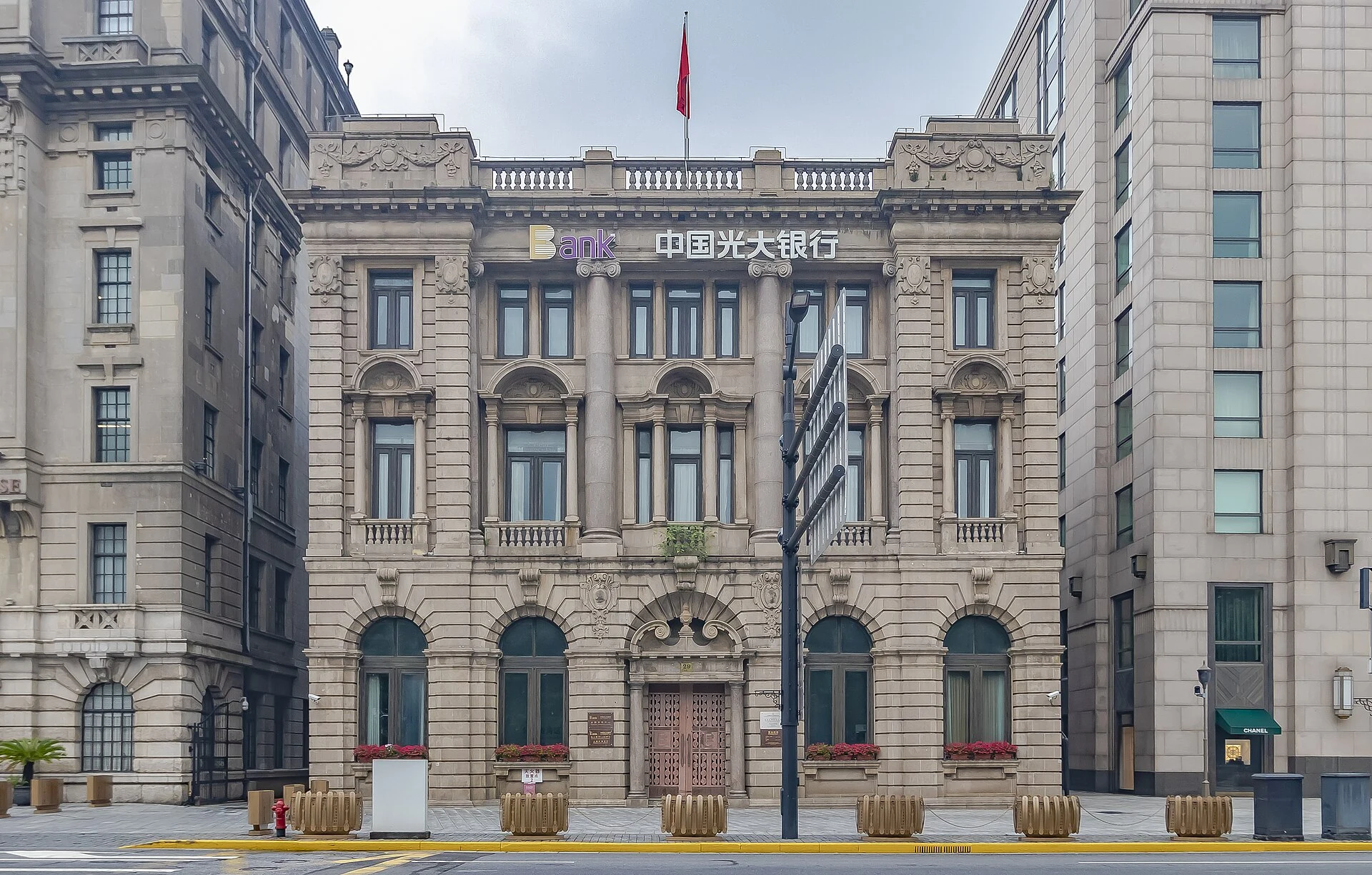
18 June 2021
The former Banque de l’Indochine’s river-facing front. Tall arched windows and classical columns give the three-storey building a distinct presence in the northern streetscape.
ScareCriterion12 · Image source · CC BY-SA 4.0
At a glance
- Construction
- Early 1910s–1914The encyclopedia gives a 1911 start; the urban construction archive lists 1912–1914
- Design
- Atkinson & DallasAtkinson & Dallas
- Style
- Neoclassical with Baroque detailsRead alongside the façade and original use.
- Original use
- Banque de l’Indochine Shanghai BranchOriginal function of the surviving building.
- Current use
- China Everbright Bank-related banking and officesAccording to the official historic-building register; occupants and arrangements are determined by the operator.
- Location
- 29 Zhongshan East 1st RoadNorthern Bund
The beginning
Why was it built here?
The surviving building at 29 the Bund was commissioned by the French-backed Banque de l’Indochine but designed by the British practice Atkinson & Dallas. Investor, designer and host city do not fit a single national label—a characteristic of Bund architectural history.[1] [3]
The bank moved to this address in 1907, then demolished and rebuilt. Today’s three-storey building was completed in 1914. Earlier Bund photographs bearing the bank’s name may show its predecessor and should not be presented as early portraits of the surviving building.[1] [3]
Look up, then look closer
Three details worth a closer look
Three storeys can still make a tall façade
Few floors, generous storey heights and large windows give the building a dignified mass. Compare it with Glen Line to the south rather than equating floor count with height.[3]
A gap in the entrance pediment
A broken pediment above the portico, columns and carving make the entrance livelier than the sides. Look successively at doors, windows and capitals to see how decoration concentrates at key points.[3]
A horizontal roof steadies the outline
A balustraded parapet forms a straight upper boundary, while central columns span the upper floors. Only a narrow gap separates it from the Peninsula Hotel to the north; there is no street opening to Yuanmingyuan Road here.[3]
One building, changing roles
History unfolds between the photographs
From earlier buildings to the one standing today. Captions distinguish photographic dates from publication dates; periods without reliable images are covered in the text.
- 1889
A Shanghai branch opens
Banque de l’Indochine established its Shanghai branch, initially somewhere other than the present new building at 29 the Bund.[1]
- 1907
Moving to 29 the Bund
After the Russo-Chinese Bank moved to 15 the Bund, Banque de l’Indochine occupied this address. The change of occupant preceded the new building.[1]
- Early 1910s–1914
- Early 20th century
The bank façade is photographed
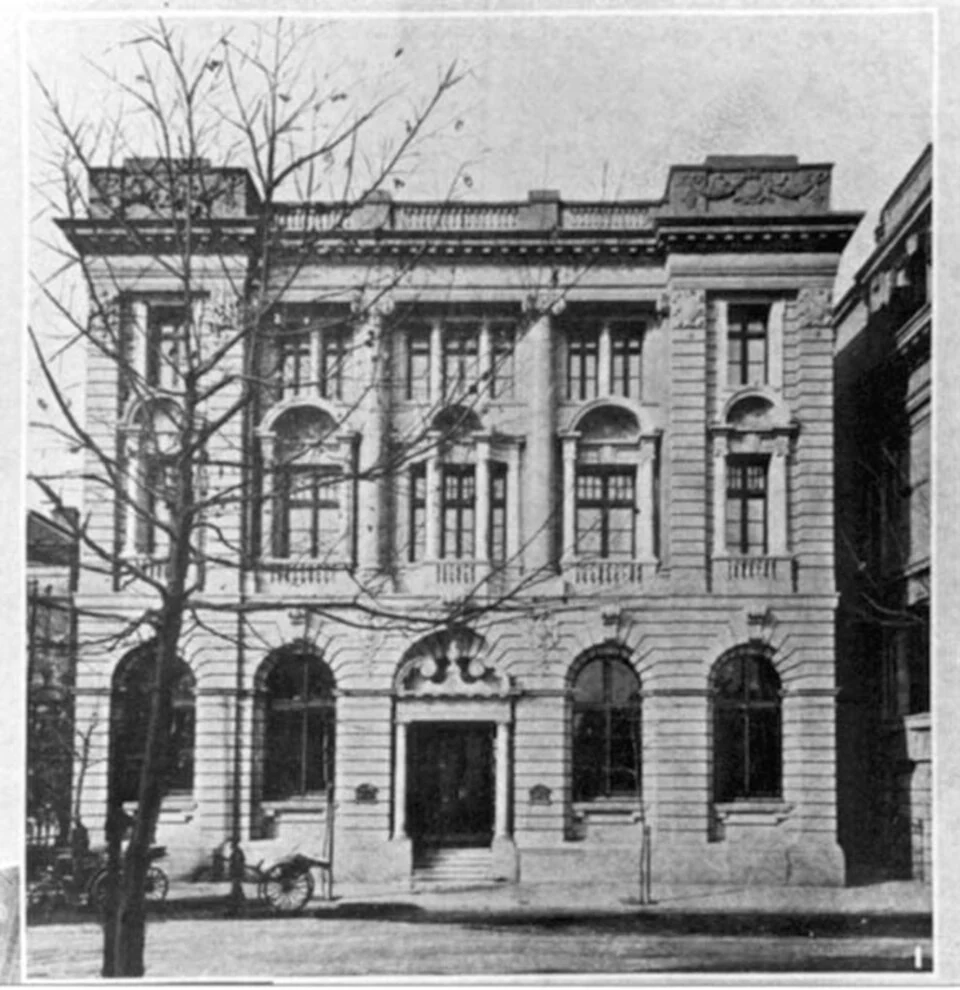
The historical view shows the surviving three-storey façade and entrance. Its exposure year is unknown; the Commons file’s 2014 digital record is not a historical exposure date.[1]
Early 20th century · exposure year unknown
Historical view of the surviving Banque de l’Indochine Building. The year 2014 in the Commons record concerns the digital file, not the year this photograph was taken.
Photographer unknown · Image source · Public domain
- After 1956
The Dongfang Building period
After takeover, it was called the Dongfang Building and used by transport administration. Former bank buildings also served other urban functions.[1]
- Recent years
Banking use continues
Shanghai’s Outstanding Historic Buildings register lists use by China Everbright Bank. Current visiting and business arrangements remain subject to on-site and operator information.[2]
Today and visiting
Discover the building from the street
View the whole silhouette from the riverside promenade, then approach along the pavement to examine entrances and stonework.[2]
- Exterior
- View the front from the Huangpu River side; use nearby pedestrian crossings.
- Details
- Look for entrances, capitals and window rows; avoid lingering in doorways.
- Interior access
- The building remains in use. Follow the operator’s rules that day for visits, photography and business access.
Sources checked: 2026-10-19 · This architectural account does not imply public access to interiors. Historical opening hours are not evidence of current access.
Shanghai and the world
A meeting point of France, Asia and Shanghai
Banque de l’Indochine’s business was rooted in France’s overseas financial system in Asia. Its Shanghai branch stood on the International Settlement’s Bund, rather than operating only in the French Concession. Banking networks, concession boundaries and design origins did not simply coincide.[1]
Text and image sources
This article reorganizes the sources below. Text adapted and condensed from Wikipedia, including its translations here, is provided under CC BY-SA 4.0; the original contributors are listed in the article’s revision history. Image licences are listed separately beneath each photograph.
- Wikipedia · Banque de l’Indochine Building ↗
Basic history and architectural information; the source article was rewritten and arranged in Chinese.
- Shanghai Housing Administration · First batch of Outstanding Historic Buildings ↗
The register records China Everbright Bank use at 29 Zhongshan East 1st Road; no inference is made about specific spaces currently open.
- Shanghai Urban Construction Archives · Buildings of the Bund ↗
Building profiles published by Shanghai Urban Construction Archives; dates that differ from other accounts are noted in the text.
Image handling and dating
Images come from the archives or image source pages listed beneath each photograph. We resize and compress them to WebP, preserving their original proportions without colourisation or added detail. Grain, blur and scanning marks in historical photographs are retained.
Photographs retain their original proportions and colours; they have only been resized and converted to WebP. Preview and full-resolution images show the same frame.
Dates for historical photographs distinguish exposure, publication and digitisation according to the source.
The exact year of the historical photograph remains unconfirmed; the 2014 digital record is not used as a historical date.