No. 28, the Bund · Zhongshan East First Road
Glen Line Building
格林邮船大楼
From ocean shipping to broadcasting and financial clearing
Explore the past and present of No. 28 on the Bund through authentic photographs, architectural details and a historical timeline.
Follow its history through photographs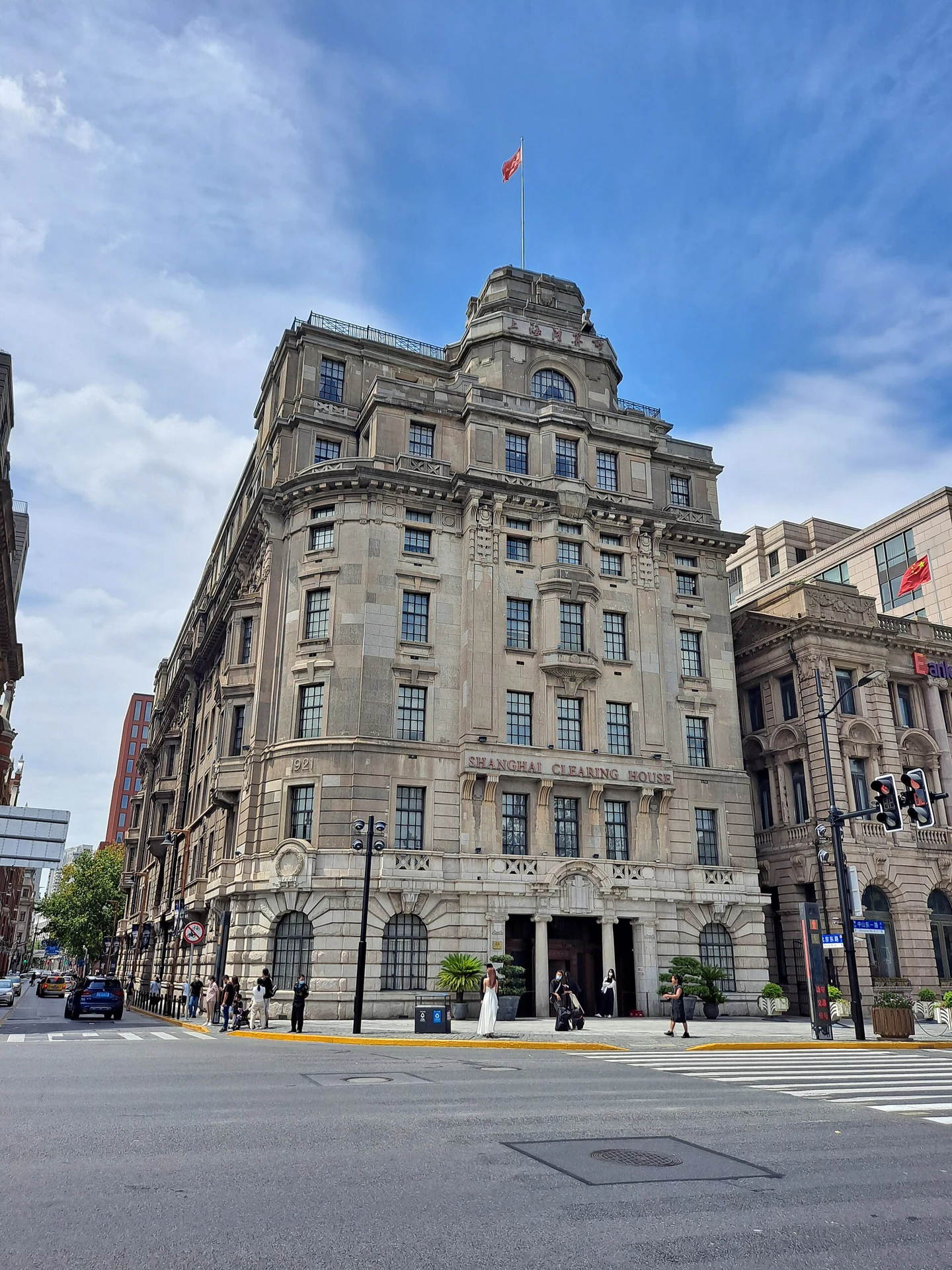
28 August 2022
Glen Line today: the Shanghai Clearing House name above the entrance identifies its current use. Tower, balconies and portico create vertical layers.
钉钉 · Image source · CC BY-SA 4.0
At a glance
- Construction
- 1920–1922According to Shanghai Urban Construction Archives
- Design
- Palmer & TurnerPalmer & Turner
- Style
- Eclectic, with a neoclassical foundationRead alongside the façade and original use.
- Original use
- Shipping-company officesOriginal function of the surviving building.
- Current use
- Shanghai Clearing HouseInstitutional information checked through October 2026.
- Location
- 2 Beijing East Road · 28 the BundCorner on the north side of Beijing East Road
The beginning
Why was it built here?
No. 28 the Bund faces Jardine across Beijing East Road. The property once belonged to the German firm Siemssen & Co.; after the First World War, British-owned Yitai acquired it. Its connection with Glen Line shipping gave the new building its name.[1] [3]
Later, shipping was only one chapter. Postwar news organisations and radio transformed it from a maritime office hub into a place transmitting voices and news. Today it serves the daily work of financial infrastructure.[1] [3]
Look up, then look closer
Three details worth a closer look
Watch the roof narrow in stages
The upper centre rises progressively from the broad main body into a prominent tower. In contrast to Jardine’s flatter roof to the south, it frames the Beijing East Road junction.[3]
Two entrances around one corner
The river-facing entrance and the Beijing East Road entrance use different column treatments. Turn along the public pavement to see how each is set into the same stone walls.[3]
Balconies give the surface depth
Central bay windows and balconies project outward, producing richer shadows up close. Heavier lower stonework and lighter upper openings balance the building’s apparent weight.[3]
One building, changing roles
History unfolds between the photographs
From earlier buildings to the one standing today. Captions distinguish photographic dates from publication dates; periods without reliable images are covered in the text.
- Late 19th century
- 1920–1922
Glen Line Building is constructed
Palmer & Turner’s new building established the main mass seen today, housing shipping-company business.[3]
- Published in 1927
An early architectural portrait
Plate 14 of Shanghai of Today records the early exterior. Its year is the publication date, not a known exposure date.[3] [5]
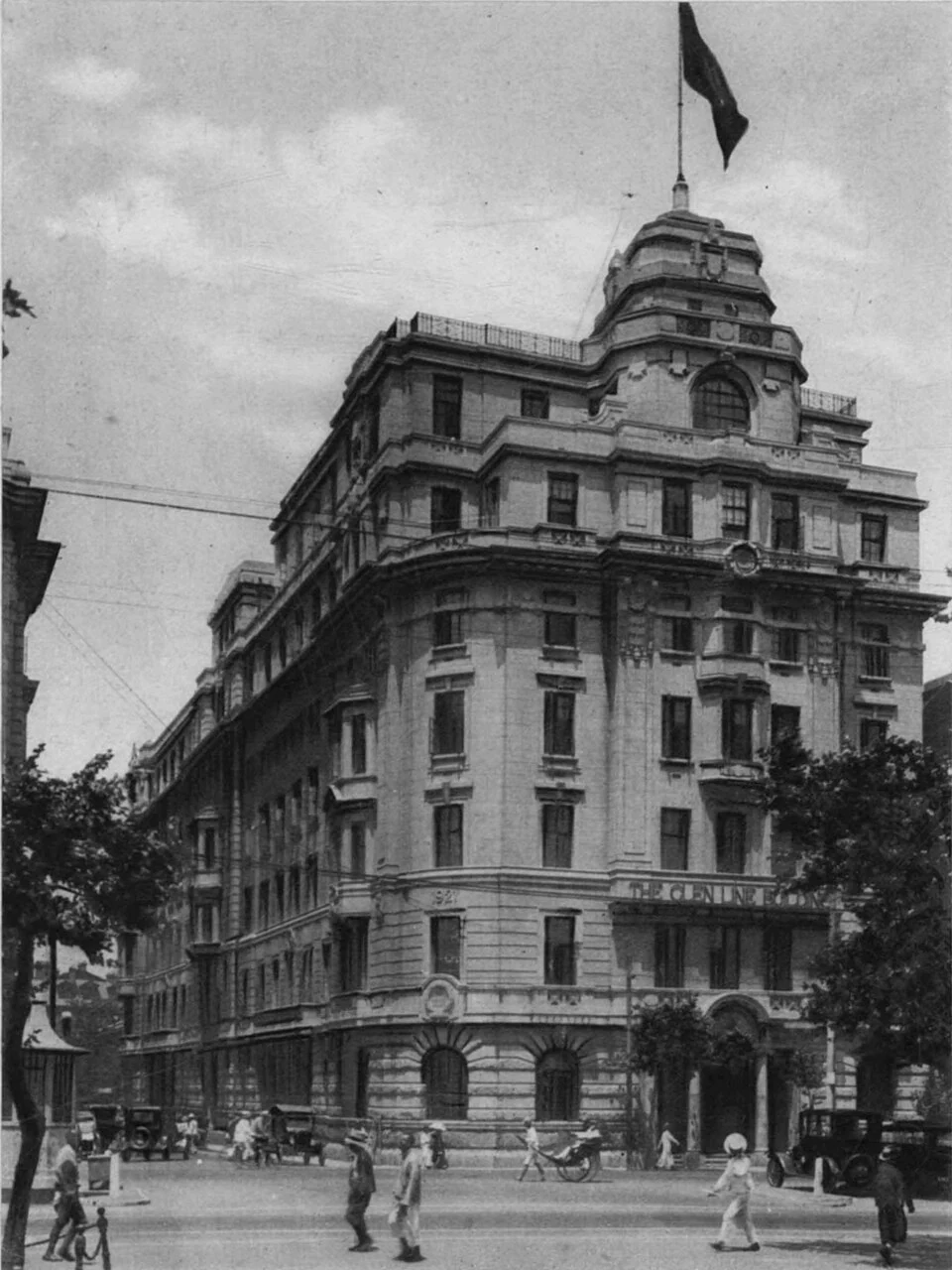
Published in 1927 · exposure date unknown
Plate 14 of Shanghai of Today. The early photograph records the relationship between the roof, balconies and surrounding streets.
Photographer unknown; published by A. S. Watson & Co. · Image source · Public domain
- 1945
US Navy use
US Navy archives preserve a photograph taken on 19 October 1945, recording the postwar period when US naval organisations in China occupied the building.[4]
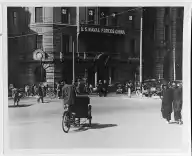
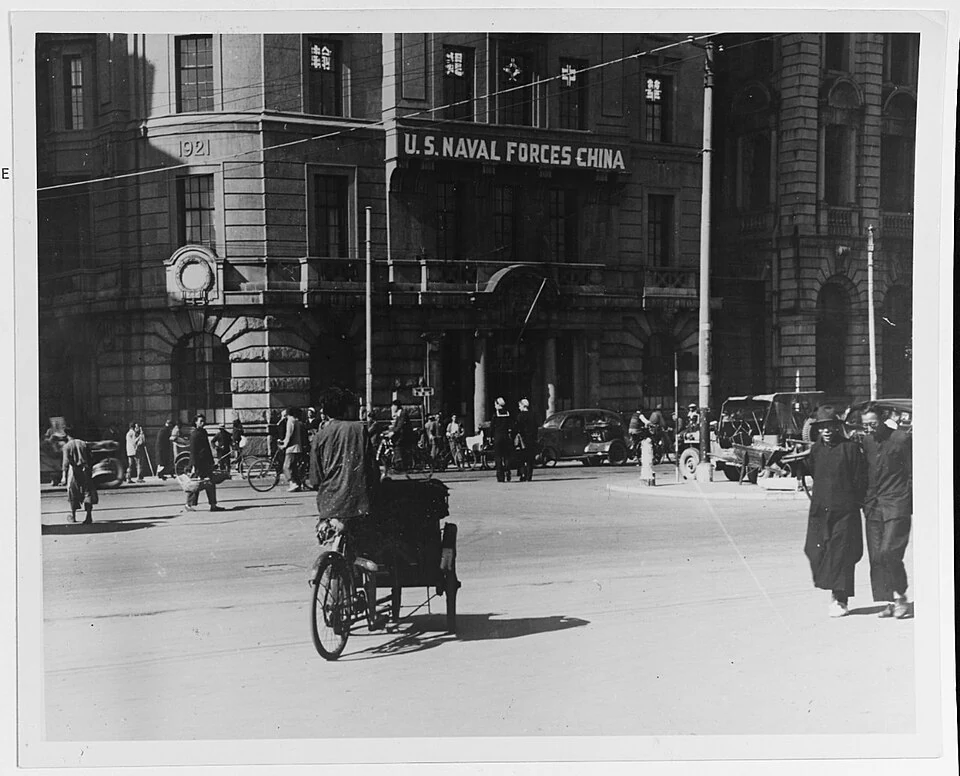
19 October 1945
US National Archives photograph 80-G-495874: the exterior while US naval organisations in China used the Glen Line Building.
National Archives 80-G-495874 · Image source · Public domain
- 1951–1996
Broadcasting from this address
Shanghai People’s Radio moved in during 1951 and worked here for decades before leaving in 1996. Many residents remember it as the Broadcasting Building.[1]
- Today
Home to Shanghai Clearing House
Shanghai Clearing House’s website lists 2 Beijing East Road, this building at 28 the Bund, as its contact address. Clearing operations continue its everyday office use.[2]
Today and visiting
Discover the building from the street
View the whole silhouette from the riverside promenade, then approach along the pavement to examine entrances and stonework.[2]
- Exterior
- View the front from the Huangpu River side; use nearby pedestrian crossings.
- Details
- Look for entrances, capitals and window rows; avoid lingering in doorways.
- Interior access
- The building remains in use. Follow the operator’s rules that day for visits, photography and business access.
Sources checked: 2026-10-19 · This architectural account does not imply public access to interiors. Historical opening hours are not evidence of current access.
Shanghai and the world
Three kinds of connection: ports, news and finance
Shipping schedules, news and financial transactions seem different but all depend on communication across distances. Successive shipping, news, broadcasting and clearing organisations have repeatedly changed how this address connects with the world.[1]
Text and image sources
This article reorganizes the sources below. Text adapted and condensed from Wikipedia, including its translations here, is provided under CC BY-SA 4.0; the original contributors are listed in the article’s revision history. Image licences are listed separately beneath each photograph.
- Wikipedia · Glen Line Building ↗
Basic history and architectural information; the source article was rewritten and arranged in Chinese.
- Shanghai Clearing House · Contact us ↗
The official contact address is 2 Beijing East Road, Huangpu District, Shanghai.
- Shanghai Urban Construction Archives · Buildings of the Bund ↗
Building profiles published by Shanghai Urban Construction Archives; dates that differ from other accounts are noted in the text.
- Historical photograph · File description and original source ↗
Checks the depicted subject, provenance and publication year; unknown exposure dates are explicitly marked.
Image handling and dating
Images come from the archives or image source pages listed beneath each photograph. We resize and compress them to WebP, preserving their original proportions without colourisation or added detail. Grain, blur and scanning marks in historical photographs are retained.
Photographs retain their original proportions and colours; they have only been resized and converted to WebP. Preview and full-resolution images show the same frame.
Dates for historical photographs distinguish exposure, publication and digitisation according to the source.