No. 27, the Bund · Zhongshan East First Road
Jardine Matheson Building
怡和洋行大楼
A broad trading-house façade at the Beijing East Road corner
Explore the past and present of No. 27 on the Bund through authentic photographs, architectural details and a historical timeline.
Follow its history through photographs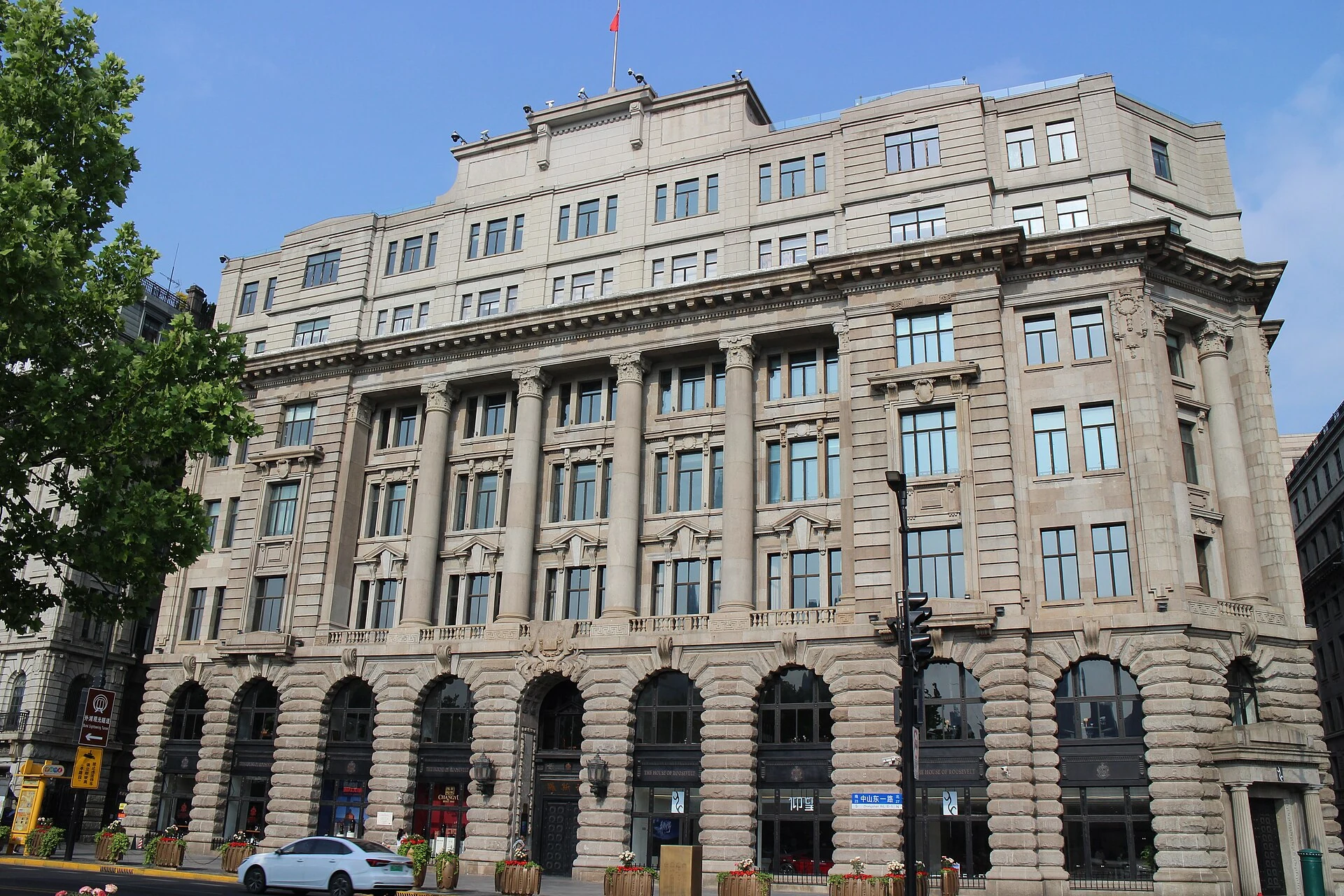
1 May 2025
Jardine Matheson’s river-facing side. Today’s upper floors include later additions and should not all be treated as the original early-1920s form.
Suicasmo · Image source · CC0 1.0
At a glance
- Construction
- Early 1920sWikipedia records completion in 1922; the urban construction archive lists 1920–1923
- Design
- Accounts name the Si Jiusheng / Mahai practicesThe urban construction archive credits Si Jiusheng; Wikipedia credits the architect Si Jinsheng of the Mahai practice.
- Style
- NeoclassicalRead alongside the façade and original use.
- Original use
- Jardine Matheson officesOriginal function of the surviving building.
- Current use
- Commerce, restaurants and officesInstitutional information checked through October 2026.
- Location
- 27 Zhongshan East 1st RoadNorthern Bund
The beginning
Why was it built here?
Jardine Matheson was among the British trading firms that entered Shanghai soon after the port opened. It occupied and rebuilt successive premises at 27 the Bund. Today’s stone building dates from the 1920s rebuilding, not the nineteenth-century predecessor with verandas.[1] [3]
Jardine’s business included imports, exports, shipping and industrial investment; its early activities also involved the opium trade. The Bund’s grand commercial buildings were closely tied to colonial trade, a history that should not be omitted.[1] [3]
Look up, then look closer
Three details worth a closer look
Giant columns organise a broad front
Central columns spanning several floors unify the window rows, supported by arches and heavy stone walls below. The river-facing front particularly conveys the scale of this trading-house office.[3]
The building continues around the corner
Beijing East Road opens along its north side, exposing the river and side façades together. Glen Line across the street offers a comparison of two office layouts.[3]
The roof shows the most change
Later additions altered the upper levels from those in early photographs. First locate the original cornice and columns, then the added floors, rather than treating today’s entire silhouette as original.[3]
One building, changing roles
History unfolds between the photographs
From earlier buildings to the one standing today. Captions distinguish photographic dates from publication dates; periods without reliable images are covered in the text.
- 1840s
Jardine arrives in Shanghai
After the port opened, Jardine established a Shanghai operation and acquired Bund premises. Its first offices looked very different from the surviving stone building.[1]
- 1861
- Early 1920s
- 1920s
The original roof in old photographs
A northern Bund streetscape published in 1927 shows Jardine’s giant-column front; its roof then differed from today’s expanded upper levels.[3] [4]
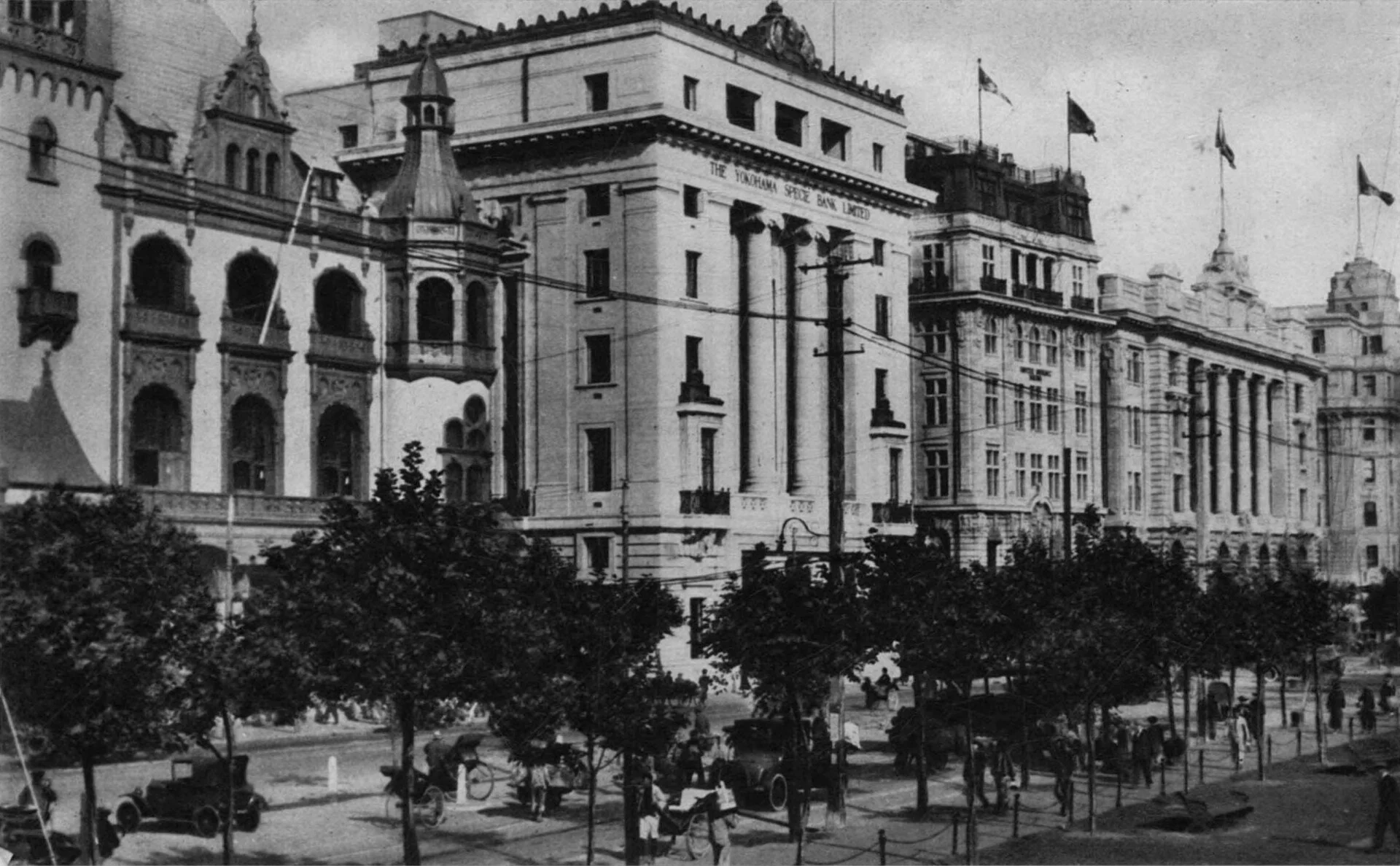
Published in 1927 · exposure date unknown
Jardine occupies the right half of Plate 12 of Shanghai of Today, allowing comparison with its enlarged roof today. Glen Line is also visible farther away.
Photographer unknown; published by A. S. Watson & Co. · Image source · Public domain
- 1980s
- Today
A new life at 27 the Bund
The building now houses commercial, restaurant and office spaces. The House of Roosevelt website lists 27 the Bund. Each venue has its own services and reservations.[2]
Today and visiting
Discover the building from the street
View the whole silhouette from the riverside promenade, then approach along the pavement to examine entrances and stonework.[2]
- Exterior
- View the front from the Huangpu River side; use nearby pedestrian crossings.
- Details
- Look for entrances, capitals and window rows; avoid lingering in doorways.
- Interior access
- The building remains in use. Follow the operator’s rules that day for visits, photography and business access.
Sources checked: 2026-10-19 · This architectural account does not imply public access to interiors. Historical opening hours are not evidence of current access.
Shanghai and the world
From trading house to urban property
Jardine’s network linked Shanghai with Hong Kong, Britain and other ports. It traded goods and invested in industry and infrastructure, making this office a window onto how modern commercial capital entered urban space.[1]
Text and image sources
This article reorganizes the sources below. Text adapted and condensed from Wikipedia, including its translations here, is provided under CC BY-SA 4.0; the original contributors are listed in the article’s revision history. Image licences are listed separately beneath each photograph.
- Wikipedia · Jardine Matheson Building ↗
Basic history and architectural information; the source article was rewritten and arranged in Chinese.
- House of Roosevelt, Shanghai · Official website ↗
Checks present restaurant and club use at 27 the Bund; does not infer every tenant in the building.
- Shanghai Urban Construction Archives · Buildings of the Bund ↗
Building profiles published by Shanghai Urban Construction Archives; dates that differ from other accounts are noted in the text.
- Historical photograph · File description and original source ↗
Checks the depicted subject, provenance and publication year; unknown exposure dates are explicitly marked.
Image handling and dating
Images come from the archives or image source pages listed beneath each photograph. We resize and compress them to WebP, preserving their original proportions without colourisation or added detail. Grain, blur and scanning marks in historical photographs are retained.
Photographs retain their original proportions and colours; they have only been resized and converted to WebP. Preview and full-resolution images show the same frame.
Dates for historical photographs distinguish exposure, publication and digitisation according to the source.
The archival image is a streetscape published in 1927. At the Bank of China site it shows the predecessor of the surviving tower; Yangtze and Jardine are identified by their positions in the frame.