210 Wukang Road
The Romeo Balcony
罗密欧阳台
A literary image above a real front door
No. 210 is a house built in 1932. Its famous balcony has no historical connection to Shakespeare’s characters living here: Chen Danyan recorded a friend imagining it as a balcony Romeo might climb. Literature changed how people saw the house, without giving it a former official name.
Explore the historical timeline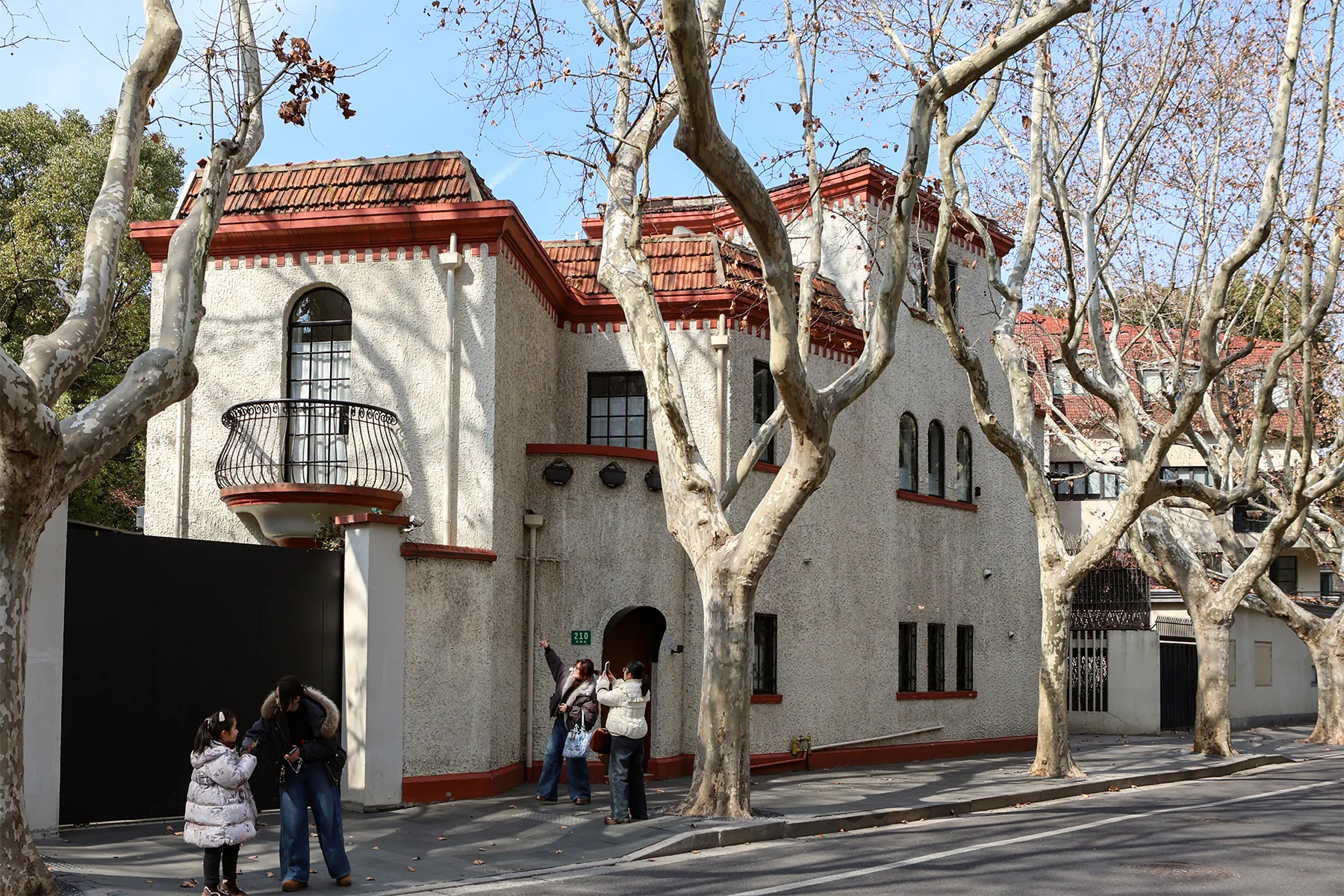
9 February 2026
No. 210 from the street: balcony, roughcast walls, red tiles and street entrance.
Windmemories · Image source · CC BY-SA 4.0
At a glance
- Built
- 1932Date recorded by Shanghai Library
- Architect
- Eastern Asia Development Co.Linked design firm; individual architect unnamed
- Style
- Spanish-style housePale walls, red tiles and a curved balcony
- Original use
- Private residenceSeveral families and changes of ownership
- Use today
- Historic residenceNot a public Shakespeare attraction
- Address
- 210 Wukang Road“Romeo Balcony” is a literary nickname
The beginning
Why was it built here?
No. 210 is a house built in 1932. Its famous balcony has no historical connection to Shakespeare’s characters living here: Chen Danyan recorded a friend imagining it as a balcony Romeo might climb. Literature changed how people saw the house, without giving it a former official name.[1] [2]
The library records changing owners in the 1930s, Li Cangzhuo’s purchase in 1951 and the later gradual return of property rights. Behind this doorway is a history of actual families and displacement that a romantic nickname cannot replace.[1] [2]
Look up, then look closer
Three details worth a closer look
20 October 2009
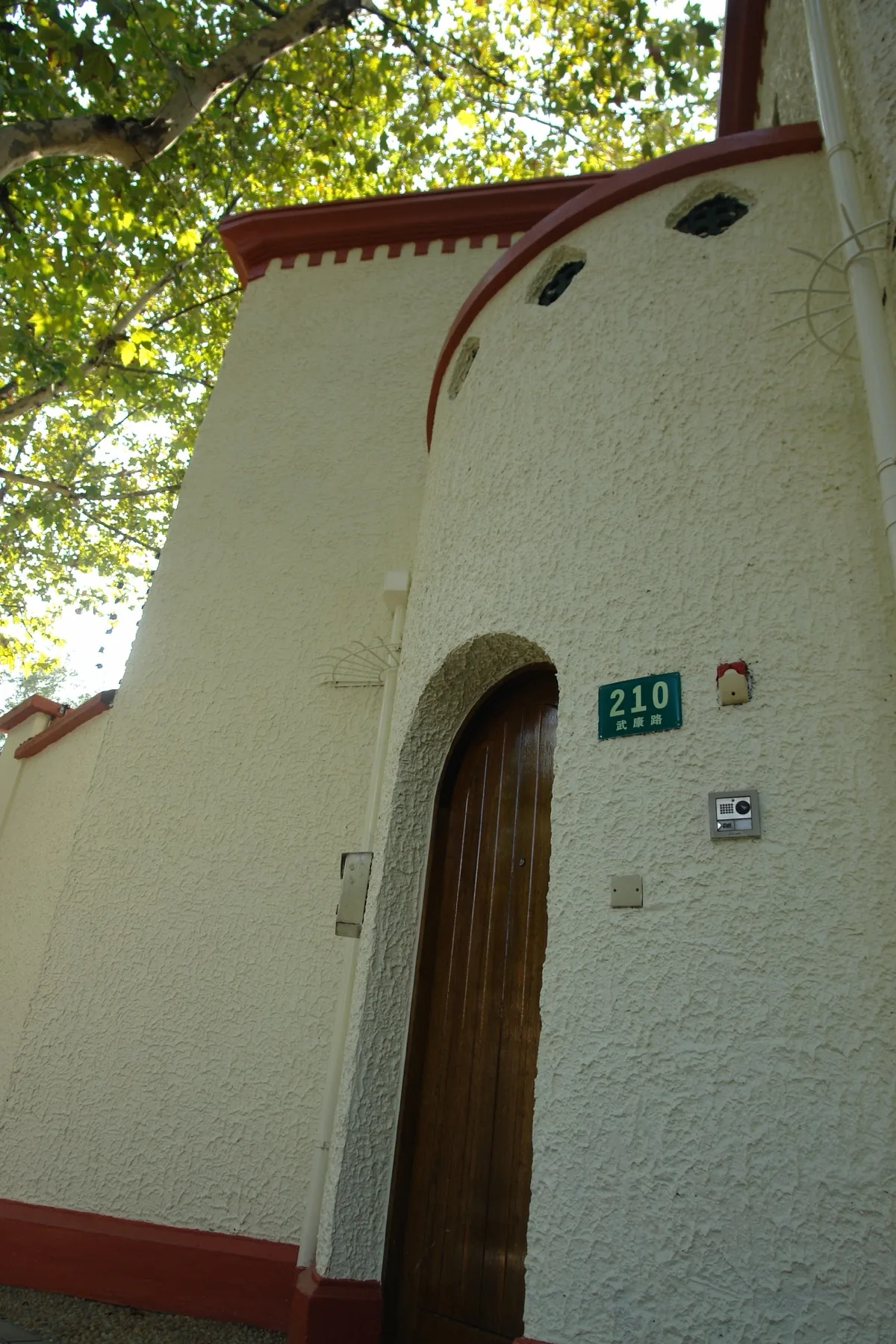
Entrance and curved wall in 2009: a dated earlier photograph, not a view of the house on completion in 1932.
Shypanda · Image source · CC BY 3.0
One building, changing roles
Read the building through time
Captions distinguish photographic dates from publication dates; periods without reliable images are covered in the text.
- 1932
- 1951
- 1976–1984
- 2015
Today and visiting
Discover the building from the street
Observe the No. 210 plate, curved wall and balcony from the public pavement. Do not climb, knock on the door or treat a home as a theatrical set.[1] [2]
- What to notice
- A small curved balcony · Textured render and red edges · Arches and straight lines
- Access
- View from public pavements. Do not enter residential stairs, private gardens or school grounds, or photograph through residents’ windows.
Sources checked: 2026-10-22 · Follow signs and local access rules. Documentary research does not grant entry.
Shanghai and the world
Connections along the street
No. 129 also has a much-photographed balcony, but its designer and history differ. Literary associations invite observation; addresses and documents identify the actual places.[1] [2]
Text and image sources
This account is based on the sources below. Unverified details are identified as such. Where photographs are included, sources and licences are listed beneath each image.
- Shanghai Library · Romeo Balcony ↗
Building and ownership chronology; literary nickname. Storey fields differ, so no precise storey count is asserted.
- Shanghai Library · Eastern Asia Development Co. ↗
Design organization linked from No. 210; no individual architect inferred.
Image handling and dating
Images come from the archives or image source pages listed beneath each photograph. We resize and compress them to WebP, preserving their original proportions without colourisation or added detail. Grain, blur and scanning marks in historical photographs are retained.
Photographs retain their original framing; only camera orientation, size and compression are adjusted. Dates are capture dates. Different viewpoints are not presented as restoration comparisons; periods without licensed images remain textual.