上海市徐汇区五原路314号
Former China Welfare Foundation Nursery
中国福利基金会托儿所旧址
A garden residence becomes a place of childcare
Soong Ching Ling founded the nursery in 1949 on North Shaanxi Road; it moved to this 1932 house at the end of that year. Distinguishing foundation from relocation clarifies Wuyuan Road’s role in the history of childcare.
Explore the historical timeline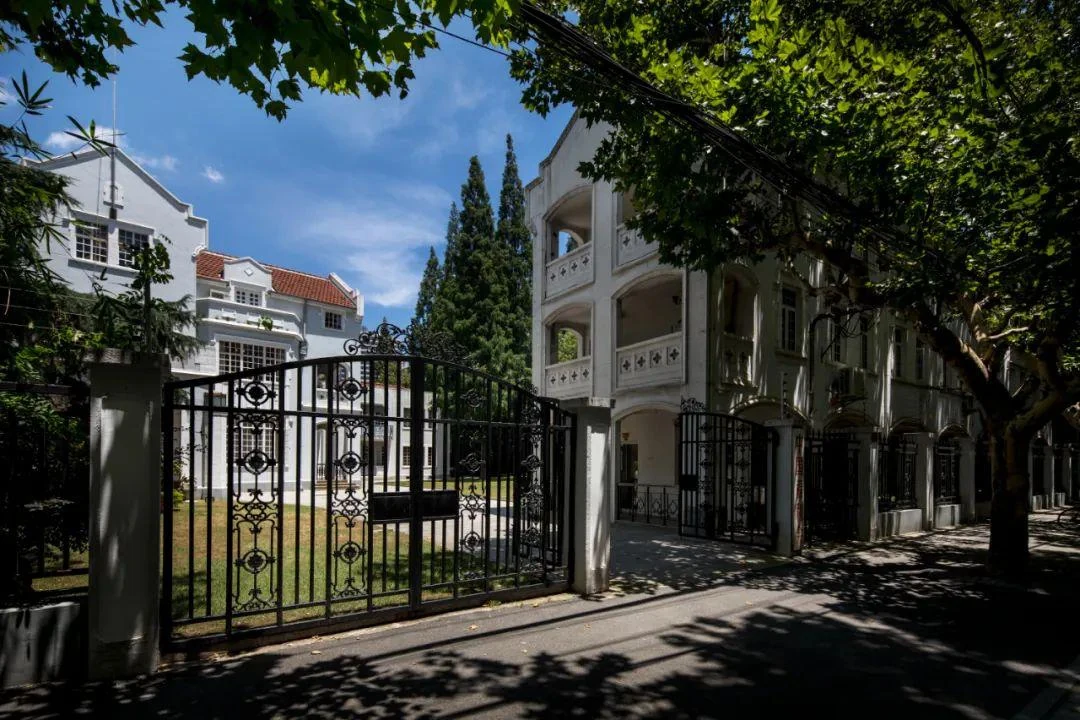
Capture date unknown
Entrance-side view of the former nursery compound and house. This is not a 1949 archival photograph. Published in a 2023 housing-authority feature; capture date unknown.
Photographer not individually credited; see source · Image source · Rights retained by original creators and source
At a glance
- Construction / use dates
- 1932
- Architect
- Not established in the reviewed sources
- Character
- Gothic Revival features and Art Deco details
- Original use
- Garden residence
- Use and access
- Welfare institution offices; kindergarten relocated
- Address
- 上海市徐汇区五原路314号Wuyuan Road
Architecture and use: sources[1]
The beginning
Why was it built here?
Soong Ching Ling founded the nursery in 1949 on North Shaanxi Road; it moved to this 1932 house at the end of that year. Distinguishing foundation from relocation clarifies Wuyuan Road’s role in the history of childcare.[1]
Soong Ching Ling’s social work addressed women’s and children’s health, education and living conditions. The nursery became a kindergarten and moved to Pudong in 1995; welfare offices and a children’s publishing institution moved in the following year. Domestic space became care space, then organizational space.[1]
Look up, then look closer
Details worth a closer look
Read from the street
Red pitched roofs and gables establish the outline; white window surrounds mark the pale grey walls. Gothic Revival forms and geometric ornament can coexist without forcing the whole building into a single pure style.[1]
A closer detail
Distinguish the lower street-front building from the older house within the garden. Office construction in 1996 changed the street edge; today’s foreground is not the nursery-era garden arrangement.[1]
One building, changing roles
Read the building through time
Captions distinguish photographic dates from publication dates; periods without reliable images are covered in the text.
- 1932
Original garden residence built
The house began as a residence; childcare arrived later.[1]
- 1949
Nursery moves here at year’s end
The nursery began on North Shaanxi Road that year and moved here at year’s end.[1]
- 1953
Becomes the China Welfare Institute Kindergarten
The service developed from nursery care into kindergarten education.[1]
- 1995–1996
Kindergarten leaves; offices and publishing arrive
Departure and arrival span two years; the street-front addition belongs to this later phase.[1]
Today and visiting
Discover the building from the street
Welfare institution offices; kindergarten relocated[1]
- Address
- 上海市徐汇区五原路314号
- Approach
- Entrances, events and access can change; follow current notices. Historic significance does not make residential stairs, gardens or living spaces public.
Sources checked: 2026-10-26 · Entrances, events and access can change; follow current notices. Historic significance does not make residential stairs, gardens or living spaces public.
Shanghai and the world
Place the address in the city
This address and Zhang Leping’s nearby home both lead into childhood: one through care and education, the other through cartoons about children’s circumstances. Together they make the neighbourhood more than a collection of house styles.[1]
Text and image sources
This account is based on the sources below. Unverified details are identified as such. Where photographs are included, sources and licences are listed beneath each image.
- Building and local-history source ↗
Used to check dates, uses and architectural descriptions; photo dates are separately identified.
Image handling and dating
Images come from the archives or image source pages listed beneath each photograph. We resize and compress them to WebP, preserving their original proportions without colourisation or added detail. Grain, blur and scanning marks in historical photographs are retained.
Images without a documented capture date are marked undated; publication is not photography. No invented before-and-after view substitutes for a verified historic photograph.