1768弄 Middle Huaihai Road
Xiafei Garden
霞飞花园
A garden neighbourhood and a literary network
A group of houses, not a solitary mansion, defines this place. Earlier Lane 1754 and present Lane 1768 lead to the literary gatherings at Shao Xunmei’s No. 17.
Explore the historical timeline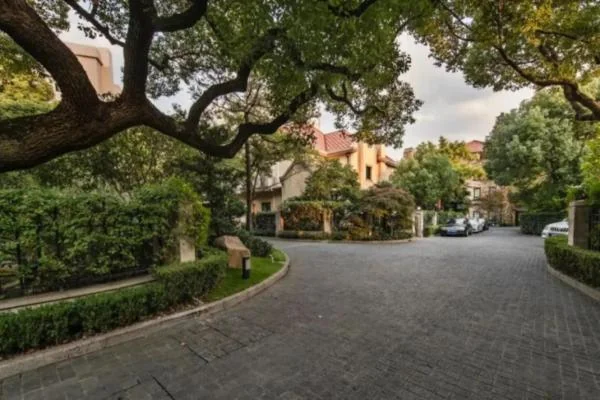
Published September 2022; capture date unstated
Trees, lane and houses inside the development; the image does not identify No. 17.
Photographer uncredited; see source page · Image source · Rights retained by creators and source; no open licence stated
At a glance
- Building date
- 1930
- Designer
- Not established by the consulted records
- Character
- Spanish-style linked garden houses
- Original use
- Housing group
- Recorded use
- Residential neighbourhood
- Location
- 1768弄 Middle Huaihai Road
The people behind the address
A life in brief
Shao Xunmei (1906–1968) was a Shanghai poet, writer, translator and publisher. The Palace Museum records his contribution to modern literature and publishing; this salon was one part of his literary circle.[2] [1]
Contributions and influence
His contribution included bringing texts, translations and writers together. Gatherings at No. 17 made a home a meeting point in Shanghai’s publishing culture.[2] [1]
The beginning
Why was it built here?
Built in 1930, the houses form a garden neighbourhood around an internal route. The tourism account records 28 houses and an old nickname referring to that number.[1] [2]
Changing lane numbers can confuse old addresses. Keep 1754, 1768 and house 17 together, and distinguish Shao’s home from the whole development.[1] [2]
Look up, then look closer
Three details worth a closer look
One building, changing roles
Read the building through time
Captions distinguish photographic dates from publication dates; periods without reliable images are covered in the text.
- 1930
- Date not established
- 2022
Today and visiting
Discover the building from the street
Observe the entrance, trees and visible façades from public pavement. Respect residential access controls; a historical association does not promise entry.[1] [2]
- Location
- 淮海中路1768弄
- Where to look
- Spanish-style linked garden houses
- Access
- Check the venue’s current admission, booking and exhibition notices.
Sources checked: 2026-10-26 · Check the venue’s current admission, booking and exhibition notices.
Shanghai and the world
Connections along the avenue
Housing development shaped the block; literature and translation connected a private drawing room to a wider world. Nearby Sheng’s residence offers another view of overlapping family, industry and cultural networks.[1] [2]
Text and image sources
This account is based on the sources below. Unverified details are identified as such. Where photographs are included, sources and licences are listed beneath each image.
- Shanghai Tourism · Huaihai architectural walk (2022) ↗
Building and historical record; not a guarantee of access today.
- Palace Museum · Shao Xunmei ↗
Building and historical record; not a guarantee of access today.
Image handling and dating
Images come from the archives or image source pages listed beneath each photograph. We resize and compress them to WebP, preserving their original proportions without colourisation or added detail. Grain, blur and scanning marks in historical photographs are retained.
Undated photographs carry the source publication date only; they do not establish present access. Missing historical stages are not illustrated with another building or an imagined scene.
Rights retained by creators and source; no open licence stated