185 Yuanmingyuan Road
Lyceum Building
兰心大楼
A theatre name survives on a different building
“Lyceum” links the address to an early theatre, while the standing building belongs to a later office redevelopment. Distinguish the theatre site, this building and today’s Lyceum Theatre on Maoming South Road: related histories, different buildings.
Explore the historical timeline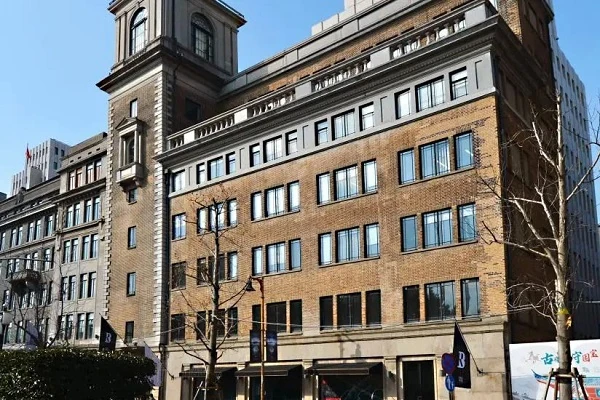
Photograph undated
Lyceum Building on Yuanmingyuan Road, with brick facing, horizontal bands and roof tower; not the Maoming South Road theatre.
shanghaitourism / Shanghai municipal government · Image source · Rights retained by original creators and source
At a glance
- Dates
- Late 1920s–early 1930s; records differ
- Designer
- Original designer not verified
- Architecture
- Brick facing, classical details and roof tower
- Historical use
- Office building on a former theatre siteHistoric names are not a current tenant directory
- Present context
- ROCKBUND district; interior access follows venue arrangements
- Address
- 185 Yuanmingyuan Road
The beginning
Why was it built here?
“Lyceum” links the address to an early theatre, while the standing building belongs to a later office redevelopment. Distinguish the theatre site, this building and today’s Lyceum Theatre on Maoming South Road: related histories, different buildings.[1] [2]
A 2014 survey lists 1927; the 2022 Huangpu account gives construction in 1930 and completion in 1931. Original completion records have not been obtained, so the difference remains explicit.[1] [2]
Look up, then look closer
Three details worth a closer look
Restoration as a new chapter of use
The architect distinguishes façade restoration from later completion of the wider project. Renewal also includes alleys and public spaces: the street and the block interior offer different scales of understanding.[3]
One building, changing roles
Read the building through time
Captions distinguish photographic dates from publication dates; periods without reliable images are covered in the text.
- Late 1920s–early 1930s; records differ
- 2006–2023 · district renewal
Restoration as a new chapter of use
The architect distinguishes façade restoration from later completion of the wider project. Renewal also includes alleys and public spaces: the street and the block interior offer different scales of understanding. Wider project dates, not seventeen years of continuous work on this building[3]
- 2026-10-26
Today and visiting
Discover the building from the street
View façades from public pavements. Check signs before entering lobbies, courtyards and exhibitions; an open shop does not mean the entire building is accessible.[1] [2]
- Address
- 185 Yuanmingyuan Road
- Before entering
- Historical records explain changes of use, not today’s tenants, exhibitions or hours. Locate the address, then confirm current entry conditions.
- Continue walking
- Yuanmingyuan · Huqiu
Sources checked: 2026-10-26 · View façades from public pavements. Check signs before entering lobbies, courtyards and exhibitions; an open shop does not mean the entire building is accessible.
Shanghai and the world
Put the building back into its block
The small roof tower identifies it in the continuous street wall. Follow the pale bands down through the window rows, then find upper arches and pediments. The distant street silhouette and close details offer different readings.[1] [2]
Text and image sources
This account is based on the sources below. Unverified details are identified as such. Where photographs are included, sources and licences are listed beneath each image.
- Shanghai Huangpu inventory · People.cn republication (2022) ↗
Architectural details and date comparison; its 1930–1931 Lyceum dating differs from another record of 1927.
- City Planning Institute of Japan · Shanghai survey (2014) ↗
The survey lists Lyceum as 1927 and True Light as 1930; later guides differ, and the dates are not silently merged.
- David Chipperfield Architects · ROCKBUND ↗
Restoration, project phases and photographs; subjects are identified separately.
- Shanghai Government · Suzhou Creek architectural walk (2024) ↗
Individually labelled photographs of Yuanmingyuan Apartments, Lyceum and True Light; credited to shanghaitourism, exposures undated.
Image handling and dating
Images come from the archives or image source pages listed beneath each photograph. We resize and compress them to WebP, preserving their original proportions without colourisation or added detail. Grain, blur and scanning marks in historical photographs are retained.
Photographs retain source attribution and their original framing; dates are not inferred. Paired comparisons are shown intact, without relabelling one side as another period.
No securely identified historical photograph of this building is included; neighbouring buildings are not substitutes.