No. 13, the Bund · Zhongshan East First Road
Customs House
江海关大楼
A port’s passage of time, marked by the chimes
Explore the past and present of No. 13, the Bund, through historic photographs, architectural details and a timeline.
Follow its history through photographs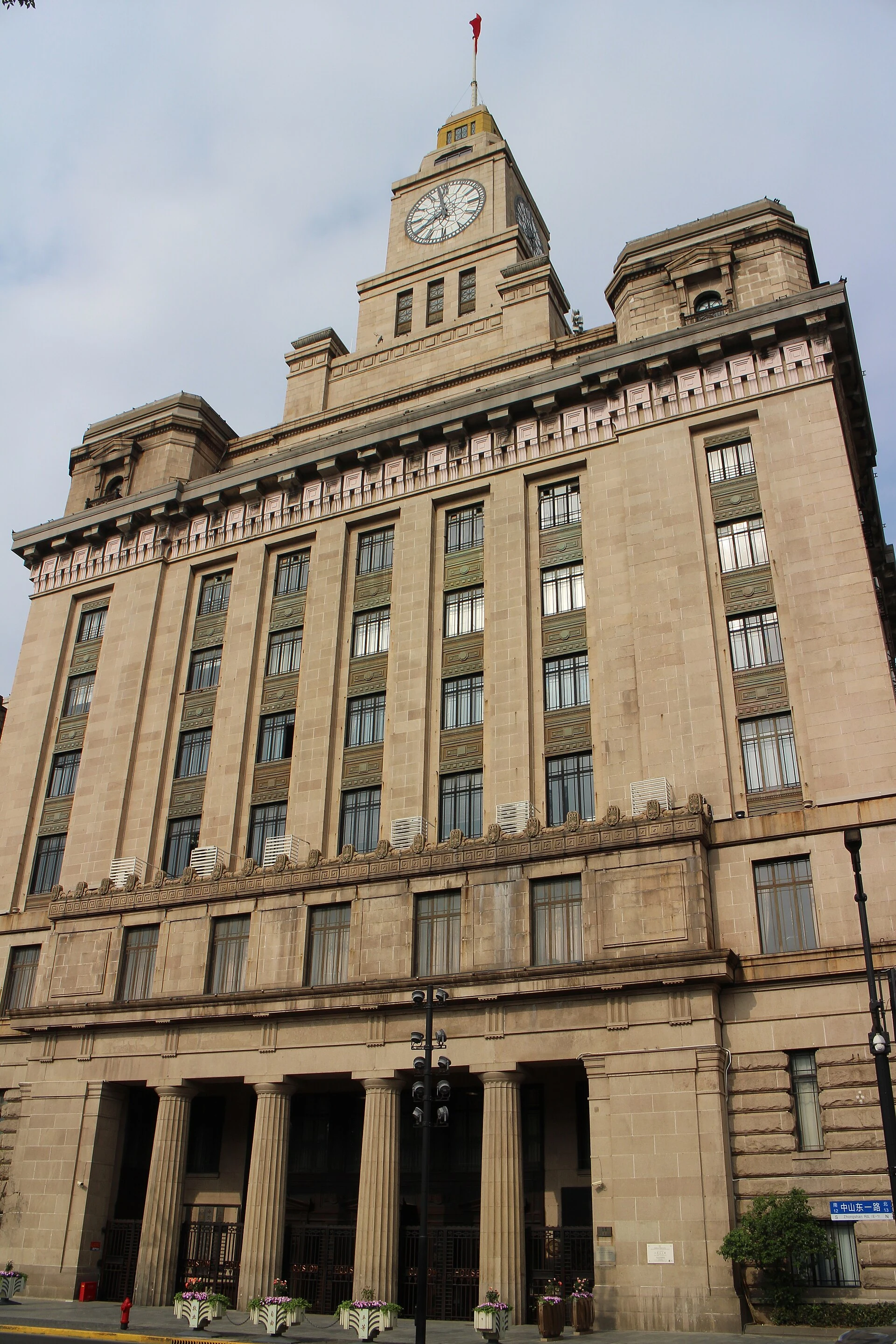
1 May 2025
Looking up from the street: the colonnade, rows of windows and central clock tower share one axis.
Suicasmo · Image source · CC0
At a glance
- Construction / completion
- 1925 / 1927Completed on 19 December 1927
- Architect
- Palmer & TurnerPalmer & Turner
- Style
- Classical and modern architecture combinedStone façade, colonnade and four-faced clock tower
- Original use
- Maritime Customs officesPort customs administration and operations
- Current use
- Customs offices and occasional cultural exhibitionsExhibition access follows current announcements
- Location
- 13 Zhongshan East 1st RoadAt Hankou Road, north of the HSBC Building
The beginning
Why was it built here?
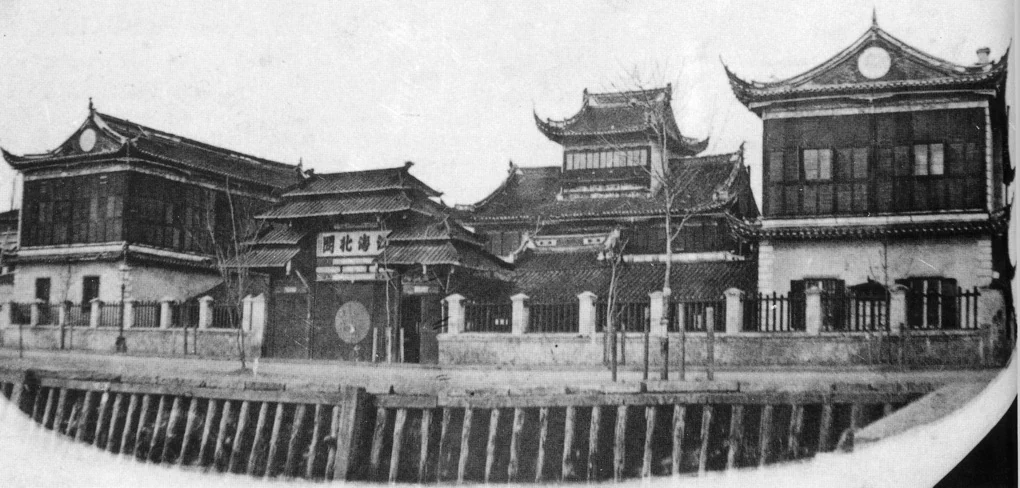
This address predates today’s clock tower. By the mid-19th century, the Maritime Customs had established offices on the Bund. Chinese roofs in early photographs show that the customs premises did not begin as a Western stone building. A later red-brick clock tower was also different from the surviving building of 1927.[1]
In the 1920s, port trade continued to demand more office space. Palmer & Turner’s new building combined customs operations, a large office block and a public time signal. From the riverfront, you can both read the history of port administration and hear how the building became part of everyday Shanghai.[1]
Look up, then look closer
Three details worth a closer look
From the portico to the clock tower
The four-column entrance portico gives the base visual weight, while rows of windows draw the eye upwards. The central clock tower narrows in stages. Find the central axis, then compare the two wings to understand the composition.[1]
Windows set a rhythm in stone
The river façade is clad in stone, with large areas of regular rectangular windows between vertical piers. Close up, look at the horizontal joints in the lower stonework; farther away, follow the vertical lines across floors. Together they organise this large office building.[1]
Maritime subjects in the entrance hall
Mosaics in the hall’s octagonal coffered ceiling depict sailing ships and shipping, linking the decoration to customs work. An exhibition opened parts of several floors in 2025, but excluded the clock tower. That event does not establish unrestricted access today.[2]
One building, changing roles
History unfolds between the photographs
From earlier buildings to the one standing today. Captions distinguish photographic dates from publication dates; periods without reliable images are covered in the text.
- Mid to late 19th century
A customs office with Chinese roofs
Archive photographs show ceremonial gateways, flagpoles and traditional roofs at the earlier customs office. This was the predecessor of today’s building. The source gives a broad date range; its upload date is not the year of photography.[1]
1857–1893 · range given by the source
The earlier customs office on this site, with ceremonial gateways, flagpoles and Chinese roofs, unlike the surviving stone clock tower.
Photographer unknown · Image source · Public domain
- 1890s
A red-brick clock tower
After the Chinese-style offices came a Gothic red-brick Customs House. It retained a tall central tower, but its height, materials and outline differed from those seen today.[1]
- 1925–1927
The third building is completed
Following demolition of the old building, the replacement designed by Palmer & Turner was completed on 19 December 1927. The neighbouring HSBC Building already stood beside it. Separate projects gradually formed the central Bund skyline.[1]
- 1928
A photograph records the new façade
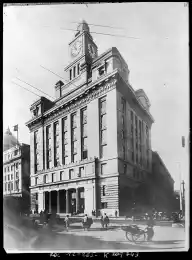
A press photograph from the Bibliothèque nationale de France records the building shortly after completion. Its clock tower, colonnade and streetcar can be compared directly with modern photographs.[3]
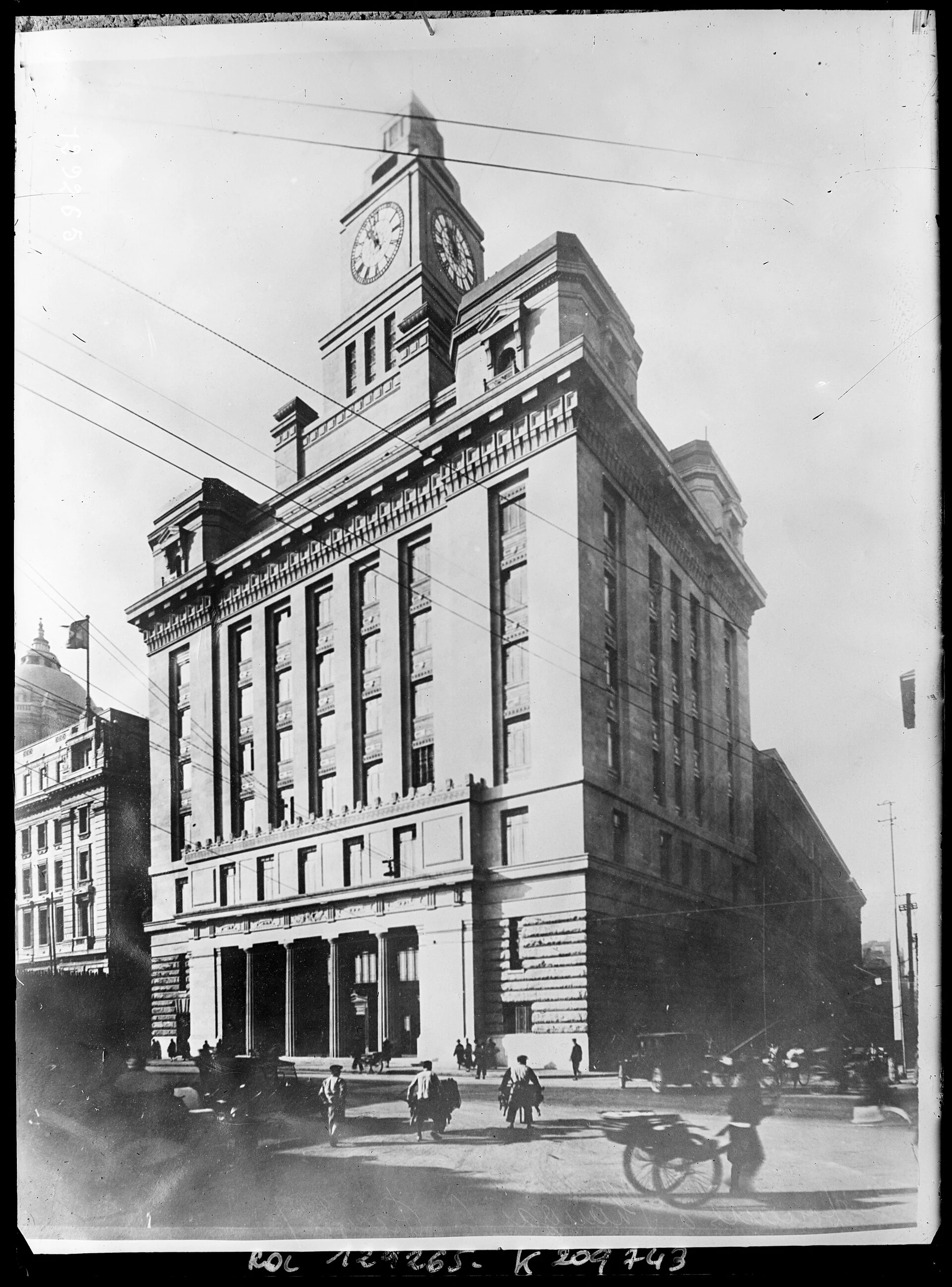
1928 · Bibliothèque nationale de France record
A press photograph shortly after the new Customs House was completed. The streetcar and pedestrians in the foreground return it to the street life of its time.
Pacific and Atlantic / Agence Rol; Bibliothèque nationale de France collection · Image source · Public domain
- 20th century to today
The time signal enters the city’s memory
The clock mechanism and its melodies have undergone maintenance and changes. When discussing today’s chimes, distinguish mechanical striking from amplified playback; a description from one period should not be treated as permanent.[1]
- 2025
Limited access to selected spaces
The Shanghai Urban Space Art Season held exhibitions in parts of floors one to three. The official announcement specified a temporary event and excluded the clock tower. The original exhibition period has ended.[2]
Today and visiting
Discover the building from the street
View the whole clock tower from the riverfront, then examine the stonework and portico at the Hankou Road corner.[2]
- Viewpoint
- The riverside promenade shows the relationship between the tower and the HSBC dome. Leave room for pedestrians near the building.
- Interior access
- The 2025 art season offered temporary access. Check official Customs or Huangpu District announcements for new exhibitions, reservations and security requirements.
- Look and listen
- Clock faces, the tower’s outline and street sounds all contribute to the experience. No particular chime melody is promised.
Sources checked: 2026-10-19 · Continuing public access in 2026 has not been verified. Do not use the hours of an exhibition that has ended.
Shanghai and the world
A port clock tower and British manufacturing
The bells and clock mechanism were made by British manufacturers and shipped to Shanghai. They link overseas transport and mechanical engineering with life at the port. The connection to London’s Big Ben lies chiefly in timekeeping traditions and technical background, not in a wholesale copy of the building.[1]
Text and image sources
This article reorganizes the sources below. Text adapted and condensed from Wikipedia, including its translations here, is provided under CC BY-SA 4.0; the original contributors are listed in the article’s revision history. Image licences are listed separately beneath each photograph.
- Wikipedia · Customs House, Shanghai ↗
History, layout and clock manufacturers. Reorganised in the Chinese base text; inconsistent height rankings are avoided.
- Shanghai Municipal Administration of Culture and Tourism · Temporary access to Customs House ↗
The 2025 exhibition and its access limits; not opening hours for 2026.
- Bibliothèque nationale de France / Commons · Customs House photograph, 1928 ↗
An archival photograph of the building, dated according to the Bibliothèque nationale de France record.
Image handling and dating
Images come from the archives or image source pages listed beneath each photograph. We resize and compress them to WebP, preserving their original proportions without colourisation or added detail. Grain, blur and scanning marks in historical photographs are retained.
The Chinese-style customs office is a predecessor; the 1928 press photograph shows the surviving building.
Images retain their original monochrome or colour. Historic photographs are not colourised, and upload dates do not replace historical dates.