No. 12, the Bund · Zhongshan East First Road
HSBC Building
汇丰银行大楼
A bank building, more than a century of Shanghai
From HSBC’s Shanghai branch to municipal offices, then to Shanghai Pudong Development Bank. Follow real photographs and a historical timeline to understand the architecture and changing life of No. 12 on the Bund.
Follow its history through photographs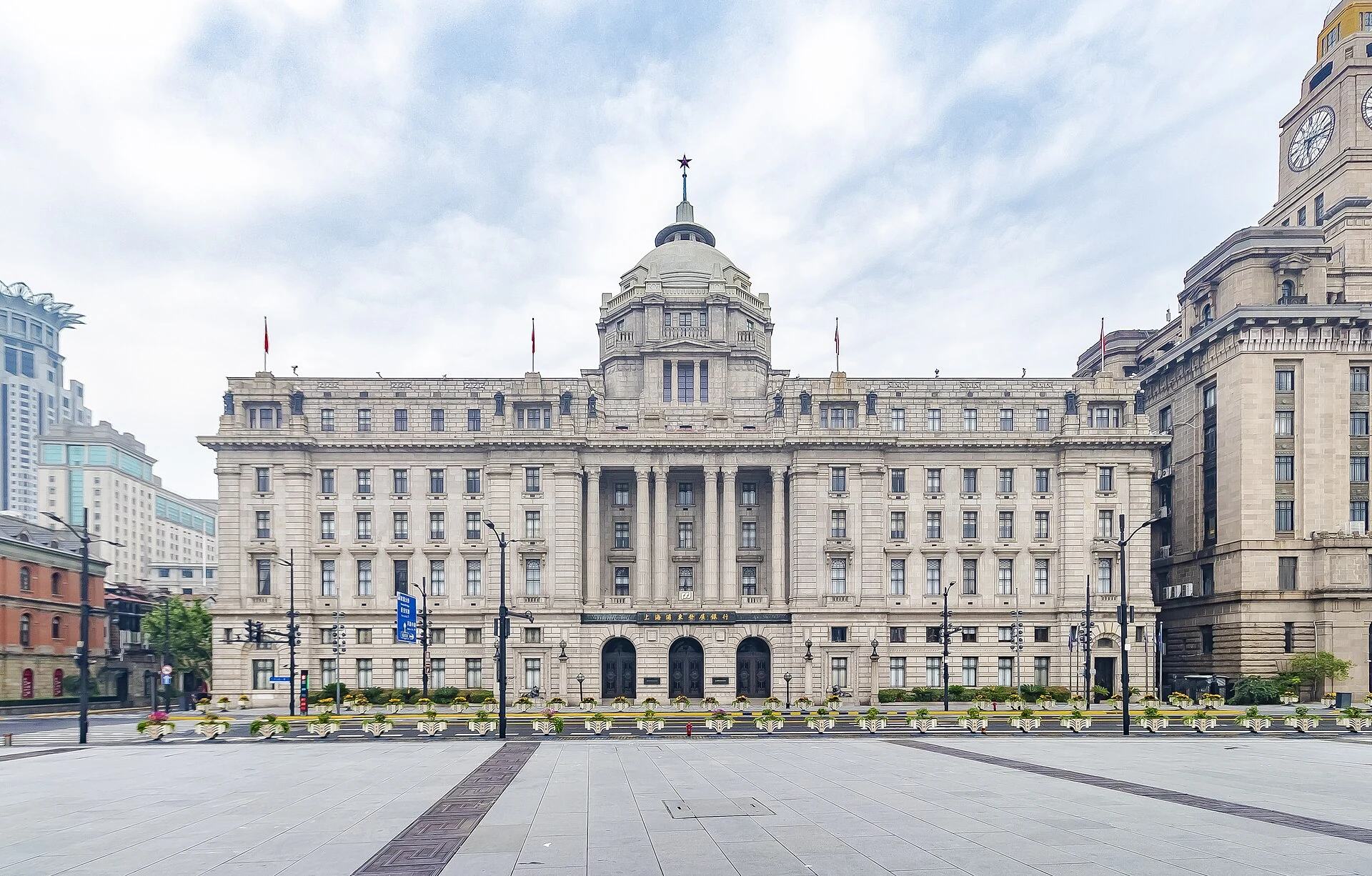
20 June 2021
The HSBC Building seen from the riverside. The central dome, six giant columns and three arched entrances form its principal façade facing the Huangpu.
ScareCriterion12 · Image source · CC BY-SA 4.0
At a glance
- Construction / completion
- 1921 / 1923Officially opened on 23 June 1923
- Architect
- Palmer & TurnerThe architectural practice known in Chinese as Gonghe Yanghang
- Architectural style
- NeoclassicalA symmetrical façade, colonnade and central dome
- Original use
- HSBC Shanghai branchBanking hall and offices
- Current use
- Shanghai Pudong Development BankFinancial services and offices
- Location
- 12 Zhongshan East First RoadThe Bund · junction with Fuzhou Road
The beginning
Why was it built here?
This was first and foremost a place for banking and office work. HSBC’s presence in Shanghai predates the present building: in 1874 the bank bought an earlier building at No. 12, later acquiring more land for its replacement. The broad frontage seen today is not the appearance of the nineteenth-century building.[1]
The opening ceremony in 1923 drew large crowds. HSBC’s archives present the new premises as an important stage in the bank’s development in Shanghai: a long-term working home and a public statement addressed to the city, its customers and trading partners.[2]
Look up, then look closer
Three details worth a closer look
A different palette inside the entrance hall
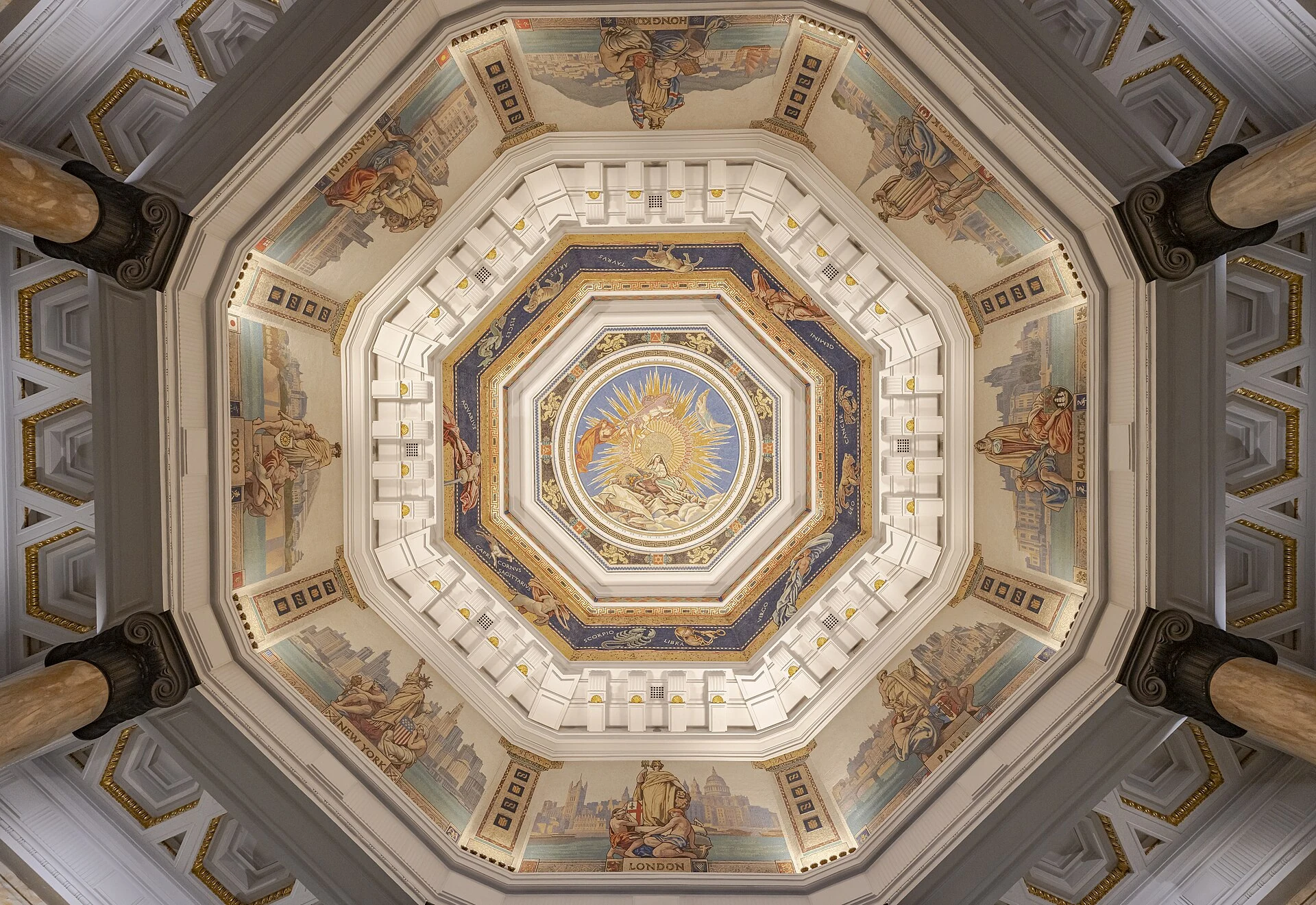
Behind the stone exterior, the octagonal entrance hall unfolds a colourful mosaic composition adjoining the banking spaces. Research into the interiors also shows that the white walls seen in later periods were not always the original decorative surfaces.[5] [6]
28 March 2024
The mosaic dome of the octagonal entrance hall. This recent photograph shows the restored decoration, not the interior as photographed in 1923.
ScareCriterion12 · Image source · CC0 1.0
One building, changing roles
History unfolds between the photographs
From earlier buildings to the one standing today. Captions distinguish photographic dates from publication dates; periods without reliable images are covered in the text.
- 1874
An earlier building before today’s landmark
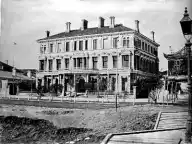
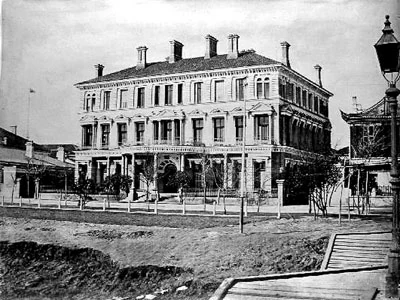
HSBC bought the existing property at No. 12 on the Bund. The three-storey building in the photograph belongs to that earlier stage and should not be confused with the new premises completed in 1923.[1]
Late nineteenth century · Wikipedia dates it to 1886
The earlier building on the same site, before today’s dome and broad colonnade. This is the predecessor of the surviving building.
Photographer unknown · Image source · Public domain
- 1920–1921
From a drawn elevation to a building site
A Palmer & Turner elevation appeared in the press in 1920. Construction of the present building began in 1921. Comparing the drawing with completion photographs distinguishes the architectural proposal from what was ultimately built.[1]
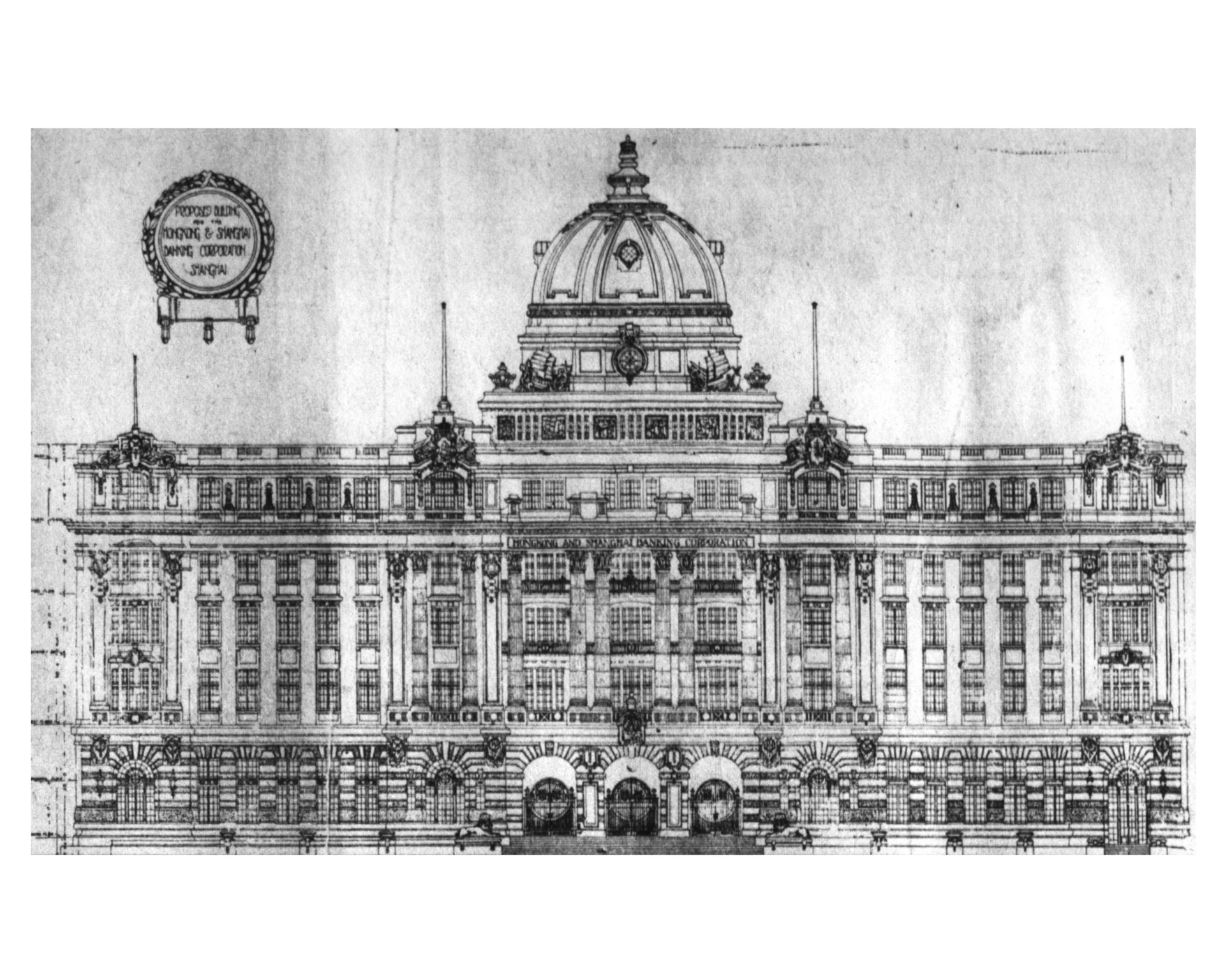
Published 14 January 1920
Palmer & Turner’s elevation, published in The China Press. It documents the design stage and should be distinguished from the completed building.
Palmer & Turner · Image source · Public domain
- 1923
The new building opens on 23 June
HSBC’s archives record the opening ceremony and the crowds on that day. The new premises housed the Shanghai branch’s banking and office operations, and the main entrance facing the Huangpu became part of the Bund streetscape.[2]
- 1920s
The building enters everyday street life
Two views reveal different contexts: close up, horse-drawn vehicles and people outside the bank; from farther away, HSBC beside the Customs House still under construction. The Bund skyline took shape gradually over different years.
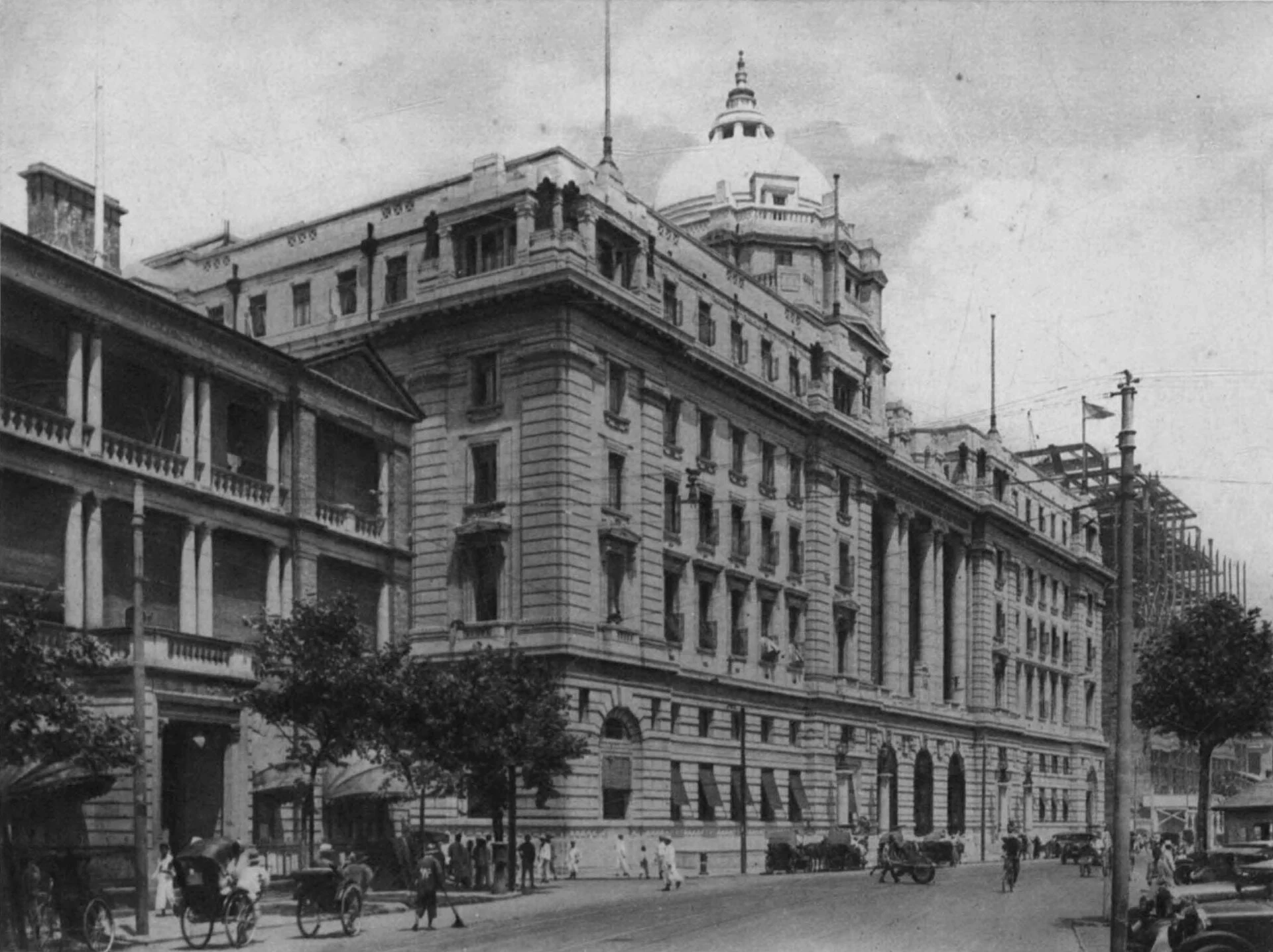
Published 1927 · photographic date unknown
Plate 7 of Shanghai of Today. Horse-drawn traffic and neighbouring buildings place the bank in the street life of its time; 1927 is the publication year recorded by the source.
Photographer unknown; published by A. S. Watson & Co. · Image source · Public domain
View another historical image
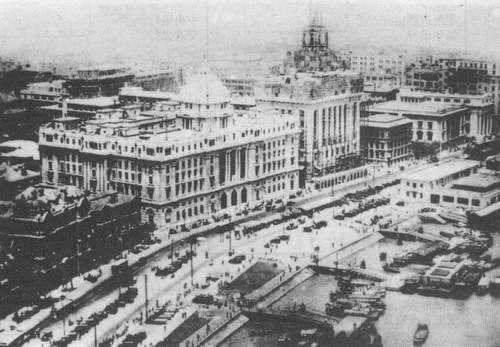
Approximately the 1920s · photographic date unknown
The HSBC Building beside the Customs House under construction. Dating is approximate, based on the scene and source description; the file’s 2014 record is not its exposure date.
Photographer unknown · Image source · Public domain
- Wartime
War changes the occupant
During the war against Japan, the building was occupied by the Yokohama Specie Bank. HSBC returned after the war. The architectural shell remained while its users and the city’s circumstances changed.[1]
- 1955–1995
- Late 1990s
Restoration and a return to banking
Shanghai Pudong Development Bank moved in as the building underwent restoration and services were updated; the entrance-hall mosaics were uncovered again. Occupation, refurbishment and completion of restoration were separate milestones: sources give 1996, 1997 and 1998, so these are presented as stages rather than one date.[1] [5]
- Today
Today and visiting
Discover the building from the street
Shanghai Pudong Development Bank, also known as SPD Bank, now uses the building for financial services and offices. Its official website lists the address as 12 Zhongshan East First Road, Shanghai.[7] [6]
- Where to look
- The pedestrian area on the Huangpu side of Zhongshan East First Road offers a view of the whole principal façade. Use pedestrian crossings to approach the entrance and study the stone details.
- Inside access
- The bank is still operating. Interior access, photography and visits are subject to on-site management and the bank’s latest announcements. This page does not give unconfirmed opening hours.
- Afterwards
- Look north towards the Customs House clock tower and compare the two silhouettes, then continue along the Bund to discover façades from different periods.
Sources checked: 2026-10-19 · Visitor access has not been verified on site
Shanghai and the world
A pair of bronze lions connects two cities
The bronze lions outside the new Shanghai building later inspired the lions at HSBC’s headquarters in Hong Kong. The same institution’s buildings in different port cities acquired a recognisable shared symbol.[3]
The lions outside today are replicas. Distinguishing the sculptures’ history from the objects now on view helps explain how preservation, replication and continued use coexist here.[5]
Text and image sources
This article reorganizes the sources below. Text adapted and condensed from Wikipedia, including its translations here, is provided under CC BY-SA 4.0; the original contributors are listed in the article’s revision history. Image licences are listed separately beneath each photograph.
- Wikipedia · HSBC Building, the Bund ↗
Basic history and the date attributed to the earlier-building photograph. The article is adapted, condensed and reorganised here.
- HSBC Archives · The grand opening in Shanghai ↗
First-hand archival account of the opening ceremony on 23 June 1923.
- HSBC History · Roaring to Life ↗
The origins of the Shanghai lions and their connection with the bank’s Hong Kong building.
- Shanghai Civil Affairs Bureau · Twenty-two Bund buildings ↗
Historical context for the change to municipal government offices in 1955.
- Reading Architecture · The colourful dome and bronze lions ↗
A 2022 republication of Shanghai tourism material: construction, restoration and replica lions. Historical opening hours are not treated as current visitor information.
- Built Heritage · Colourful treasure on Shanghai’s Bund ↗
A 2022 conservation study of decoration and paint layers in the former Chinese Banking Hall. Third-party archival photographs from the paper have not been reproduced here.
- SPD Bank · Brand identity platform ↗
The official bank page lists 12 Zhongshan East First Road. It does not confirm tourist admission or opening hours.
Image handling and dating
Images come from the archives or image source pages listed beneath each photograph. We resize and compress them to WebP, preserving their original proportions without colourisation or added detail. Grain, blur and scanning marks in historical photographs are retained.
The date 1886 for the earlier building comes from the Wikipedia article; the Commons file date is not a reliable historical exposure date. Shanghai of Today uses the source’s publication year, 1927. The Customs House construction view is only approximately dated. Reliably licensed images covering 1955 to the 1990s remain to be added.