No. 2, the Bund · Zhongshan East First Road
Shanghai Club
上海总会大楼
From a members’ club to a working hotel
Two generations of club buildings, a long bar and changing occupants make No. 2 Bund a window onto Shanghai’s social life.
Follow its history through photographs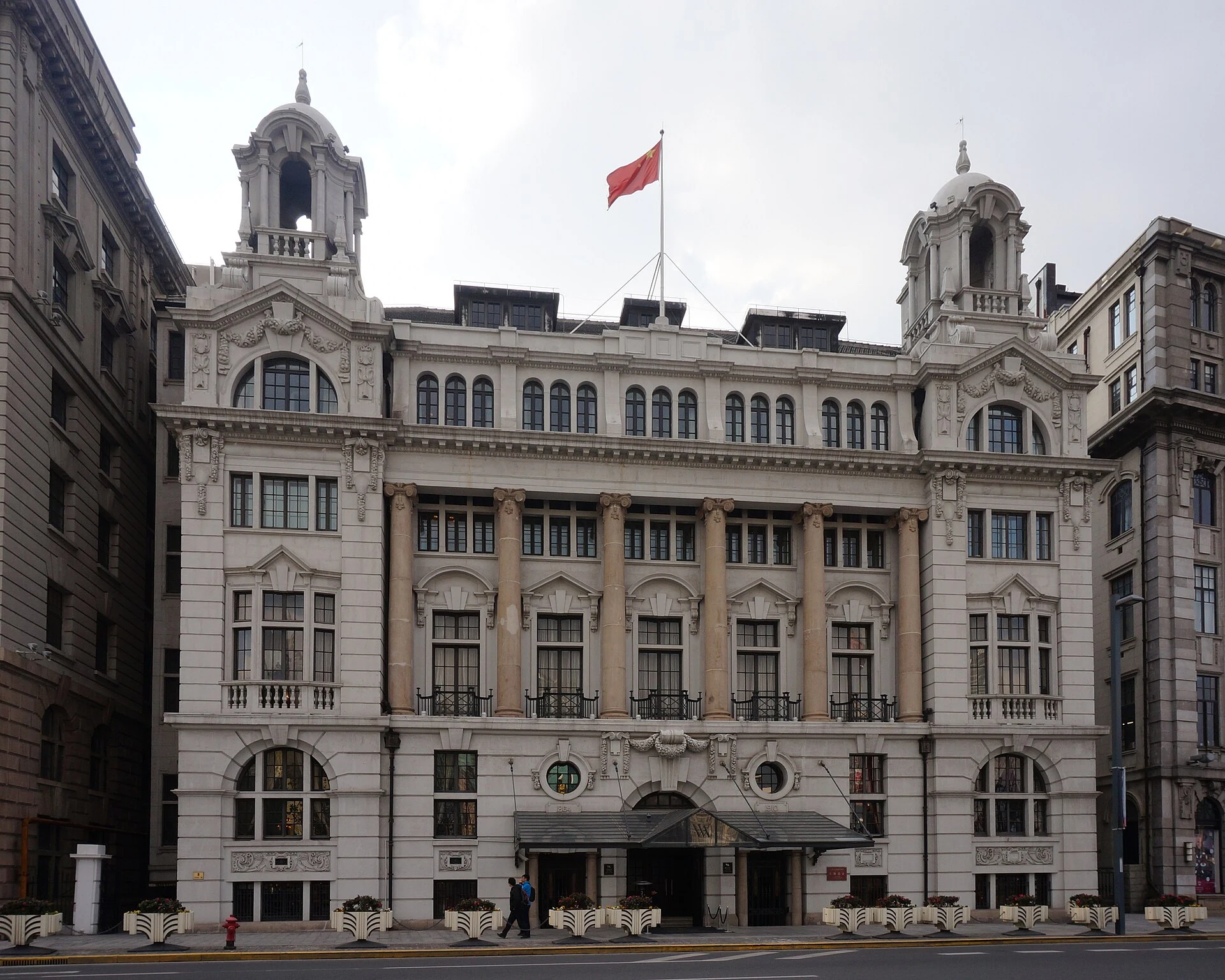
14 January 2014
The Shanghai Club from the street. The central colonnade and flanking rooftop pavilions still form a clearly symmetrical outline.
Livelikerw · Image source · CC BY-SA 3.0
At a glance
- Rebuilding / opening
- 1909 / 1911Some sources date completion to 1910; the milestones are distinguished here
- Architect
- Moorhead & HalseThe surviving second-generation club building
- Style
- Classical Revival with Baroque detailsFaçade colonnade and rooftop pavilions at both ends
- Original use
- Shanghai ClubMembers’ socialising, dining and entertainment
- Current use
- Waldorf Astoria Shanghai on the BundThe historic club forms part of the hotel
- Location
- 2 Zhongshan East 1st RoadNorth of the Asia Building
Architecture and use: sources[1]
The beginning
Why was it built here?
“Club” described a comprehensive social venue. Founded by foreign residents in Shanghai, its first building of 1864 was different from the one standing today. The lower structure and verandas in the old photograph belong to that demolished predecessor.[1]
The surviving building was rebuilt in the early 20th century. Its frontage, dining rooms and entertainment spaces expressed social standing. Now a hotel, it still receives guests, although access and clientele have changed.[1] [2]
Look up, then look closer
Three details worth a closer look
Columns bring the scale of the hall to the street
The central columns span floors and connect windows vertically. Look first at the symmetry, then at the window rows beside the columns, to distinguish the grand frontage from the scale of individual rooms.[1]
Twin pavilions punctuate the roof
A small rooftop pavilion stands at either end of the façade, with a quieter centre between. Compare these with the corner of the Asia Building to the south to see two different ways of completing a roofline.[1]
The Long Bar is not an untouched relic
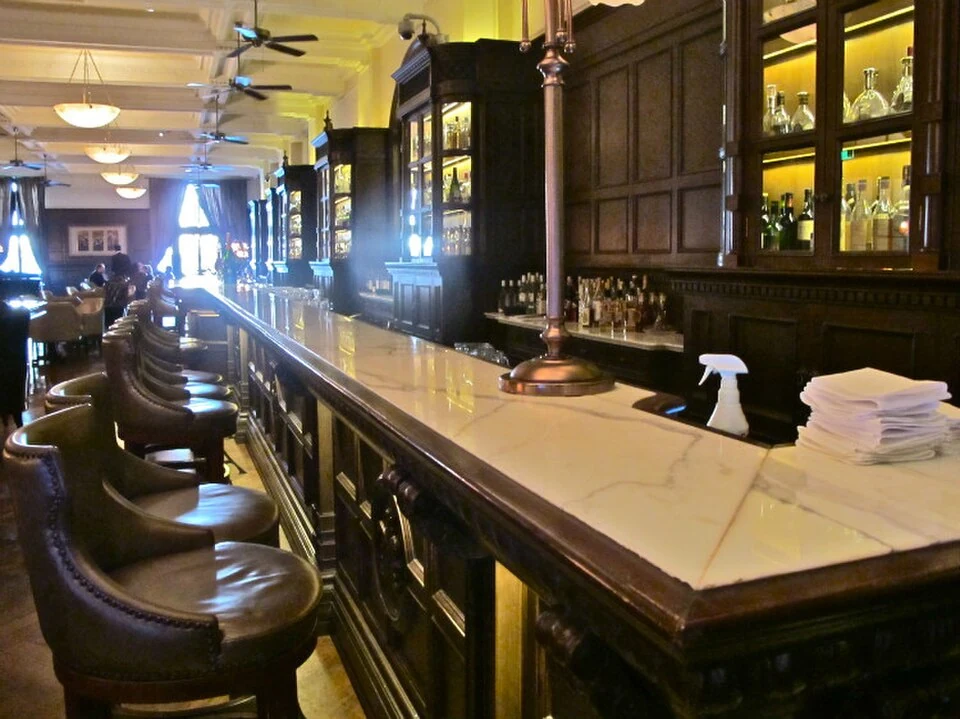
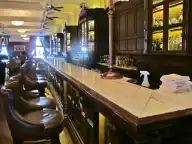
The present Long Bar was restored during the hotel conversion. The 2015 photograph records its use after restoration, not an original interior in 1911. It helps explain how a space can continue its function.[2]
3 October 2015
The Long Bar after the hotel restoration. This records the interior in use in 2015, not the original interior of 1911.
Hsen-SH · Image source · CC BY-SA 4.0
One building, changing roles
History unfolds between the photographs
From earlier buildings to the one standing today. Captions distinguish photographic dates from publication dates; periods without reliable images are covered in the text.
- 1862–1864
The club is founded and its first home completed
After its foundation the Shanghai Club built a clubhouse for meetings and dining. The first building lacked today’s twin rooftop pavilions.[1]
About 1908 · source dating
The predecessor of the surviving building: the first clubhouse, completed in 1864. The yellow tones come from the source image; it has not been recoloured.
Sze Yuen Ming · Image source · Public domain
- 1909–1911
- Published in 1927
A prominent frontage on the Bund
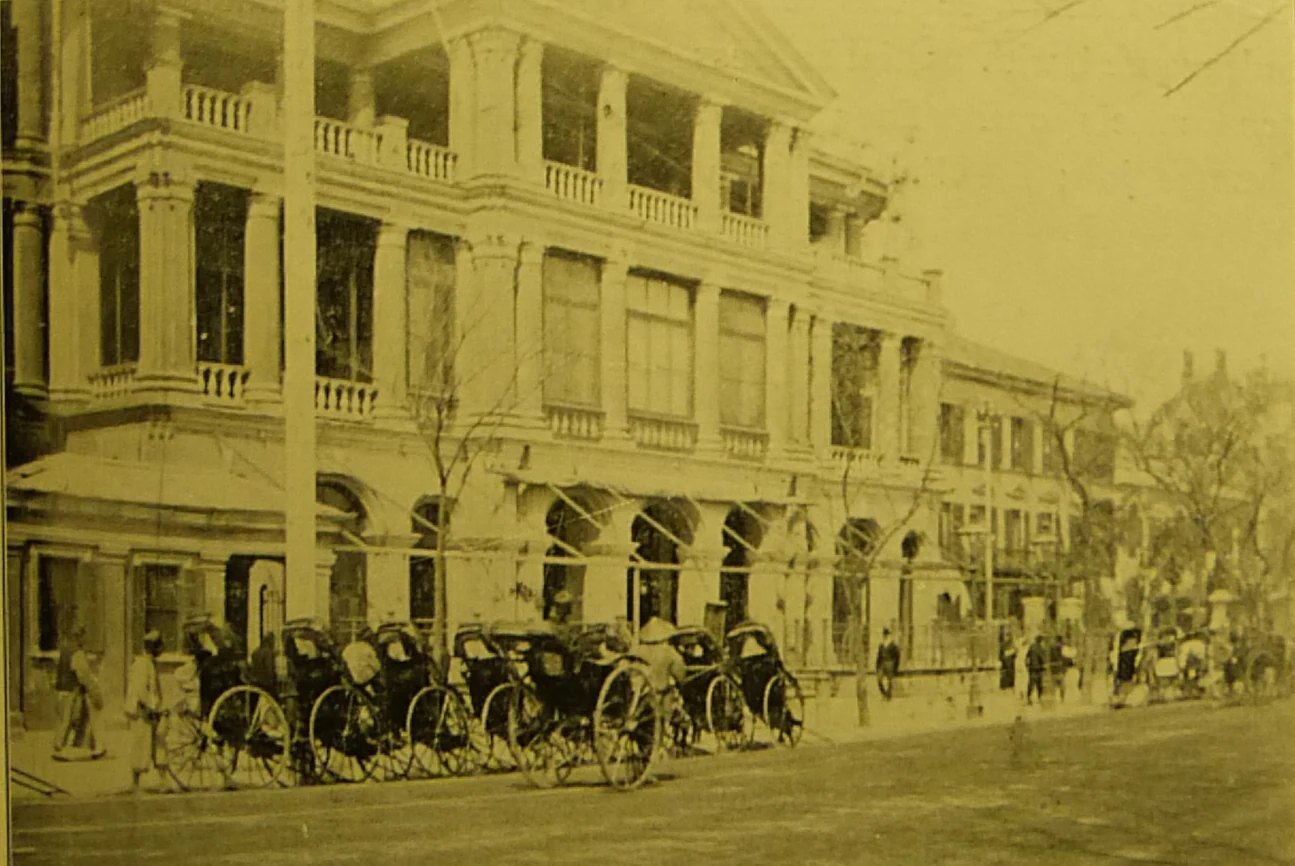
The publication records the colonnade, rooftop pavilions and street from an oblique angle. Compared with the first building, the most conspicuous changes are its size and roofline.
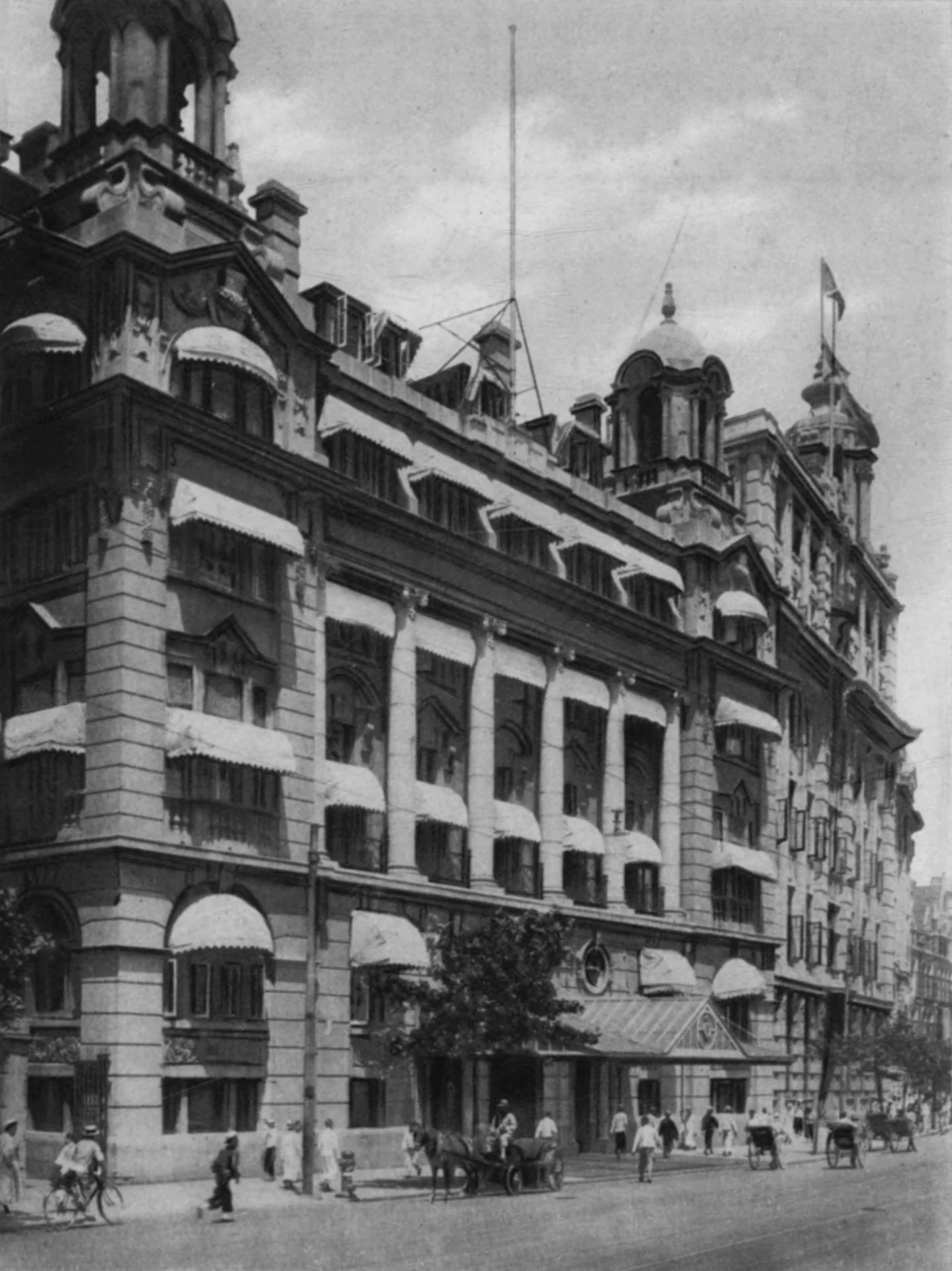
Published in 1927 · photograph date unknown
Plate 2 of Shanghai of Today records the second Shanghai Club building from an oblique angle.
Photographer unknown; published by A. S. Watson & Co. · Image source · Public domain
- 1971
The Dongfeng Hotel opens
Various institutions occupied the building after the war before it became the Dongfeng Hotel. Its name and way of serving guests differed from the members’ club.[1]
- 1989
Fast food enters the historic building
Shanghai’s first KFC operated here. Everyday consumer use became one concrete episode in the changing functions of the Bund.[2]
- 2010
The restored hotel welcomes guests again
The historic Waldorf Astoria building opened, and the restored Long Bar returned to use. The interior photograph from 2015 records this phase.[2]
3 October 2015
The Long Bar after the hotel restoration. This records the interior in use in 2015, not the original interior of 1911.
Hsen-SH · Image source · CC BY-SA 4.0
- Today
The hotel and Long Bar remain in operation
The hotel’s website lists the Long Bar in the club building. Interior visits and dining follow hotel arrangements; the exterior can be viewed from the street.[2]
Today and visiting
Discover the building from the street
Distinguishing the exterior from the changing uses inside makes the building’s continuity easier to understand.[2]
- From the street
- Observe the central axis, colonnade and twin rooftop pavilions from the river side.
- Going inside
- The hotel, restaurants and Long Bar have their own access rules. Contact them ahead for dining or accommodation.
Sources checked: 2026-10-19 · This page does not treat the lobby or Long Bar as free history galleries or promise access to every interior space.
Shanghai and the world
Compare two generations, then two neighbours
The contrast between the old and new club reveals the history of one address; its position beside the Asia Building brings social life and corporate offices together at the same junction.[1]
Text and image sources
This article reorganizes the sources below. Text adapted and condensed from Wikipedia, including its translations here, is provided under CC BY-SA 4.0; the original contributors are listed in the article’s revision history. Image licences are listed separately beneath each photograph.
- Wikipedia · Shanghai Club ↗
Used to cross-check the building’s history; conflicting dates are identified in the text. The article was independently written for this site; photographic credits and licences are listed separately.
- Hilton · History and new menu of the Waldorf Astoria Shanghai Long Bar ↗
Official brand publication of 11 February 2025; confirms the 1911 milestone, the 1989 fast-food restaurant, the 2010 hotel restoration and the present Long Bar use.
Image handling and dating
Images come from the archives or image source pages listed beneath each photograph. We resize and compress them to WebP, preserving their original proportions without colourisation or added detail. Grain, blur and scanning marks in historical photographs are retained.
The predecessor photograph is dated to about 1908 by its source; it shows the first clubhouse, completed in 1864.
1927 is the plate’s publication year; the interior photograph was taken in 2015 after restoration.