1, Lane 10, Tai’an Road
Tang Xiaodan and Lan Weijie’s Former Home
汤晓丹、蓝为洁旧居
A film-making household within a lane
In 1946 Tang Xiaodan’s family moved into the third floor for seven years. The house served as staff quarters for a film studio’s Shanghai office; their room had previously been used for storage.
Explore the historical timeline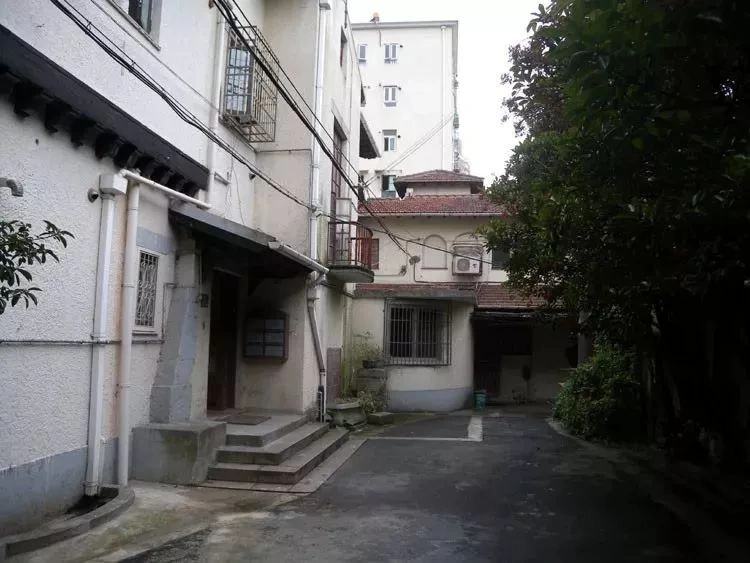
Capture date not stated by the source
The house at 1, Lane 10, Tai’an Road; the lane approach is not the main-road pavement.
Image from the cited report or institutional source · Image source · Rights retained by the original creator
At a glance
- Construction / use dates
- Construction date unknown; occupied from 1946
- Architect
- Not established in reviewed sources
- Character
- Three-storey shikumen house
- Original use
- Film-studio staff housing
- Use and access
- Residential or institutional premises; view the exterior first
- Address
- 1, Lane 10, Tai’an Road
Architecture and use: sources[1]
The people behind the address
A life in brief
Tang Xiaodan was a Chinese film director and Lan Weijie a film editor. The address records a period of their shared family life in Shanghai.[1]
Contributions and influence
Direction and editing are distinct parts of film-making. Naming both residents acknowledges the work behind the screen alongside the household that sustained it.[1]
The beginning
Why was it built here?
In 1946 Tang Xiaodan’s family moved into the third floor for seven years. The house served as staff quarters for a film studio’s Shanghai office; their room had previously been used for storage.[1]
The account records no flush toilet or running water when they arrived. These conditions reveal how film workers made homes in the postwar city more accurately than an image of a director’s mansion.[1]
Look up, then look closer
Details worth a closer look
Space and facade
The three-bay, three-storey masonry house has a red-tiled gable roof. Stone-like render, horizontal bands and timber shutters articulate its floors and openings.[1]
Entrance and details
A southern courtyard leads to the main hall and side rooms; upper floors have internal balconies and northern drying space. The photographed lane approach is not Tai’an Road’s public pavement.[1]
One building, changing roles
Read the building through time
Captions distinguish photographic dates from publication dates; periods without reliable images are covered in the text.
- 1946
Family moves to the third floor
A former storage room became the family home, initially without running water or a flush toilet.[1]
- 1946–1953
Guide records seven years of residence
The director and editor’s household spent seven years upstairs, connecting film work with everyday lane life.[1]
- 2018
Local guide documents the house layout
The guide described the three-storey shikumen’s hall, side rooms and drying areas as evidence of its domestic layout.[1]
Today and visiting
Discover the building from the street
Residential or institutional premises; view the exterior first[1]
- Address
- 1, Lane 10, Tai’an Road
- Access
- View from public roads and permitted areas. Historic importance does not open residential gardens, stairs or institutional compounds to the public; follow posted access rules.
Sources checked: 2026-10-26 · View from public roads and permitted areas. Historic importance does not open residential gardens, stairs or institutional compounds to the public; follow posted access rules.
Shanghai and the world
Building and neighbourhood
Beside garden villas, this staff house returns Tai’an Road’s film history to a more compact everyday dwelling.[1]
Text and image sources
This account is based on the sources below. Unverified details are identified as such. Where photographs are included, sources and licences are listed beneath each image.
- Shanghai Xuhui: Tai’an Road and its residents (2018) ↗
Checks dates, people, uses and architectural descriptions; reported uses belong to the source date.
Image handling and dating
Images come from the archives or image source pages listed beneath each photograph. We resize and compress them to WebP, preserving their original proportions without colourisation or added detail. Grain, blur and scanning marks in historical photographs are retained.
Publication and capture dates are distinct. Monochrome and file images are not automatically historical photographs; captions follow what the source establishes.