No. 7, the Bund · Zhongshan East First Road
Great Northern Telegraph Building
大北电报公司大楼
Between banks and wharves, information travelled from here
No. 7 Bund once connected submarine cables with city commerce. Today’s bank building retains its symmetrical façade and helmet-shaped roofs at both ends.
Follow its history through photographs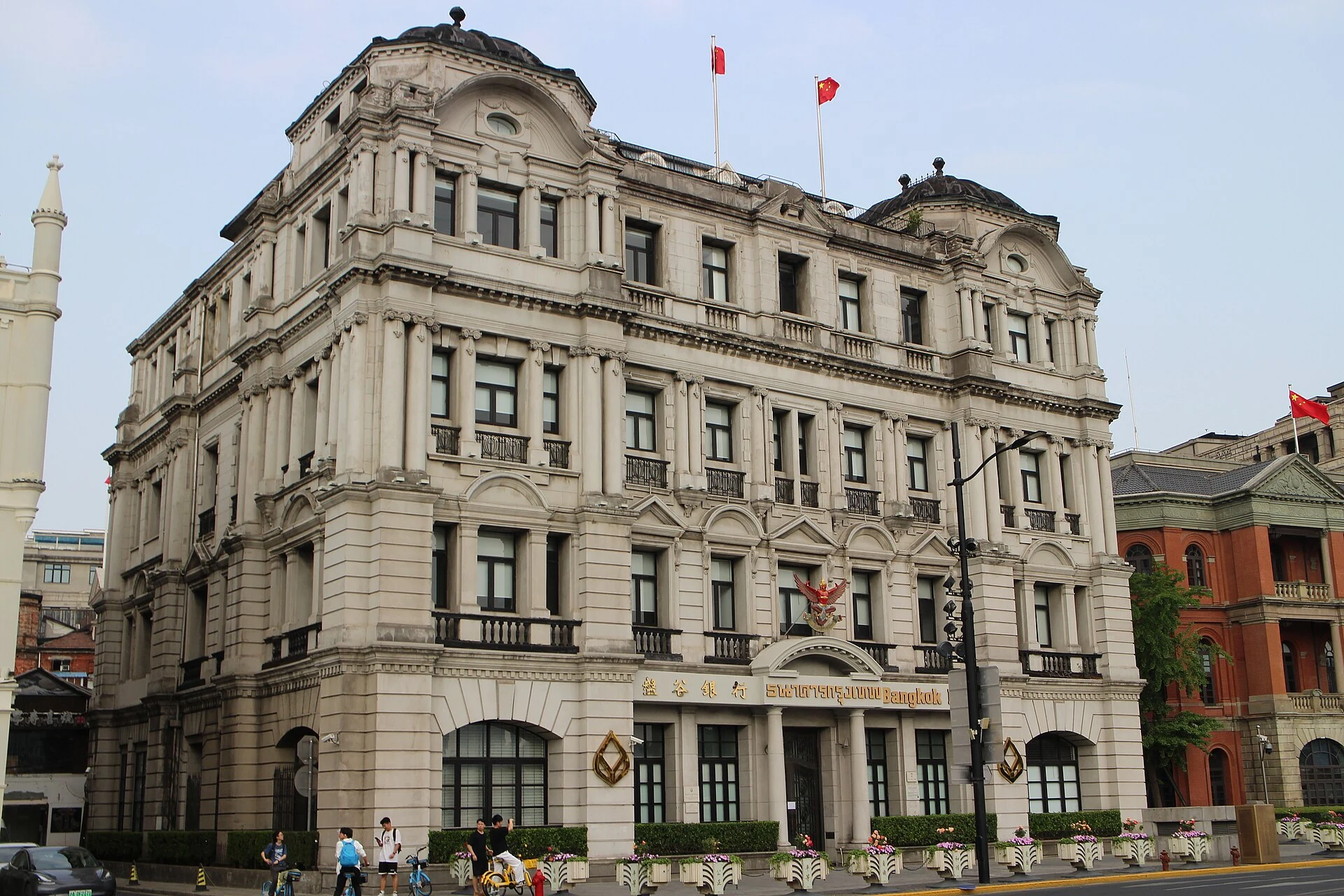
1 May 2025
The Great Northern Telegraph Building today. The contrast between its pale façade and dark roofs at either end remains clear.
Suicasmo · Image source · CC0 1.0
At a glance
- Construction
- 1906–1907Other sources place final completion in 1908
- Architect
- Atkinson & DallasAtkinson & Dallas
- Style
- Late French RenaissanceSymmetry, Baroque ornament and helmet-shaped roofs
- Original use
- Telegraph offices and servicesGreat Northern Telegraph and other communications organisations
- Current use
- Bangkok Bank China headquarters and Shanghai branchThe bank’s website specifies floors at No. 7 Bund
- Location
- 7 Zhongshan East 1st RoadChina Merchants Building immediately to the north
Architecture and use: sources[1]
The beginning
Why was it built here?
For a city dependent on ocean transport, the speed of information mattered too. Great Northern Telegraph operated international services in Shanghai and moved into older premises at No. 7 Bund in 1882, later rebuilding as business expanded.[1] [2]
This is not the telegraph building on Yan’an East Road. After the company moved away, No. 7 Bund accommodated banking, shipping administration and other uses. When the same company name appears, check both the address and the period.[1] [3]
Look up, then look closer
Three details worth a closer look
Dark roofs anchor the two ends
Curving roofs at either end contrast with the pale walls. Together with the quieter central section, they create a symmetrical outline best viewed from across the road.[2]
Horizontal mouldings and vertical divisions work together
Cornices separate floors, while the ends and centre divide the façade vertically. Look at window frames close up and the whole wall from further away to see details serving a larger order.[2]
Traces of communication in the 1908 plate
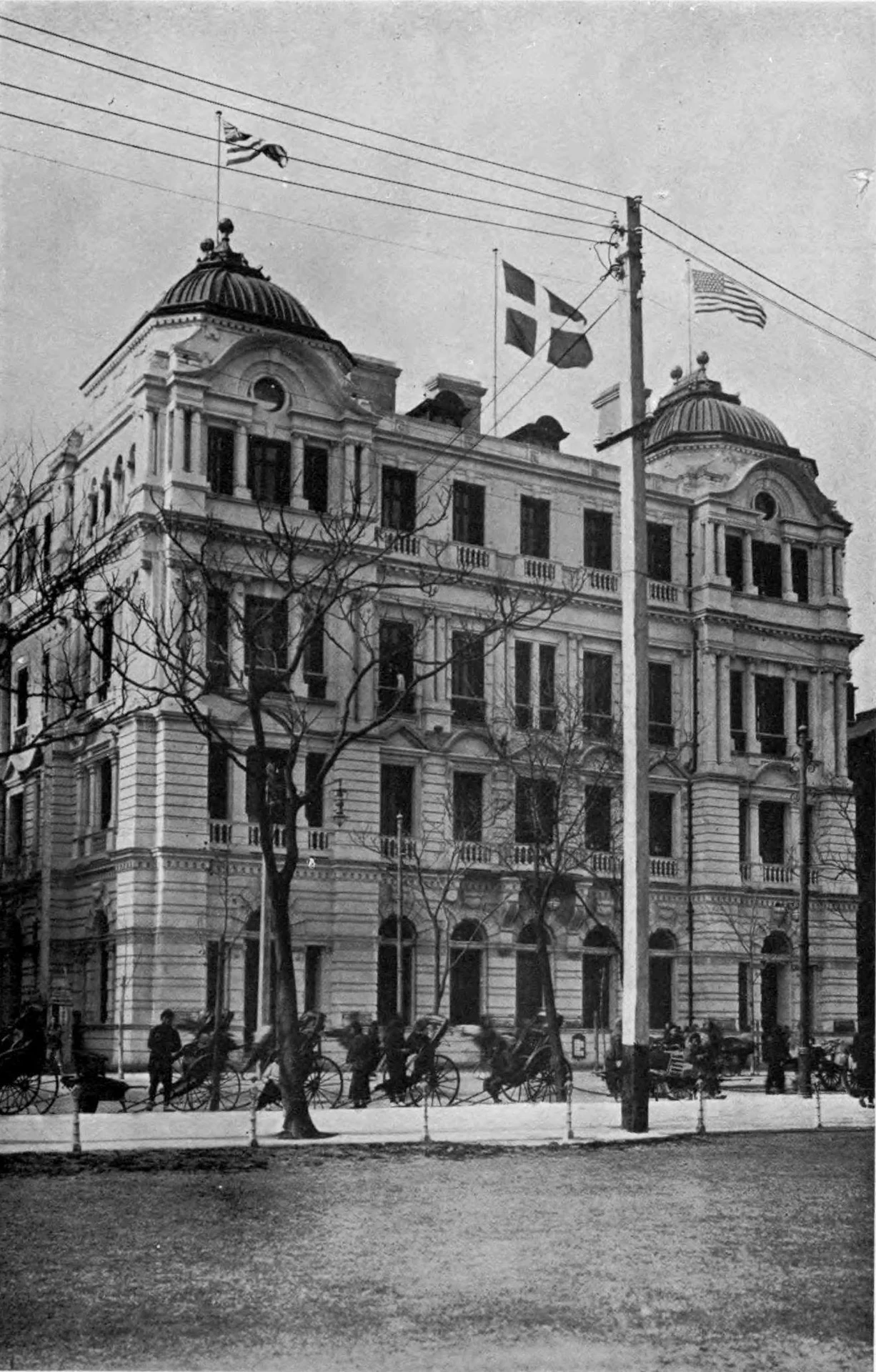
The early plate shows wires and supports above the roof and street. They make the function visible beyond the name and remind us that today’s tidy façade once belonged to a different technological setting.[1]
One building, changing roles
History unfolds between the photographs
From earlier buildings to the one standing today. Captions distinguish photographic dates from publication dates; periods without reliable images are covered in the text.
- 1870s
An international telegraph network reaches Shanghai
Great Northern Telegraph operated in Shanghai, running routes towards Hong Kong, Nagasaki and elsewhere. The Huangpu waterfront became a node in an international information network.[1]
- 1882
The company moves into older premises at No. 7
It began using an existing building here. That phase must be distinguished from the later new building; 1882 is not the surviving building’s completion date.[2]
- 1906–1908
- Published in 1908
An early photograph of the new building
The book’s plate clearly shows both helmet-shaped roofs and the arrangement of doors and windows. The publication year is known, but no independent photograph date is recorded.
Published in 1908 · photograph date unknown
The Great Northern Telegraph Building in a publication of 1908, with wires and supports visible above the roof.
Photographer unknown; edited by Arnold Wright · Image source · Public domain
- From the 1920s
- Since the 1990s
Financial services sustain the building’s use
Bangkok Bank developed its Shanghai business and used this building. Its official locations page places the China headquarters and Shanghai branch on different floors of No. 7.[4]
- Today
Still a place of work
Today’s Bangkok Bank sign can be compared with the telegraph plate of a century earlier. The shell survives while the interior continues to serve practical business needs.[4]
Today and visiting
Discover the building from the street
View the whole façade from outside first; bank interiors are accessible according to business and on-site arrangements.[4] [1]
- Look at the roofs
- Find the two helmet-shaped roofs and central mouldings, and compare their symmetry.
- Identify the address
- The Shanghai Telecom Museum occupies another, later telegraph building. This page concerns No. 7 Zhongshan East 1st Road.
- Bank access
- A working bank is not a history gallery. Follow on-site rules for entry and photography.
Sources checked: 2026-10-19 · The official address confirms current use, not unrestricted visitor access to all floors.
Shanghai and the world
Communication and transport meet at neighbouring addresses
China Merchants’ shipping business to the north needed long-distance contact, while the Commercial Bank of China to the south served financial flows. These adjoining buildings form a short walking route through the trade networks of the modern Bund.[1] [3]
Text and image sources
This article reorganizes the sources below. Text adapted and condensed from Wikipedia, including its translations here, is provided under CC BY-SA 4.0; the original contributors are listed in the article’s revision history. Image licences are listed separately beneath each photograph.
- Wikipedia · Great Northern Telegraph Building ↗
Used to cross-check the building’s history; conflicting dates are identified in the text. The article was independently written for this site; photographic credits and licences are listed separately.
- Shanghai Urban Construction Archives · Commercial Bank of China and Great Northern Telegraph buildings ↗
Published by Shanghai Urban Construction Archives in 2023; used to check construction dates, architects, structure and appearance.
- Shanghai Civil Affairs Bureau · Twenty-two international buildings on the Bund ↗
An overview of historic buildings. Some dates differ from institutional archives and are discussed separately. Former uses are not assumed to be current uses.
- Bangkok Bank China · Locations ↗
Official addresses place the China headquarters in areas B/C of floor 2 and floors 3–4 at No. 7; the Shanghai branch occupies floor 1 and area A of floor 2.
Image handling and dating
Images come from the archives or image source pages listed beneath each photograph. We resize and compress them to WebP, preserving their original proportions without colourisation or added detail. Grain, blur and scanning marks in historical photographs are retained.
1908 is the publication year of the book containing the plate; upload dates are not treated as photograph dates.
The surviving building is separate from the telegraph building on Yan’an East Road.