No. 6, the Bund · Zhongshan East First Road
Commercial Bank of China Building
中国通商银行大楼
Beneath the pointed roofs, an early chapter in Chinese banking
The history of No. 6 Bund requires separating the age of the building, the bank’s opening and subsequent rebuilding.
Follow its history through photographs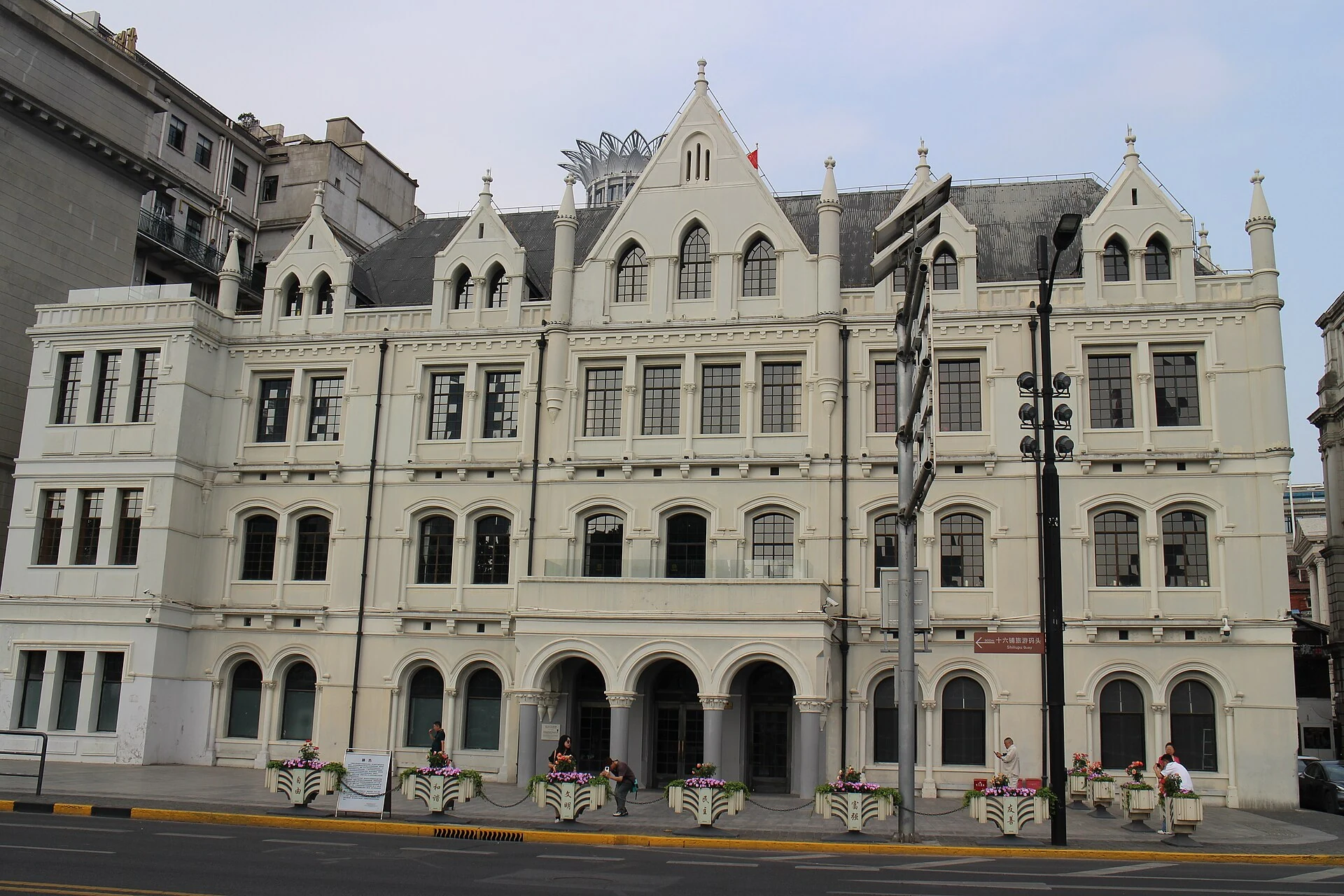
1 May 2025
The front of the Commercial Bank of China Building. Pale walls, pointed gables and ground-floor arches show its surviving appearance.
Suicasmo · Image source · CC0 1.0
At a glance
- Building / bank opening
- 1880s / 1897Construction date from Shanghai Urban Construction Archives; some overviews also record rebuilding in 1906
- Architect
- MorrisonRecorded by Shanghai Urban Construction Archives
- Style
- Gothic RevivalSteep roofs, pointed window heads and a ground-floor arcade
- Original use
- Commercial premises, later a bankAn auction house once stood on the site
- Current use
- No. 6 on the Bund commercial buildingThe full tenant list and interior access have not been verified
- Location
- 6 Zhongshan East 1st RoadBetween the Nisshin and Great Northern Telegraph buildings
Architecture and use: sources[1]
The beginning
Why was it built here?
The Commercial Bank of China opened in 1897, promoted by Sheng Xuanhuai. The bank’s establishment is a milestone in financial history, but it does not date the building’s existence: Shanghai Urban Construction Archives traces construction to the 1880s.[2]
English names vary; the historic photograph is captioned “Imperial Bank of China”. It refers to the historical Commercial Bank of China. This institution differs from today’s China Merchants Bank and from the China Merchants shipping building to the north, which occupies another address.[1]
Look up, then look closer
Three details worth a closer look
Start with the pointed roofline
Gables and window heads rise upward, contrasting with the straight cornice of the Nisshin Building to the south. Even a smaller building can stand out through the rhythm of its roof.[2]
Window shapes change above the arcade
Rounded ground-floor arches create entrances at pedestrian scale; the windows and gables above become increasingly pointed. Following one window bay upward says more than simply calling the building “European”.[2]
The pale walls are not the whole original story
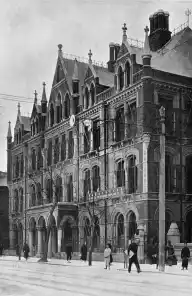
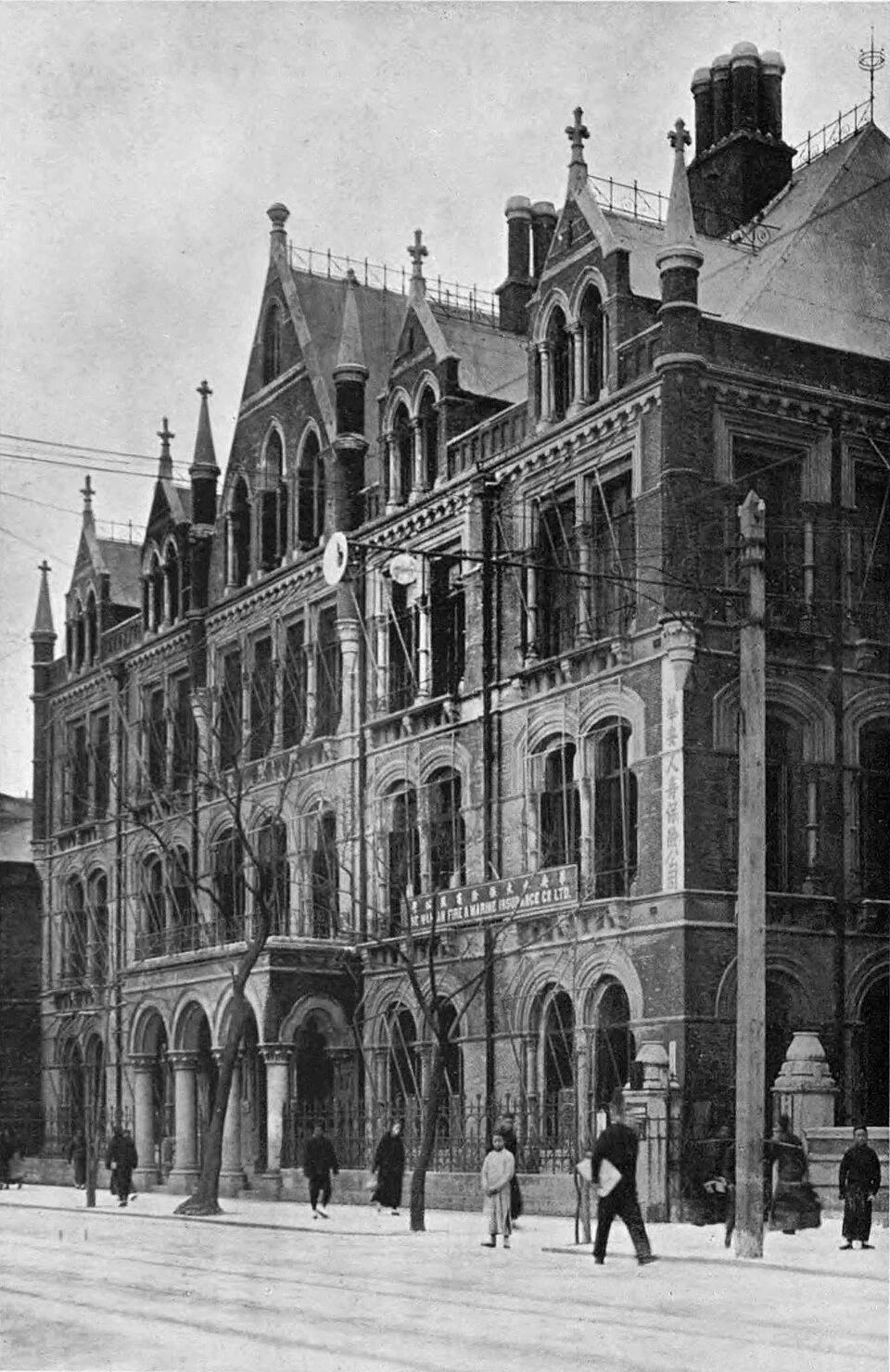
Archives describe original exposed red-brick walls, later covered with cement render. Compare the darker walls in the 1908 plate with today’s photograph, but monochrome tones cannot establish the bricks’ exact colour.[2]
One building, changing roles
History unfolds between the photographs
From earlier buildings to the one standing today. Captions distinguish photographic dates from publication dates; periods without reliable images are covered in the text.
- 1880s
An early commercial building takes shape
Shanghai Urban Construction Archives dates the building to the 1880s and describes its original brick-and-timber structure. This preceded the bank’s opening in 1897.[2]
- 1893
Fire and repairs
The archives record a fire on 7 April that destroyed the upper two floors, followed by repair and continued use. The surviving building is not an entirely unchanged original.[2]
- 1897
The Commercial Bank of China opens
The bank officially opened on 27 May. This date marks the institution’s establishment and operation, not simply the building’s completion.[2]
- Around 1906
- Published in 1908
An early image of the darker walls
Captioned Imperial Bank of China, the plate shows pointed roofs, gables and the ground-floor arcade. 1908 is the book’s publication year; the exact photograph date is unknown.
Published in 1908 · photograph date unknown
Plate in Twentieth Century Impressions of Hongkong, Shanghai, and other Treaty Ports of China, originally titled Imperial Bank of China.
Photographer unknown; edited by Arnold Wright · Image source · Public domain
- Second half of the 20th century
Shipping institutions occupy the building
An overview records use by the Yangtze shipping company after the bank. Finance and shipping alternated within the same building.[3]
- Today
Historic appearance and commercial use coexist
The 2025 photograph still shows the pointed roofs and ground-floor arches. Current tenants and access have not been fully checked, so this page concentrates on reading the exterior.
Today and visiting
Discover the building from the street
View it with its neighbours: three distinct rooflines stand almost side by side.[2]
- Identify the building
- Confirm No. 6 Zhongshan East 1st Road; do not mistake this historic bank for a current China Merchants Bank branch.
- Read from bottom to top
- Compare arches, window heads and roof points, noting the pale walls against the historic photograph.
- Interior visits
- If attending an event or visiting a business, confirm the entrance with the specific operator beforehand.
Sources checked: 2026-10-19 · General tourist access throughout the interior has not been verified. No access to a historic banking hall is promised.
Shanghai and the world
Banking, shipping and telegraphy side by side
Great Northern Telegraph to the north provided long-distance communication, while the Nisshin Building to the south served shipping. Together the three show how capital, transport and information for trade gathered along one riverfront street.[2] [1]
Text and image sources
This article reorganizes the sources below. Text adapted and condensed from Wikipedia, including its translations here, is provided under CC BY-SA 4.0; the original contributors are listed in the article’s revision history. Image licences are listed separately beneath each photograph.
- Wikipedia · Commercial Bank of China Building, Shanghai ↗
Used to cross-check the building’s history; conflicting dates are identified in the text. The article was independently written for this site; photographic credits and licences are listed separately.
- Shanghai Urban Construction Archives · Commercial Bank of China and Great Northern Telegraph buildings ↗
Published by Shanghai Urban Construction Archives in 2023; used to check construction dates, architects, structure and appearance.
- Shanghai Civil Affairs Bureau · Twenty-two international buildings on the Bund ↗
An overview of historic buildings. Some dates differ from institutional archives and are discussed separately. Former uses are not assumed to be current uses.
Image handling and dating
Images come from the archives or image source pages listed beneath each photograph. We resize and compress them to WebP, preserving their original proportions without colourisation or added detail. Grain, blur and scanning marks in historical photographs are retained.
The 1908 plate is a scan of an original monochrome print; its grey values do not establish the original wall colour precisely.
Sources differ on construction dates. The building’s age, fire, bank opening and accounts of rebuilding are listed separately.