No. 9, the Bund · Zhongshan East First Road
China Merchants Building
轮船招商局大楼
A small Bund building with a large shipping story
Three storeys of red brick and open galleries preserve traces of China Merchants’ Shanghai operations, moves and return to its old premises.
Follow its history through photographs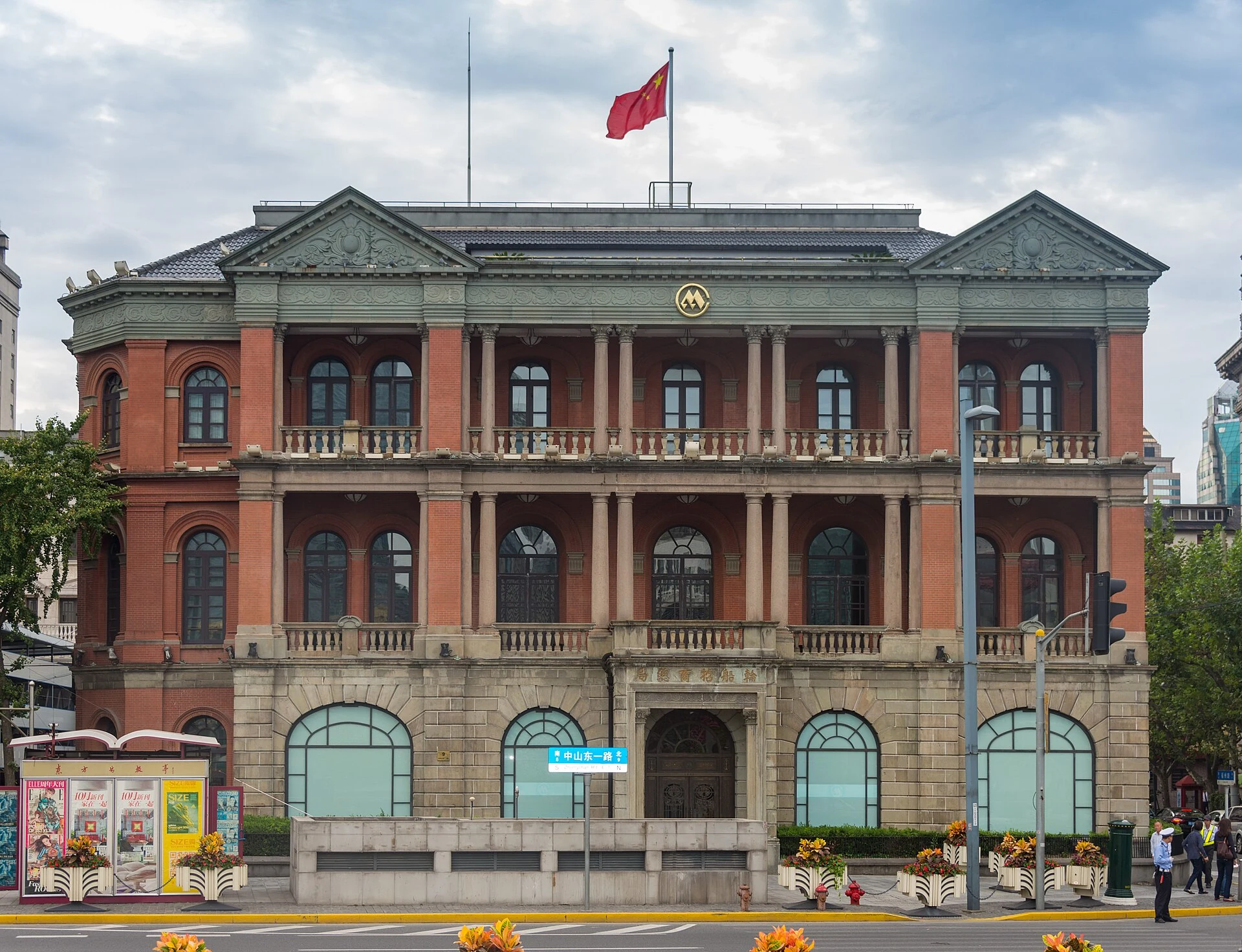
11 October 2016
The China Merchants Building after restoration. Its three-storey mass, upper red brick and river-facing verandas remain distinctive.
xiquinhosilva · Image source · CC BY 2.0
At a glance
- Completed
- 1901New riverfront building; older buildings at the rear have a separate history
- Architect
- MorrisonFollowing Huangpu District Archives
- Style
- RenaissanceRed brick, a stone base and stacked verandas
- Original use
- China Merchants Steam Navigation headquartersA Chinese shipping enterprise of the modern era
- Current use
- China Merchants corporate heritage and related usesThe “China Merchants: A Century of Voyages” exhibition occupies the ground floor
- Location
- 9 Zhongshan East 1st RoadNorth of the Great Northern Telegraph Building
Architecture and use: sources[1]
The beginning
Why was it built here?
China Merchants was founded before this small building existed. The company reached the Bund after acquiring ships, wharves and some property from the Shanghai Steam Navigation Company in the 1870s. Completion of the new riverfront building in 1901 marked a later stage.[2] [1]
The three-storey red-brick block before you is not the entire property. It was connected by passageways to older buildings behind. References to the old Russell & Co. premises and the China Merchants Building can therefore concern different periods and different parts.[1]
Look up, then look closer
Three details worth a closer look
Red brick stands out among stone-coloured neighbours
The ground-floor stonework feels weighty, while the upper red brick is warmer. Despite the modest size, colour changes and horizontal bands make the three storeys easy to read.[2]
Pause at the open galleries
Groups of columns support the river-facing verandas, with views of the water from behind them. The verandas were once enclosed as rooms; later restoration reworked these spaces.[2]
One building, changing roles
History unfolds between the photographs
From earlier buildings to the one standing today. Captions distinguish photographic dates from publication dates; periods without reliable images are covered in the text.
- 1872–1873
China Merchants is founded and begins business
Following Qing approval for its establishment, China Merchants began operating in Shanghai. Its earliest office was not this building of 1901.[3]
- 1877
- 1901
The three-storey riverfront building is completed
The new offices designed by Morrison entered use. Open verandas and the roofline in early photographs remain recognisable in the restored building.[2]
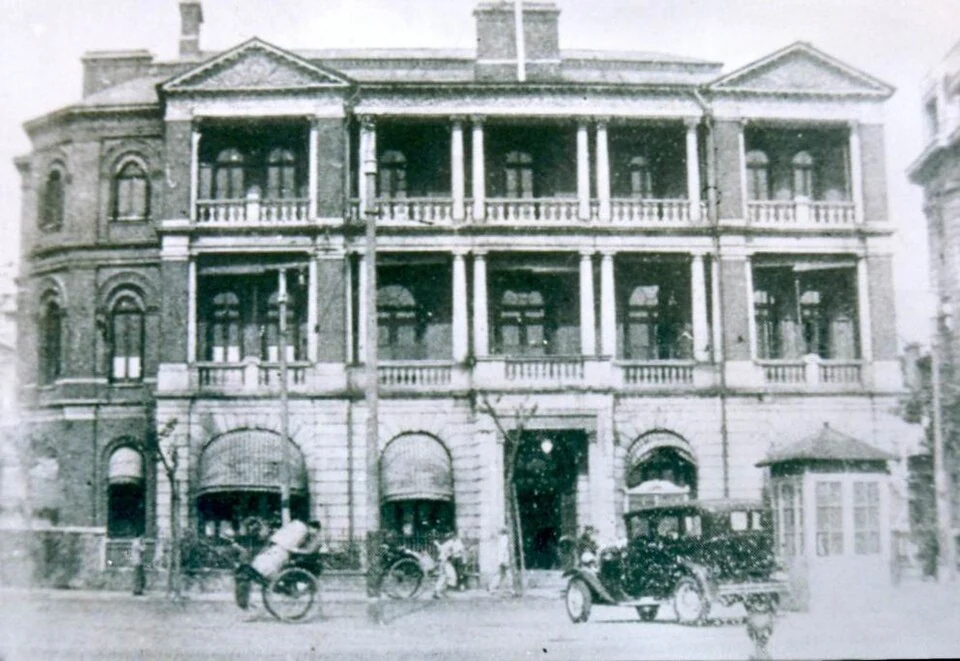
1901 · source dating
Historic photograph of the China Merchants headquarters dated 1901 by its source; photographer unknown. Compare verandas, roof and ground-floor entrance with today’s building.
Photographer unknown; supplied by China Merchants historical archives · Image source · Public domain
- After 1937
War changes offices and asset arrangements
During the war, China Merchants relocated operations and preserved some assets through entrusted management and other means. The fortunes of the building and company diverged at this stage.[1]
- From the 1950s
Port and maritime administrators move in
Port supervision, maritime safety and other bodies used the building. Verandas were enclosed, floors subdivided and the roof altered.[2]
- 2001–2004
- Recent years
A century of voyages on the ground floor
In 2024 the China Institute of Navigation introduced the ground-floor “China Merchants: A Century of Voyages” gallery. The former offices also became a place to learn the company’s history.[4]
Today and visiting
Discover the building from the street
Slow down here and begin with the lintel, verandas and changes of material.[4] [2]
- Look at the materials
- Observe the junction of stone base and red brick without blocking access.
- Distinguish front and rear
- The riverfront building of 1901 and the older Russell & Co. buildings behind are related but distinct parts.
- Visiting the gallery
- Published information identifies a corporate history gallery on the ground floor. Confirm opening days, bookings and temporary arrangements with management.
Sources checked: 2026-10-19 · The 2024 gallery introduction is not a promise of daily opening. Do not confuse this Bund gallery with the China Merchants History Museum in Shenzhen.
Shanghai and the world
Follow the shipping story to No. 5 Bund
China Merchants also took over the Nisshin Building after the war. No. 9 tells the story of its own early offices; No. 5 shows the postwar transformation of another shipping property.[2] [1]
Text and image sources
This article reorganizes the sources below. Text adapted and condensed from Wikipedia, including its translations here, is provided under CC BY-SA 4.0; the original contributors are listed in the article’s revision history. Image licences are listed separately beneath each photograph.
- Wikipedia · China Merchants Building ↗
Used to cross-check the building’s history; conflicting dates are identified in the text. The article was independently written for this site; photographic credits and licences are listed separately.
- Huangpu District Archives · Archive Gallery: China Merchants Building ↗
2015 feature; used to check the 1901 date, Morrison, materials and later alterations.
- China Merchants History Museum · Historical milestones ↗
Official China Merchants history, distinguishing approval to establish the company in 1872 from the start of operations in 1873.
- China Institute of Navigation · “China Merchants: A Century of Voyages” gallery at No. 9 Bund ↗
Gallery introduction of 1 February 2024 confirms corporate history displays on the ground floor; opening arrangements require separate verification.
Image handling and dating
Images come from the archives or image source pages listed beneath each photograph. We resize and compress them to WebP, preserving their original proportions without colourisation or added detail. Grain, blur and scanning marks in historical photographs are retained.
The historic source file is dated 1901; the photographer is unknown. The company archive supplying the image is not presented as a confirmed photographer.
Plates showing only ships and wharves, without an identifiable view of this building, have not been used as building photographs.