No. 24, the Bund · Zhongshan East First Road
Yokohama Specie Bank Building
横滨正金银行大楼
Behind the colonnade, a former link in East Asian finance
Explore the past and present of No. 24 on the Bund through authentic photographs, architectural details and a historical timeline.
Follow its history through photographs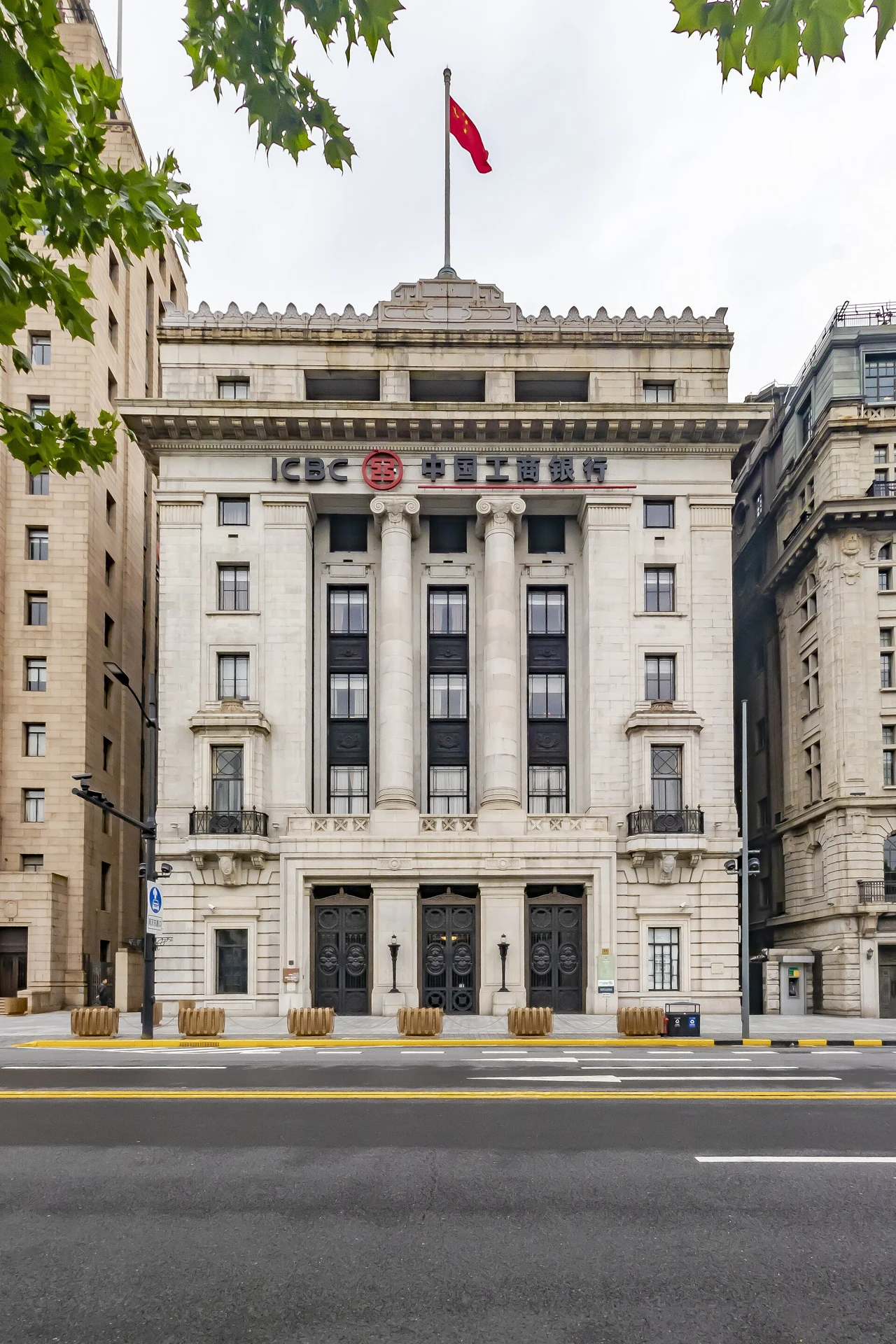
20 June 2021
The former Yokohama Specie Bank façade already carried ICBC signage when photographed. Giant columns, bay windows and the ground-level entrance retain a clear symmetrical composition.
ScareCriterion12 · Image source · CC BY-SA 4.0
At a glance
- Construction
- 1922–1924The urban construction archive dates the start to 1922; some accounts say 1923
- Design
- Palmer & TurnerPalmer & Turner
- Style
- NeoclassicalRead alongside the façade and original use.
- Original use
- Yokohama Specie Bank Shanghai BranchOriginal function of the surviving building.
- Current use
- ICBC banking and officesInstitutional information checked through October 2026.
- Location
- 24 Zhongshan East 1st RoadNorthern Bund
The beginning
Why was it built here?
No. 24 the Bund was formerly occupied by the old Sassoon firm. After purchasing the site, Yokohama Specie Bank rebuilt it as a dedicated bank. Its Shanghai business belonged to the financial networks of Japan’s foreign trade.[1] [3]
The building housed more than one bank. László Hudec established an architectural office here, bringing its tenants into the story of modern architectural design in Shanghai. Behind the upper windows, other kinds of work also took place.[1] [3]
Look up, then look closer
Three details worth a closer look
Giant columns span several floors
The central Ionic columns unify several floors of office windows. Look at the scroll capitals and count the window levels they span for a more concrete understanding than a style label alone.[3]
Light and dark around the entrance
Pale stone walls set off dark iron gates and lamp bases. Ornament clusters around the main entrance while side windows are more regular, creating a clear hierarchy.[3]
Bay windows project from the façade
Bulging second-floor windows and their supporting brackets interrupt the flat surface. Seen with the central colonnade, they show that symmetry need not make every part identical.[3]
One building, changing roles
History unfolds between the photographs
From earlier buildings to the one standing today. Captions distinguish photographic dates from publication dates; periods without reliable images are covered in the text.
- Early 1920s
Acquiring the old Sassoon site
The bank bought 24 the Bund for a new Shanghai branch. The old trading-house building was subsequently demolished.[3]
- 1922–1924
- 1920s
An architectural practice upstairs
Hudec opened his independent practice here. A photograph published in 1927 shows the early façade after the building entered use.[3] [5]
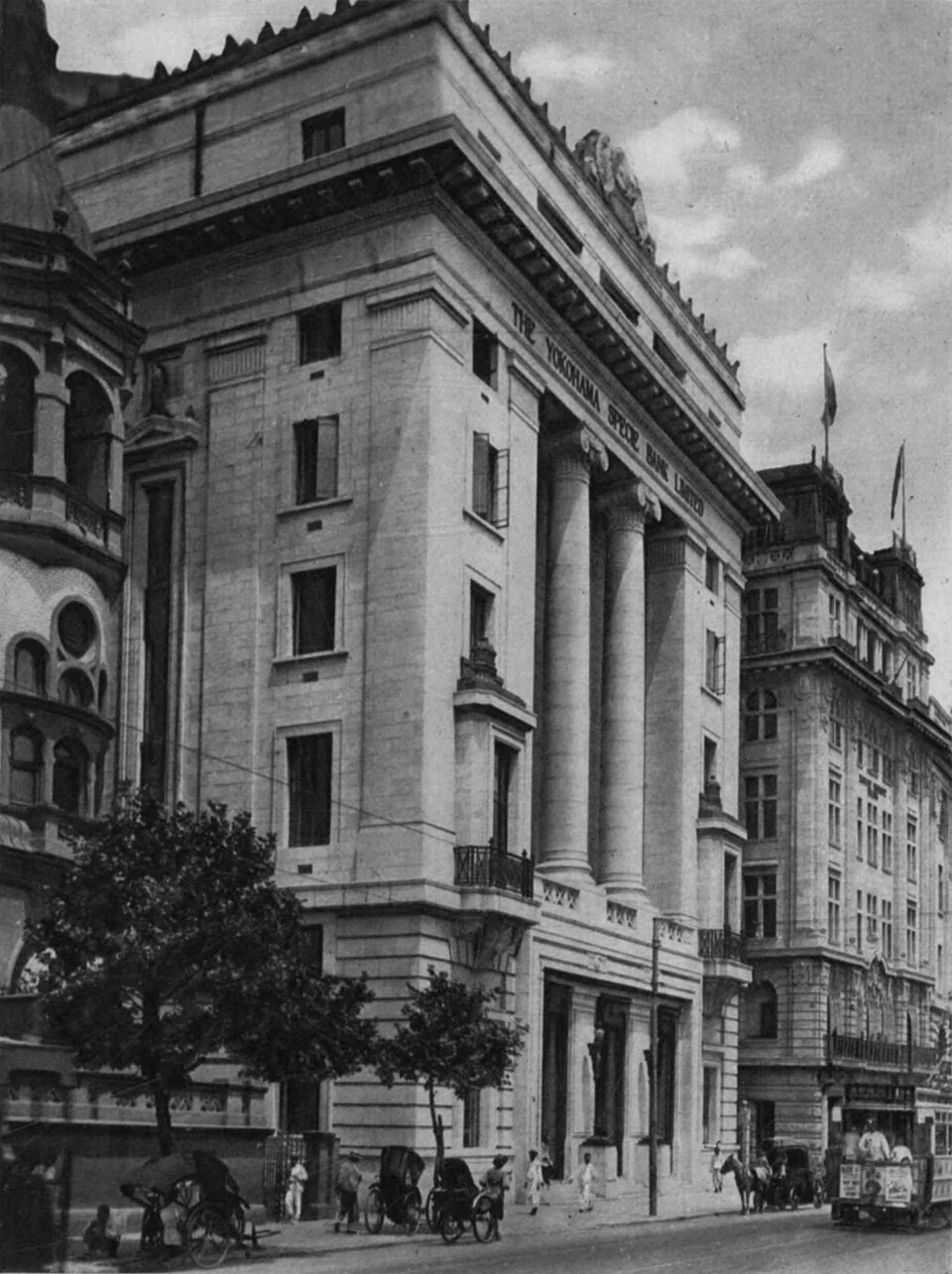
Published in 1927 · exposure date unknown
Plate 10 of Shanghai of Today records the new building after it entered use. Compare the historical English bank sign with today’s frontage.
Photographer unknown; published by A. S. Watson & Co. · Image source · Public domain
- After 1945
Use by the Central Bank
After the war against Japan, the Central Bank used the building, which was also known as the Central Building.[4]
- 1949–1956
Finance gives way to industrial administration
After 1949 it housed the East China regional offices of the People’s Bank of China. Textile-industry administrators moved in during 1956. Its name and occupants changed with the times.[4]
- Today
ICBC continues to use the building
ICBC’s published Shanghai branch information lists a banking hall at 24 Zhongshan East 1st Road. Observe the entrance decoration without obstructing people conducting banking business.[2]
Today and visiting
Discover the building from the street
View the whole silhouette from the riverside promenade, then approach along the pavement to examine entrances and stonework.[2]
- Exterior
- View the front from the Huangpu River side; use nearby pedestrian crossings.
- Details
- Look for entrances, capitals and window rows; avoid lingering in doorways.
- Interior access
- The building remains in use. Follow the operator’s rules that day for visits, photography and business access.
Sources checked: 2026-10-19 · This architectural account does not imply public access to interiors. Historical opening hours are not evidence of current access.
Shanghai and the world
Financial routes between Yokohama and Shanghai
The old bank name “Specie” connects the Bund with Japanese foreign trade and international settlement. This history also includes wartime financial control and postwar institutional changes; it cannot be read simply as commercial prosperity.[1]
Text and image sources
This article reorganizes the sources below. Text adapted and condensed from Wikipedia, including its translations here, is provided under CC BY-SA 4.0; the original contributors are listed in the article’s revision history. Image licences are listed separately beneath each photograph.
- Wikipedia · Yokohama Specie Bank Building ↗
Basic history and architectural information; the source article was rewritten and arranged in Chinese.
- ICBC · Shanghai branch information, 2025 ↗
Official branch information lists the business-department banking hall at 24 Zhongshan East 1st Road.
- Shanghai Urban Construction Archives · Buildings of the Bund ↗
Building profiles published by Shanghai Urban Construction Archives; dates that differ from other accounts are noted in the text.
- Shanghai Civil Affairs Bureau · Twenty-two Buildings on the Bund ↗
Historical details including the move into offices on New Year’s Day 1946.
- Historical photograph · File description and original source ↗
Checks the depicted subject, provenance and publication year; unknown exposure dates are explicitly marked.
Image handling and dating
Images come from the archives or image source pages listed beneath each photograph. We resize and compress them to WebP, preserving their original proportions without colourisation or added detail. Grain, blur and scanning marks in historical photographs are retained.
Photographs retain their original proportions and colours; they have only been resized and converted to WebP. Preview and full-resolution images show the same frame.
Dates for historical photographs distinguish exposure, publication and digitisation according to the source.