No. 17, the Bund · Zhongshan East First Road
North-China Daily News Building
字林西报大楼
From a newspaper’s editorial rooms to an insurer’s century-old address
Explore the past and present of No. 17, the Bund, through historic photographs, architectural details and a timeline.
Follow its history through photographs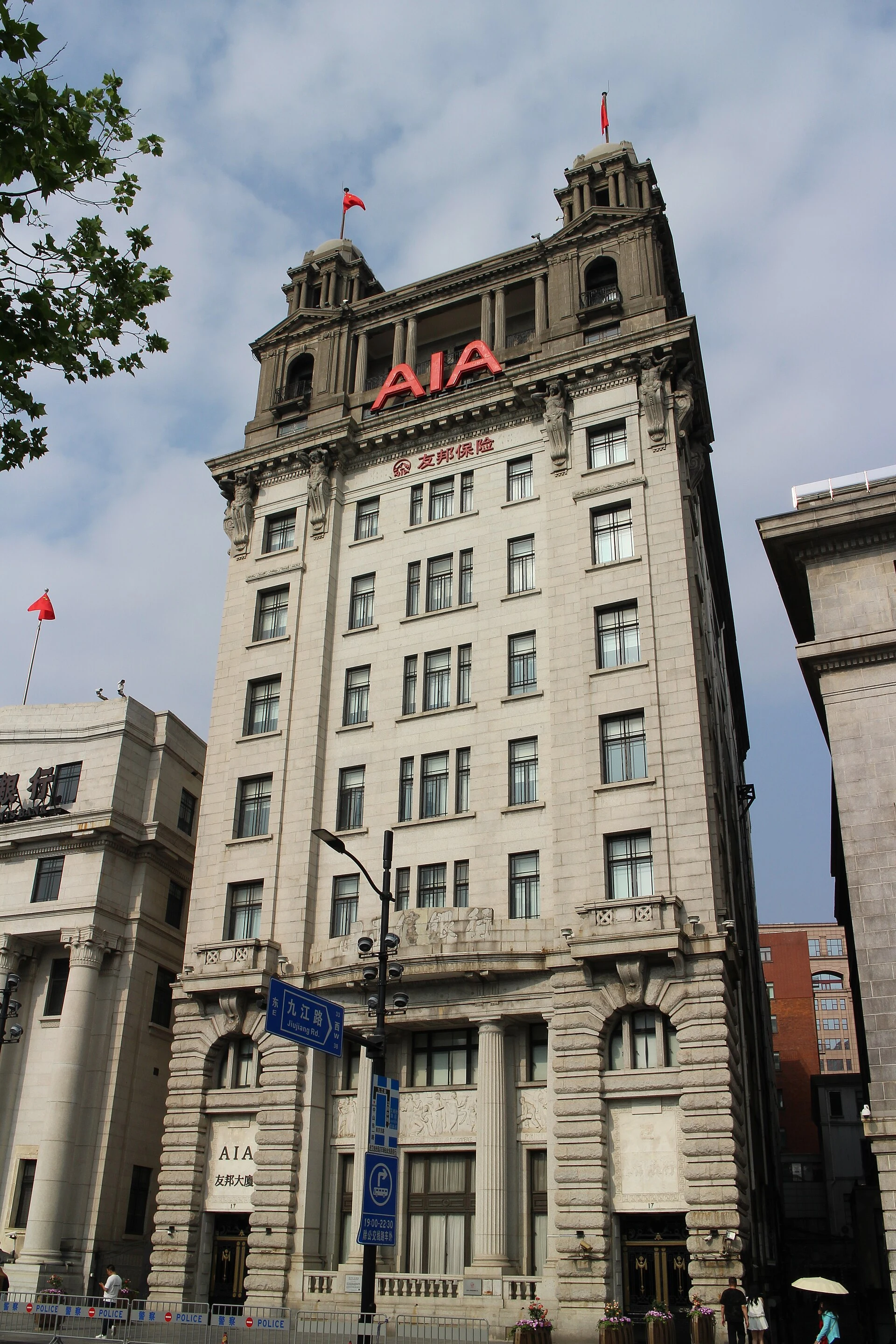
1 May 2025
The former North-China Daily News Building now carries AIA signage. Its roof pavilions and cornice ornament still define its outline.
Suicasmo · Image source · CC0
At a glance
- Construction / completion
- 1921 / 1924Completion ceremony in February 1924
- Architect
- Lester, Johnson & MorrissLester, Johnson & Morriss
- Style
- Classical ornament with modern officesRoof pavilions, supporting figures and regular window rows
- Original use
- North-China Daily News offices and rented officesAIA-related organisations were tenants
- Current use
- AIA BuildingAIA China announced a lease renewal in 2025
- Location
- 17 Zhongshan East 1st RoadBetween the Bank of Taiwan and Chartered Bank
The beginning
Why was it built here?
A newspaper building on the Bund needed more than editorial rooms. The North-China Daily News Building combined publishing with rented offices. Its tenants linked news, advertising, insurance and urban commerce. Named after the newspaper, it had a broader purpose than a publishing headquarters from the start.[1]
The Bund grew taller in the 1920s. Lester, Johnson & Morriss arranged regular office window rows while keeping rich ornament at the entrance, cornice and roof. The newspaper later ceased publication; AIA returned late in the 20th century and continues to use the building.[2] [3]
Look up, then look closer
Three details worth a closer look
Three parts, solid below and lighter above
Begin with the stone base, then the regular rectangular windows in the middle, and finally the roof pavilions. Different densities of detail give the tall building a clearly readable base, body and crown.[2]
Supporting figures below the cornice
Human sculptures take supporting poses beneath the great cornice near the top. These ornaments bring the human body into the composition. Looking upwards from the riverfront reveals them more readily than studying only the entrance.[2]
Small pavilions at both corners
The roof pavilions at each end and the central colonnade interrupt a flat roofline. Compare them with the triangular pediment of No. 18 to the north: two buildings completed in similar years have distinctly different silhouettes.[2]
One building, changing roles
History unfolds between the photographs
From earlier buildings to the one standing today. Captions distinguish photographic dates from publication dates; periods without reliable images are covered in the text.
- 1921
The newspaper plans new offices
The North-China Daily News invested in replacing its old premises, combining its own publishing operations and rentable space in one building.[1]
- 1924
- 1927
A publication records the tower
Plate 9 of Shanghai of Today shows the whole new building. The publication year is confirmed; the exact date of photography is unknown.[5]
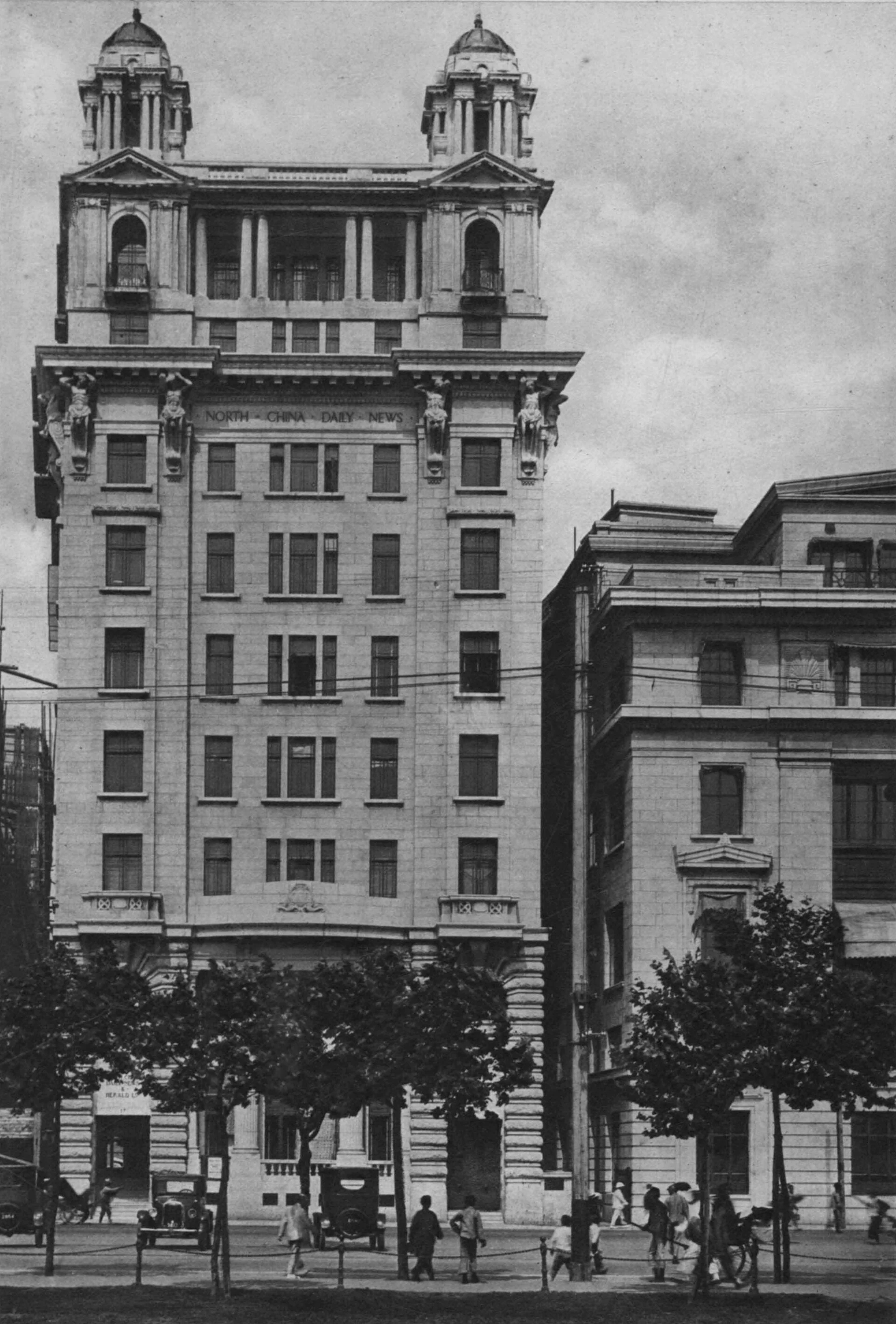
Published in 1927 · photograph date unknown
Plate 9 of Shanghai of Today records the entire North-China Daily News Building. Its twin pavilions and regular windows correspond to the modern image.
Photographer unknown; published by A. S. Watson & Co. · Image source · Public domain
- 1951
The North-China Daily News ceases publication
After the newspaper closed on 31 March, its name no longer described daily work inside. The historic name nevertheless survived.[1]
- 1998
AIA formally returns
AIA’s official centenary history dates its formal return to 17 Zhongshan East 1st Road to 1998. Some building entries give 1996; this page follows AIA’s own chronology.[3]
- 2025
Lease renewal continues the building’s use
AIA China announced renewal of its lease of the AIA Building, confirming a historic address in ongoing institutional use, rather than an empty landmark with only an old name.[4]
Today and visiting
Discover the building from the street
From the riverfront, look above the cornice for supporting figures and the twin roof pavilions.[4]
- Reading the façade
- Daylight makes differences between stonework, window rows and figure carving easier to see.
- With its neighbours
- Read it alongside No. 16’s giant columns and No. 18’s triangular pediment; each silhouette has its own emphasis.
- Going inside
- An insurer still works here. Viewing from public streets is the most reliable option; interior reception needs separate confirmation.
Sources checked: 2026-10-19 · No regular architectural tour for individual visitors has been verified. Access to office floors is not promised.
Shanghai and the world
News and insurance meet in one building
The English-language newspaper brought Shanghai’s shipping, business and political news to overseas readers. AIA, founded in Shanghai, also once had offices here. Both businesses relied on information and trust across regions, making No. 17 a concrete place to explore the Bund’s international networks.[1] [3]
Text and image sources
This article reorganizes the sources below. Text adapted and condensed from Wikipedia, including its translations here, is provided under CC BY-SA 4.0; the original contributors are listed in the article’s revision history. Image licences are listed separately beneath each photograph.
- Wikipedia · North-China Daily News Building ↗
Cross-check of the basic history. The Chinese base text is reorganised and rewritten; differing dates are explained in the text.
- Shanghai Urban Construction Archives · North-China Daily News and Chartered Bank ↗
The archives’ 2023 account cross-checks the design, façades and construction dates.
- AIA China · A Century of AIA ↗
The official history gives 1998 for the formal return to No. 17, the Bund.
- AIA China · 2025 lease renewal for the AIA Building ↗
An official institutional press release used to check current use and design information.
- Commons · Shanghai of Today, Plate 9 ↗
A photograph of the building published in 1927.
Image handling and dating
Images come from the archives or image source pages listed beneath each photograph. We resize and compress them to WebP, preserving their original proportions without colourisation or added detail. Grain, blur and scanning marks in historical photographs are retained.
1927 is the book’s publication year, not an assigned photographic date.
AIA’s return is dated to 1998 in its official history. Its return to mainland China in 1992 must not be confused with moving into this building.